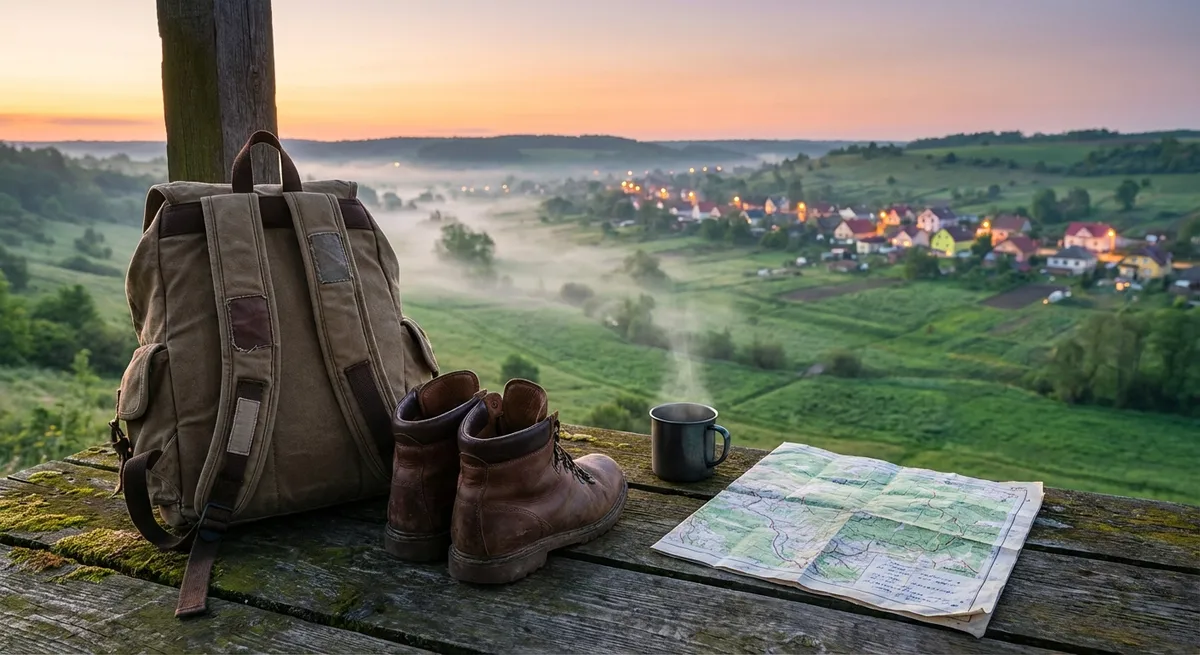
Rethink Distance: Big Adventures in “Small” Radiuses
You don’t have to cross continents to feel far from home; you just have to cross your routine.
Start by drawing a 300–500 mile circle around where you live. Inside that ring are national parks, overlooked small towns, historic sites, cheap coastal getaways, and trailheads that most people you know have never seen. Because you’re staying relatively close, you can slash costs on flights and pour that money into experiences instead—kayak rentals, entry fees, food tours, or that sunrise hot spring soak that turns into your trip’s defining memory.
Lean into regional trains, buses, and car-sharing apps instead of flights. Overnight routes can double as both transport and accommodation, especially in regions like Europe or parts of Asia and South America. When you stop obsessing over far-away bucket-list pins and start hunting local epics, suddenly you’re sipping coffee in a mountain town you’d never heard of three days ago, listening to someone else’s life story and realizing you’ve stepped into the kind of scene people assume requires a passport stamp and a huge budget.
The adventure isn’t measured in miles; it’s measured in how different the world feels from your usual Monday.
Chase Seasons That Others Ignore
Your money goes furthest where the crowds are thinnest.
Every destination has its “shoulder season”—those magical in-between months after peak tourism and before the deep off-season. That’s where budget travelers thrive. Flights drop. Hotels and guesthouses negotiate. Popular hikes become quiet paths again. Locals have more time to talk, and those conversations become the moments you remember long after your return flight.
Imagine wandering a European city in late autumn: mist on old stone, warm light spilling from cafés, a museum almost to yourself. Picture a tropical beach after the main holiday crush: cheaper rooms, fewer umbrellas competing for sand, and restaurant staff that actually have time to give you their honest, unpolished tips.
Research typical peak travel windows, then deliberately aim just outside them. A shift of two weeks can mean the difference between paying top-dollar for a rushed, crowded experience and getting a slow, rich version of the same place for half the cost. Budget travel is less about saying “no” and more about saying “not when everyone else does.”
Sleep Differently: Turn Accommodation Into an Adventure
Where you sleep can be the most forgettable part of a trip—or the heart of your story.
Budget travelers know that accommodation isn’t just a bed; it’s a portal. Hostels with communal kitchens become late-night recipe swaps with strangers. Family-run guesthouses come with breakfast conversations that quietly change how you see a country. Overnight trains and buses become moving capsules of life: a baby crying, someone quietly singing, landscapes changing outside your window while you drift in and out of sleep.
Try hostels that focus on community, not just low prices. Look for reviews mentioning social events, shared dinners, or free walking tours. Consider homestays or small guesthouses, where your room fee helps a local family directly and your questions are answered by someone who knows the city’s real heartbeat.
And yes, occasionally trade comfort for pure experience: a basic mountain hut near a glacier, a simple eco-lodge deep in the jungle, a tent under a sky exploding with stars. You might wake to a stiff neck—but also to a sunrise that feels like it belongs only to you. Luxury gives you predictability; budget stays give you stories.
Eat With the City, Not Above It
Your most memorable meal won’t be the one with the longest receipt.
Follow the workers on their lunch break, not the glossy ads. Streetside stalls, market counters, mom-and-pop cafés one block off the main drag—that’s where you’ll find food that’s both cheaper and more alive than most “must-visit” restaurants. Budget travel teaches you to read a town by its food: where the lines form, when the grills light up, how families gather around shared plates.
Skip breakfast buffets and eat where the city wakes up: bakeries, corner cafés, tiny noodle shops. Visit local markets not just as a photo op but as your pantry. Buy fruit, bread, cheese, dumplings, or grilled skewers and build a picnic facing something beautiful: a river, a plaza, a bus station buzzing with departures.
When you do splurge on a meal, make it a choice, not a habit. One thoughtfully chosen “big night out” often feels more special than a week of forgettable mid-range dining. The money you save by eating humbly and locally buys you extra days on the road—or a detour to somewhere you hadn’t planned to go.
Treat Your Budget Like Gear, Not a Chain
Your budget is your compass, not your jailer.
Instead of thinking, “I can’t afford to travel,” ask, “What can I adjust to travel the way I want?” Budget travel is strategic: you decide where to go big and where to go bare-bones. Maybe you camp for two nights so you can afford scuba diving on the third. Maybe you walk instead of taking taxis and use that saved money to join a local cooking class.
Track your daily spending like you’d track miles on a hike. A simple notes app or budget app turns vague anxiety (“Am I overspending?”) into clear choices (“If I cook tonight, I can afford that kayak rental tomorrow”). The goal isn’t to nickel-and-dime every moment; it’s to channel your cash into what will actually make the trip unforgettable for you.
Most of all, realize that “budget travel” is not a lesser version of “real travel.” It’s a mindset that often leads to richer, more honest connections—because you’re riding the same transport, eating at the same counters, walking the same streets as the people who actually live there.
Conclusion
Budget travel isn’t the consolation prize for people who can’t afford “real” vacations. It’s a decision to live wide awake in the world, to trade glossy extras for raw moments: a shared joke with a stranger at a bus stop, a quiet sunrise from a cheap guesthouse balcony, the rush of realizing you navigated a city with nothing but a map and your instincts.
When you rethink distance, chase quieter seasons, turn sleep into an adventure, eat with the city instead of above it, and treat your budget like a piece of gear you know how to use, the map stops feeling like a wall of “someday.” It starts feeling like a series of doors you can actually open—one careful, thrilling choice at a time.
Sources
- U.S. Department of State – Travel Resources - Official guidance on travel planning, safety, and documentation
- National Park Service - Information on U.S. national parks, fees, passes, and trip ideas for nearby adventures
- European Commission – Your Europe: Passenger Rights - Useful for understanding budget-friendly train, bus, and air travel options in Europe
- Lonely Planet – Budget Travel Tips - Practical advice and inspiration for saving money while traveling
- BBC Travel – Off-Season Travel Insights - Explores why shoulder-season and off-season trips can be rewarding and more affordable