Below are five adventure ideas that aren’t just about where you go, but how you travel—experiences that wake up your senses, plug you into the world, and remind you that your story is still being written.
1. Follow a River from Its Source to Its Story
Pick a river—famous or forgotten—and trace it like a living timeline. Start where it’s small and shy, a trickle in the hills or a spring in the forest, and follow it as it gathers strength, towns, and stories on its way to the sea.
Hiking or biking along a river corridor lets you watch landscapes morph in real time: alpine meadows becoming farmland, quiet villages giving way to humming cities, languages and accents shifting every few stops. River routes are rich with local food, small guesthouses, ferries, markets, and people whose lives are braided with the water’s flow. You can camp on gravel bars, share tea with anglers at dawn, or ride local boats between river towns.
Practical angle: look for existing river trails, cycling routes, or long-distance paths that shadow waterways. Plan sections by public transport access so you can hop on or off as your time allows. Pack light, bring a filter for drinking water, and keep a journal of the people and river stories you collect along the way. By the time you reach the river’s end, you’ll realize you’ve also traced a new direction in yourself: from curiosity to courage.
2. Chase the Night Sky Instead of the City Lights
There’s something fiercely humbling about standing under a sky that looks like it’s on fire with stars. Instead of planning your next adventure around urban skylines, let darkness be the destination and starlight the main event.
Head to a dark-sky reserve, high-altitude plateau, desert, or remote island where the Milky Way looks like spilled sugar across black velvet. Build your trip around celestial moments: the Perseid meteor shower in August, the Geminids in December, aurora seasons in northern latitudes, or a lunar eclipse viewed from some wind-scoured ridge. Nights like these slow everything down. Conversations become softer, time stretches, and the universe above reminds you just how wild it is that you exist here at all.
On the practical side, check light pollution maps and dark-sky parks before picking a destination, and time your trip around a new moon for maximum stars. Bring a red-light headlamp to preserve your night vision, a warm layer per person more than you think you need, and learn a few constellations before you go. When your eyes adjust and the sky explodes into detail, you’ll feel it: the quiet realization that you are small, but not insignificant.
3. Ride a Story Across Borders by Train
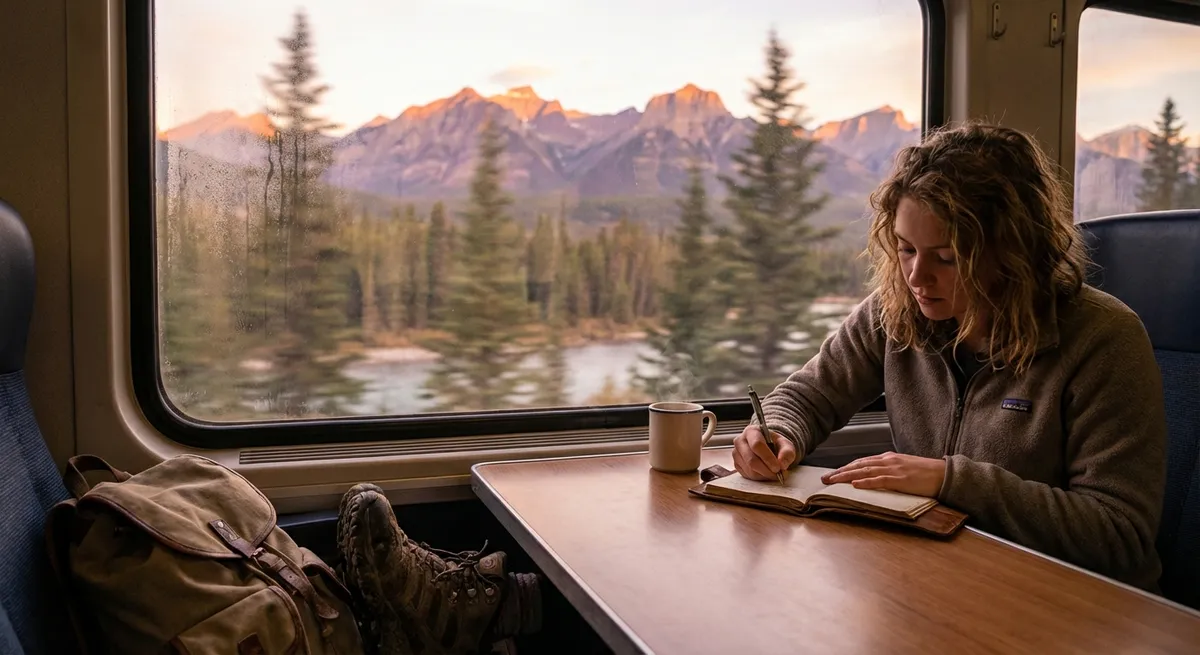
There’s a special kind of magic to long-distance trains: the slow roll out of a city, the rhythm of tracks, the way scenery spills past like a film with the sound turned down. Make your next adventure a moving story by stringing together rail journeys across regions, countries, or even continents.
Design a route that feels like a narrative arc. Start in a city that crackles with energy, ride through farmlands and villages that show you daily life outside the capital, climb mountain passes or trace coastlines, and finish in a place that feels like a different world from where you began. Long trains invite you to practice patience and presence: reading in the dining car, making friends in the corridor, sharing snacks with strangers, and watching as languages on station signs slowly change.
For logistics, look into rail passes or regional tickets, and consider booking at least your longest segments in advance—especially overnight sleepers. Pack a lightweight scarf (it becomes a pillow, curtain, or blanket), offline maps, and a small “train kit”: snacks, a refillable bottle, a notebook, and a pen. The destination matters less than the act of surrendering to the rails and letting the journey itself become the experience.
4. Design a Journey Around a Skill You Want to Learn
Instead of asking, “Where should I go next?”, try: “What do I want to be able to do when I come home?” Then build an adventure around that skill.
Maybe you’ve always wanted to navigate by map and compass, freedive to the reef without panic, cook with fire and no electricity, surf your first green wave, or speak enough of a language to barter in markets and tell a story. Choose a destination where that skill is woven into daily life. Learn avalanche awareness in a mountain town where snow is religion. Study traditional boatbuilding in a coastal village. Practice wildlife tracking in savanna or forest with local guides who have spent decades reading the ground.
To make it real, mix structured learning (courses, workshops, certified guides) with unstructured time to practice. Plan for repetition, not just a one-off experience: multiple dives, several market visits in the local language, repeated hikes with navigation tasks. Listen carefully to local instructors—they’re not just teaching you a skill; they’re handing you a new way of seeing the world. You’ll return not just with photos, but with competence, confidence, and a piece of that place living in your muscle memory.
5. Walk a Line of History Through Living Landscapes
Maps are full of invisible lines that shaped the world: ancient trade routes, pilgrimage paths, migration corridors, forgotten borders. Choose one of these threads of history and follow it on foot, step by step, as it weaves through the present.
Walking a historic path turns the abstract into the tangible. You might cross the same pass used by traders centuries ago, follow a coast walked by monks or navigators, or traverse a valley that has seen empires rise and fade. Along the way you’ll move through layers of architecture, cuisine, and belief—medieval villages next to modern train stations, stone bridges still carrying the weight of today’s travelers.
Practically, research recognized long-distance trails or cultural routes that align with a story that fascinates you—whether it’s spice, silk, saints, or salt. Break the journey into stages you can manage based on your time and fitness, and stay in local guesthouses or small inns where you can talk with people whose families have lived along the route for generations. Pack well-broken-in footwear, a light daypack, and an open mind. The greatest revelation may be that history isn’t sealed in museums; it’s under your feet, in the air you breathe, and in the stories still being told in the villages you pass.
Conclusion
Adventure doesn’t always roar with drama. Often, it begins with a quiet decision: to follow a river instead of a highway, to seek out dark skies instead of neon, to ride trains that connect lives, to learn something new instead of just collecting views, to walk paths where centuries of footsteps echo beneath your own.
The world is still bigger than your daily orbit. Somewhere out there, a river is carving a new curve, the night sky is waiting to blind you with stars, a train is about to leave with an empty seat, and a path is waiting for your first step.
You don’t have to wait for the “perfect time.” Choose one of these ideas, sketch the rough outline, leave space for the unexpected, and let your next chapter be written in motion. When you look back, you won’t remember the reasons you hesitated—you’ll remember the moment you finally went.
Sources
- International Dark-Sky Association – Overview of certified Dark Sky Parks and why low light pollution matters for stargazing
- UNESCO World Network of Biosphere Reserves – Information on protected landscapes and regions ideal for nature-based adventures
- Eurail Official Site – Details on rail passes, routes, and planning multi-country train journeys in Europe
- Camino de Santiago – Official Pilgrim Office – Example of a historic walking route, with information on stages, culture, and infrastructure
- Leave No Trace Center for Outdoor Ethics – Guidelines for responsible travel and minimizing impact while hiking, camping, and exploring wild places