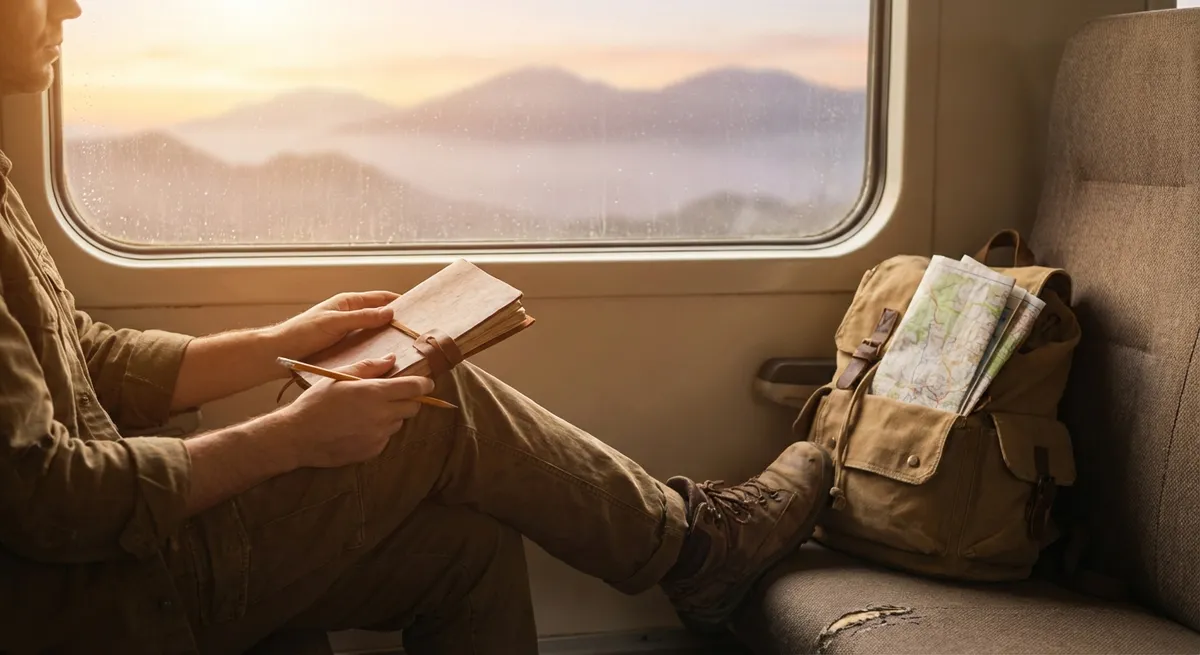
Below are five adventure sparks—each one a different doorway into a wilder, more awake version of you. Pick one, tweak it to your comfort level, and let it pull you forward.
Trade Straight Lines for Wild Paths
Roads get you there. Trails change you on the way.
Stepping onto a wild path—whether it’s a forest trail, a desert ridge, or a coastal cliff walk—forces your senses to switch on. Suddenly you’re scanning the ground for roots, listening for a shift in the wind, smelling pine, ocean salt, or hot dust. Your body becomes your primary vehicle, every step a small commitment to keep going.
You don’t need to start with a weeklong trek. Begin with what your time and fitness allow: a sunrise hike near your city, a half‑day walk in a national park, or a guided day trek if you’re new to backcountry navigation. Check weather forecasts, pack enough water, wear layers, and always let someone know your plan. Use marked trails at first; they’re designed to protect both you and the environment.
The magic of wild paths is cumulative. After a while you’re not just walking—you’re reading the land. You notice how the terrain changes with altitude, how light moves differently through old‑growth trees versus scrubland. You catch yourself thinking, “If I can climb this, what else have I been underestimating?” That’s adventure doing its quiet, powerful work.
Let Water Rewrite Your Fear of Depth
There’s a moment in any water adventure when you feel the tug between control and surrender. It might be the instant a wave lifts your kayak higher than you expect, the first time you trust a life jacket on a fast river, or that breathless pause before tipping backward off a dive boat into clear blue.
Water has a way of reflecting your inner state. Calm lake paddling soothes scattered thoughts. Snorkeling over a reef turns curiosity into a full‑body experience as schools of fish flicker past. White‑water rafting demands presence; there’s no room to worry about emails when you’re reading a rapid’s current.
Start with your comfort zone and expand it gently. If you can’t swim well, consider a flotation‑assisted canyoning tour or a guided raft trip classified for beginners. Wear safety gear that fits properly, listen closely to instructor briefings, and double‑check weather and tide conditions if you’re going out on your own. Even a sunrise paddleboard session on a quiet bay can feel like tapping into another dimension of stillness.
The reward for stepping into the water world? A new relationship with trust—trust in your gear, your guide, your body, and your ability to stay calm when things get choppy.
Chase Heights That Make Your Heart Negotiate
There’s a thin line between fear and awe—the air is thinner up there, and the views are better too.
High places deliver some of the most powerful adventure moments. Maybe it’s standing at the edge of a canyon you’ve only ever seen in photos, leaning back into a climbing harness on a beginner rock wall, or crossing a suspension bridge swaying gently over a lush valley. Your brain screams, “What are we doing?” while your eyes say, “Don’t you dare look away.”
Not every height has to be extreme. You might start with a city rooftop viewpoint, a cable car up a nearby mountain, a ferris wheel over a riverfront, or a via ferrata (a protected climbing route with iron rungs and safety cables). As you gain confidence, you can explore beginner rock climbing with certified guides, tandem paragliding from a coastal cliff, or ziplining through forest canopy.
Prepare by understanding your limits and communicating them. Tell your guide if you’re nervous; good operators are trained to coach you through. Wear proper footing (closed‑toe shoes with grip), follow harness instructions exactly, and never unclip from safety lines unless directed. Deep breathing and focusing on a fixed point in the distance can turn vertigo into a grounded, heightened awareness.
When you finally step back onto solid ground, something subtle has shifted—you’ve negotiated with fear and discovered that courage isn’t the absence of it, but your willingness to move anyway.
Turn a Night Under the Open Sky into Your Reset Button
Adventure hits differently after dark.
The first time you crawl into a tent, hear the zipper close, and realize that between you and the night is just a thin layer of fabric, the world feels larger—and your screen-sized problems feel smaller. Campfires pull people into tight circles. Headlamps make ordinary walks feel like tiny expeditions. The sky, freed from city lights, reveals its quiet riot of stars.
You don’t need to haul gear into a remote wilderness to experience this. Start with a designated campground or a dark‑sky reserve known for stargazing. Many parks offer rental equipment, guided night hikes, or ranger‑led astronomy talks. If you’re new to camping, join friends who already have gear, or go on an organized overnight where equipment and meals are handled.
Pack the basics: a reliable light source, warm layers, extra socks, a simple first‑aid kit, and enough water and snacks. Learn simple campsite etiquette—store food securely, minimize noise late at night, and leave no trace of your stay. As you settle in, notice how your senses retune: the texture of wind in the trees, the range of insect sounds, the temperature shift just before dawn.
That first sip of coffee or tea as the sky lightens and birds restart their daily symphony might be the most potent reset button you’ve ever pressed.
Say Yes to a Skill You Can’t Yet Imagine Yourself Doing
One of the boldest adventures you can take is to become a beginner again, on purpose.
Think of a skill that quietly intimidates you: navigation with a map and compass, scuba fundamentals, basic mountaineering, survival skills, or even backcountry cooking. Instead of bookmarking videos and “someday” guides, sign up for a structured course in a destination that excites you. The place becomes your classroom, and the world becomes more legible with every lesson.
Look for programs run by certified organizations and experienced instructors. Read reviews, verify credentials, and check what gear is supplied vs. what you must bring. Many entry‑level courses assume no prior experience and are designed to keep you within safe boundaries while still giving you a thrill.
The practical payoff is huge. A weekend navigation course might unlock solo day hikes you previously wrote off. A cold‑water orientation could make polar or northern adventures feel possible. Learning to assess avalanche risk or read glacier terrain, under expert supervision, transforms distant landscapes from “off‑limits” to “someday soon.”
Most importantly, you’ll carry home a new inner sentence: “I can learn hard things.” That mindset fuels every adventure that follows.
Conclusion
Adventure isn’t something other people do on carefully curated videos. It’s something you build from one brave decision at a time—choosing the trail over the couch, the river over the routine, the mountaintop view over the usual skyline. You don’t have to cross a continent to feel your life expand; you just have to cross the threshold of your comfort zone, again and again, in ways that feel right for you.
Pick one of these five sparks—wild paths, water, heights, nights outside, or a brand‑new skill—and schedule it, even if it starts as a single afternoon. Let that small leap be the prologue to a longer story. Your next chapter doesn’t need permission.
It just needs you, in motion.
Sources
- U.S. National Park Service – Hiking Basics - Practical guidance on trail safety, planning, and Leave No Trace principles
- American Canoe Association – Paddlesports Safety Resources - Safety tips and educational materials for kayaking, canoeing, and paddleboarding
- UIAA – International Climbing and Mountaineering Federation - Authoritative advice on mountain safety, including altitude, equipment, and risk management
- International Dark-Sky Association - Information on certified dark‑sky parks ideal for stargazing and night‑sky experiences
- PADI – Learn to Dive - Overview of beginner scuba training, certifications, and safety considerations for new divers