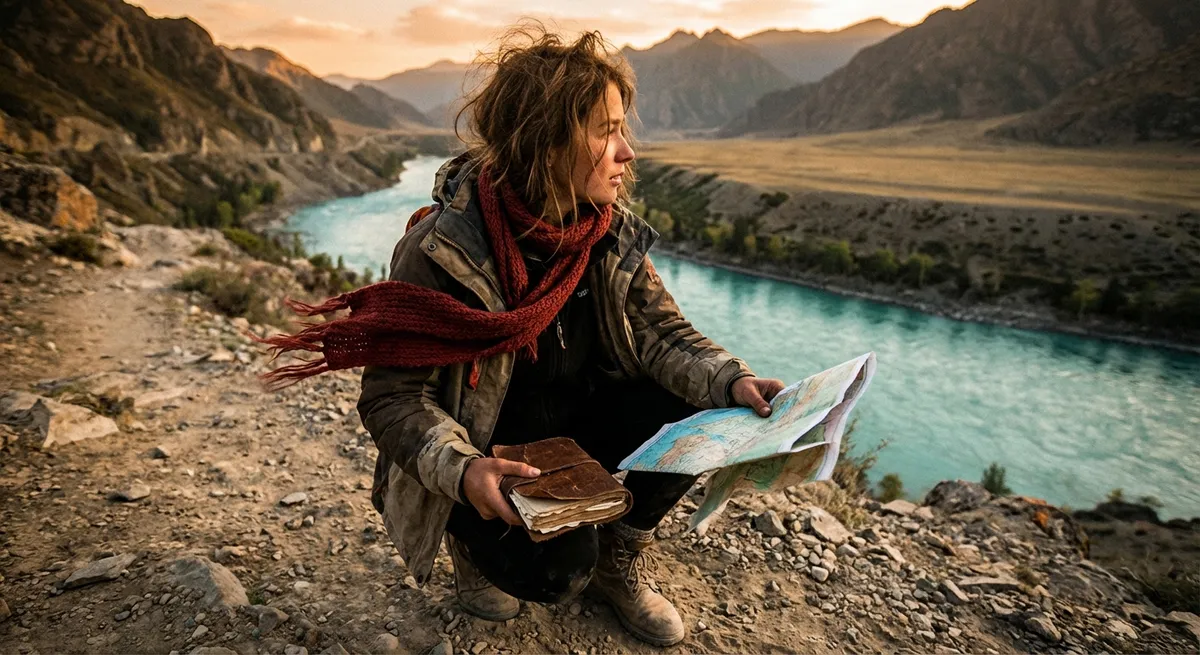
Below are five adventure ideas that don’t just entertain you; they ask something of you. They invite you to return home less on autopilot, more awake.
Follow a Trail Until It Changes the Way You Breathe
There’s a specific moment on a trail—when the noise in your head finally gives up. Your breath syncs with your steps, the air tastes different, and you realize you’ve been moving through life too fast, too distracted. Long-distance or multi-day hikes are like a moving meditation, and you don’t need to be an elite athlete to feel their magic.
Choose a route that matches your current fitness and your desired challenge. Classic treks like Spain’s Camino de Santiago, the Tour du Mont Blanc in the Alps, or the Laugavegur Trail in Iceland offer marked paths, basic infrastructure, and a built-in community of fellow walkers. Closer to home, national parks and regional trails can give you the same sense of unfolding discovery without a long flight.
Pack lighter than you think you need; every extra kilogram becomes a decision on your shoulders. Invest in good footwear, learn basic blister care, and test your gear on shorter day hikes before committing to a multi-day journey. Train by walking with a weighted backpack a few times per week, gradually increasing distance and elevation.
The reward is profound: sunrises that feel like private performances, shared jokes with strangers at mountain huts, and the quiet satisfaction of watching a line on a map become a lived memory. A trail doesn’t just take you somewhere new—it slowly rewires what you believe you’re capable of.
Let Water Rewrite Your Sense of Scale
Water has a way of shrinking your ego and amplifying your senses. Whether you’re gliding across glassy lakes at dawn, drifting down a remote river, or diving through the blue silence of the ocean, aquatic adventures shift your perspective—literally and figuratively.
Kayaking and canoeing offer approachable ways to explore coastlines, fjords, and hidden inlets. You see landscapes from an entirely different angle, moving at a human pace instead of a highway blur. For something more immersive, try a guided multi-day paddling trip: think camping on riverbanks under sky-thick stars or waking up to mist rolling off the water.
If the underwater world calls to you, consider getting a scuba certification (Open Water Diver) or starting with snorkeling in clear, shallow waters. Coral reefs, kelp forests, and even modest shipwrecks host ecosystems that feel almost alien. Respect marine life: keep your distance, avoid touching corals, and follow responsible operator guidelines to minimize your impact.
Safety is your anchor on any water-based adventure. Learn basic self-rescue skills for paddling, always wear a life jacket, and check weather and tide forecasts. For diving, choose reputable schools or guides, stick to your training limits, and never skip safety checks.
In water, time stretches. The rhythm of paddles dipping, the hush of bubbles rising, the surge of a wave lifting you—this is the kind of presence that’s hard to find on land. You come back lighter, calmer, and a little more in awe of the planet’s blue heart.
Chase Darkness to Find the Brightest Skies
While cities chase light, adventure seekers can chase the dark. Far from neon signs and traffic glare, the night sky returns to its original brilliance: star fields so dense they look like brushed silver, constellations you’ve only seen in textbooks, and if you’re lucky, the flicker and dance of the aurora.
Dark-sky adventures begin with choosing the right place and time. Certified Dark Sky Parks and Reserves around the world protect night environments, offering exceptional stargazing conditions. Desert regions, high-altitude plateaus, and sparsely populated islands are often ideal. For aurora hunters, destinations near the polar circles—like northern Norway, Iceland, or parts of Canada and Alaska—maximize your chances during peak season.
Equip yourself with simple tools: a red-light headlamp (to preserve night vision), warm layers, a thermos, and a basic stargazing app that helps you identify planets and constellations. If astrophotography intrigues you, a tripod and manual camera settings can turn the sky into your canvas.
For a deeper experience, join a guided night hike or astronomy tour. Rangers, local experts, or astronomers can decode what you’re seeing: satellite trails, the band of the Milky Way, meteor showers, and seasonal constellations. The science doesn’t dilute the magic—it deepens it.
Standing under a sky that humbles you is its own kind of adventure. The to-do lists, deadlines, and digital noise shrink to their real size. You realize you’re part of something enormous, ancient, and dazzlingly beautiful—and that realization follows you long after the sun comes back.
Use Cities as Your Adventure Playground, Not Just a Checklist
Adventure isn’t limited to mountains and remote islands. Cities can be just as wild if you treat them as living, layered stories instead of collections of “top 10” attractions. Think of each neighborhood as a different chapter, each local encounter as a clue that leads you deeper into the plot.
Start by loosening your grip on rigid itineraries. Pick a focal point—a bakery recommended by a local, a riverside promenade, a street art alley—and walk outward from there with your senses fully on. Notice smells from side-street kitchens, overhear fragments of conversation, follow the sound of live music or laughter from a courtyard you’d normally pass by.
Use public transit like a local, not a tourist: take the tram at rush hour, hop off at unplanned stops, and wander. Visit markets at opening time, when traders are chatting, arranging goods, and sharing coffee. Neighborhood cafes often reveal the true pace of a place: watch who walks in, how long they stay, what they order.
Layer your experience with context. Before you go, read a novel or memoir set in the city, or listen to local podcasts. Once there, mix “big” sights with intimate ones: a small community-run gallery, a public park where families gather, a late-night food stall. Say yes to local recommendations, but remain aware of your surroundings and trust your instincts.
Urban adventures remind you that exploration doesn’t always demand epic distances. Sometimes the boldest move is to step into a familiar type of place—a city—and refuse to see it in a familiar way.
Volunteer Your Skills Somewhere That Needs Them
Some adventures leave you with more than memories; they give you a different relationship to the world. Traveling to volunteer or contribute your skills can be powerful when done thoughtfully, in partnership with communities rather than as a feel-good photo opportunity.
Start with self-inventory: what are you genuinely good at, and what can you realistically offer without causing harm or dependency? Teaching languages, sharing tech skills, helping with conservation projects, supporting research as a citizen scientist—these can have real value when aligned with verified local needs.
Research organizations carefully. Look for transparency about where funds go, measurable outcomes, and clear collaboration with local leadership. Avoid short-term roles that replace local jobs or put untrained volunteers in sensitive positions (like medical care or orphanage settings). Sometimes the most responsible way to support a place is through longer-term programs or remote contributions that continue after you leave.
Prepare culturally and mentally: learn basic phrases in the local language, read up on history and customs, and arrive ready to listen more than you speak. Respect schedules, dress norms, and local decision-making processes. You’re not there to “save” anyone; you’re there to be useful and to learn.
When you share this type of adventure on social media, center the work and the community, not just yourself. Highlight local initiatives, credit local leaders, and consider how your images and captions portray people’s dignity.
A service-oriented journey can be one of the most transformative adventures of your life. It asks you to trade the spotlight for a supporting role—and often, that’s where the deepest growth happens.
Conclusion
Adventure doesn’t always roar. Sometimes it whispers: a trailhead at dawn, the first dip of your paddle, the hush of a star-thick sky, the side street you almost didn’t turn down, the project you almost felt too small to join. Saying yes to these invitations is how you widen the map of your life.
You don’t have to wait for a perfect moment, a giant budget, or total freedom from responsibilities. Start where you are, with what you have. Choose one adventure that excites you and scares you a little, and take the first concrete step today—book the train, reserve the campsite, sign up for the course, send the email.
The next chapter of your story isn’t somewhere “out there.” It’s waiting for you the moment you decide to move toward it.
Sources
- National Park Service – Hiking Basics – Practical guidance on preparing for and staying safe during hikes and backcountry trips
- PADI – Learn to Dive – Overview of scuba certification, training standards, and what to expect underwater
- International Dark-Sky Association – Information on Dark Sky Places and light pollution, plus locations for world-class stargazing
- Camino de Santiago – Official Website – Details on routes, planning, and infrastructure for one of the world’s most famous long-distance walks
- Peace Corps – Volunteer Safety and Best Practices – Insight into responsible volunteering, risk management, and working respectfully with local communities