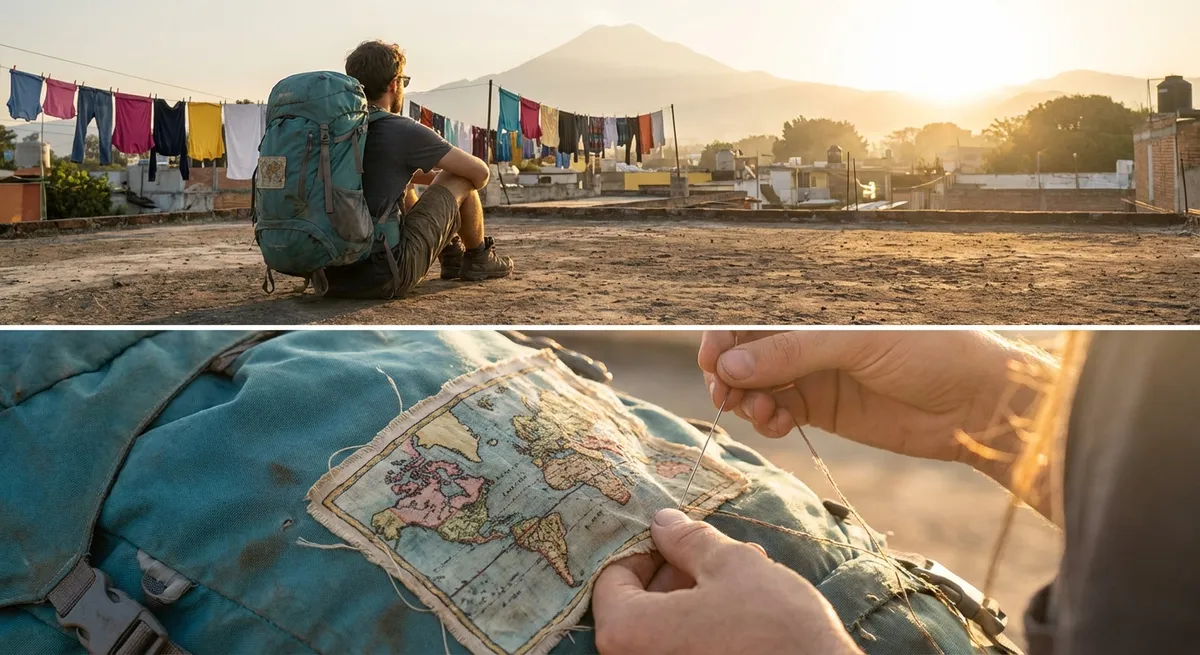
Below are five bold, budget-friendly ways to travel that don’t water down the experience—they sharpen it.
1. Swap the Skyline: Sleep Where Locals Live, Not Where Tourists Pose
Luxury hotels give you clean lines and lobby music; budget stays give you stories.
Hostels, guesthouses, homestays, and short-term rentals in local neighborhoods drop your nightly cost and pull you straight into the heartbeat of a place. You might share a kitchen with a chef-in-training in Lisbon, swap recipes with a family in Mexico City, or sip rooftop tea with students in Hanoi.
Look for accommodations near public transit, markets, and parks instead of tourist boulevards. Not only are prices lower, but your days begin where real life happens: morning vendors setting up stalls, kids racing to school, the smell of fresh bread drifting out of corner bakeries. Prioritize places with kitchens and communal spaces; every shared meal or balcony conversation is a chance to collect local tips that never appear in guidebooks—free viewpoints, hidden street-food gems, quiet neighborhoods perfect for wandering.
You’re not just saving money. You’re trading glossy distance for vivid proximity.
2. Turn Getting There into the Adventure (Slow Travel, Fast Memories)
The most memorable trips rarely involve rushing through airports; they’re stitched together by long train rides, overnight buses, and ferries cutting across open water.
Slow travel—choosing ground or sea over constant flights—often costs less and gives you something far more valuable: a sense of scale. Watching landscapes shift from mountain to plain, city to coast, you start to feel how a country fits together. An overnight train in Eastern Europe might double as your hotel, saving you a night’s stay while giving you a sunrise over rolling fields straight out of a painting.
Pick routes where the journey is the main act: coastal rail lines, river ferries, or scenic bus corridors locals use daily. BYO comforts—snacks, a scarf as a blanket, an offline playlist or podcast—and treat the ride like a moving retreat. Instead of losing time in travel, you reclaim it: reading, journaling, planning the next stop with a paper map spread across your lap.
When you remember the trip years from now, it might be that dusky train window, not the crowded tourist landmark, that hits you hardest.
3. Eat Where the City Breathes, Not Where It Poses
Budget travel doesn’t mean surviving on instant noodles. It means finding the food locals would still eat if no tourist ever showed up.
Skip the polished “must-try” restaurants at primetime and chase the clatter of plates and tiny plastic stools: lunchtime worker cafés, market stalls, late-night food trucks. Explore supermarkets and neighborhood markets—you’ll see what locals actually buy, and you can build entire meals from fresh fruit, bread, cheese, street snacks, and a little curiosity.
To stretch your budget without losing flavor:
- Make lunch your biggest meal; set menus and daily specials are often cheaper midday.
- Ask one magic question: “Where do you eat on your break?” and follow that lead.
- Embrace street food in places with busy turnover and visible cooking; it’s often fresher and cheaper than sit-down options.
- Cook at “home” a few nights using local ingredients; it turns dinner into a cultural experiment and saves serious cash.
Your taste buds don’t care about white tablecloths. They care about spice, crunch, smoke, and stories woven into every bite.
4. Hunt Experiences, Not Souvenirs
On a tight budget, you learn the secret that changes everything: the best things to collect are skills, not stuff.
Instead of buying trinkets, hunt for low-cost or free experiences that give you a new way to move through the world. Take a pay-what-you-want walking tour to decode a city’s history, then wander back to the places that grabbed you. Join community events: public dance nights, outdoor movie screenings, local festivals, free museum days. Many cities offer museum discounts on specific evenings or have entire collections that are permanently free—you just have to check.
Say yes to experiences that challenge you:
- A sunrise hike with a local guide instead of a pricey packaged excursion.
- A cheap group class—cooking, dance, pottery, language—held in a community center instead of a studio built for tourists.
- Volunteering for a day at a beach clean-up, food bank, or local project; it costs little and roots you deeply to the place.
When you look back, it won’t be the souvenir magnet that stays with you. It’ll be the memory of nailing your first salsa step, or the quiet pride of planting trees on foreign soil.
5. Design Days Around Wonder, Not Your Wallet
A tight budget doesn’t shrink your adventure; it sharpens your focus.
Start each day with one core intention that thrills you: “Find the highest free viewpoint,” “Traverse the city only by tram,” or “Talk to three strangers and ask what they love most about this place.” Build your budget around that purpose, not the other way around. You’ll be surprised how many unforgettable moments cost nothing more than a bus fare, a packed sandwich, and a willingness to follow your curiosity.
Use simple tools to stay fluid and fearless:
- Offline maps for wandering with confidence, even without data.
- Public transit apps or printed maps to turn you into a city-surfing expert.
- A clear daily budget in your mind—enough for food, transport, and one small splurge—so you can say “yes” decisively when the right moment arrives.
Budget travel works best when you treat constraints as creative prompts. With every choice—hostel over hotel, train over plane, street food over sit-down meal—you’re not just saving money. You’re voting for a version of yourself that’s resourceful, brave, and completely alive to the world.
Conclusion
The world doesn’t open only for those with platinum cards and bottomless wallets. It opens for those willing to trade comfort for connection, speed for depth, and certainty for the wild, electric unknown.
When you choose budget travel, you’re not choosing “less.” You’re choosing closer: to the streets, to the people, to the soul of each place. You’re proving to yourself that adventure isn’t something you buy; it’s something you build, decision by decision, with whatever you have in your pocket right now.
Pack light, dream big, and let your next trip be the moment you realize: you were always rich in the one currency that matters most—courage.
Sources
- U.S. Department of State – Traveler’s Checklist - Official guidance on documents, safety, and preparation for international trips
- UNWTO – International Tourism Highlights - Data and trends on global tourism, including insights into travel behavior and spending
- Hostelling International - Practical tips on staying in hostels, meeting other travelers, and saving money on accommodation
- Rick Steves – Budget Travel Tips - Veteran traveler advice on stretching your budget in Europe without sacrificing experiences
- Smithsonian Magazine – The History of Street Food - Context on street food culture worldwide and why it’s central to understanding local life