This is your invitation to move from “I wish” to “I’m going.” Let’s turn lean wallets into rich experiences with five powerful, thrilling shifts that open up the world without emptying your account.
1. Follow the Cheap Flight, Not the Fixed Plan
Instead of choosing a destination first and then suffering through brutal flight prices, flip the script: let the deals decide where you go.
Picture this: you open a flight search with “Everywhere” as the destination and “Cheapest month” as your time frame. A $60 hop to a neighboring country appears. A $35 train to a city you’ve never considered. Suddenly you’re not just planning a trip—you’re chasing opportunity in real time.
The magic here is flexibility. If your dates, airports, or even your final stop are a little fluid, you unlock the wild underbelly of budget travel: error fares, offbeat hubs, and routes that are cheaper because they’re not the obvious choice. You might land in a secondary airport two hours away from your dream city, but that extra bus ride? It turns into a bonus mini-road trip—more landscapes, more food stops, more stories.
Practical moves:
- Use “everywhere” or “anywhere” searches on flight tools.
- Be open to midweek departures and returns.
- Consider flying into one city and out of another if it cuts costs.
- Watch shoulder seasons (right before and after peak) for the best value-to-crowd ratio.
When you let price shape the map, you stop waiting for “the perfect destination” and start discovering the ones that surprise you.
2. Trade Hotels for Stays That Plug You into Local Life
The place you sleep can be more than a room; it can be a portal into the culture you came to experience.
Hostels aren’t just for backpacking twenty-somethings anymore—many now offer private rooms, coworking spaces, and community dinners. Guesthouses and homestays bring you straight into family kitchens, courtyard conversations, and shared breakfasts where you learn about local life in ways guidebooks never touch.
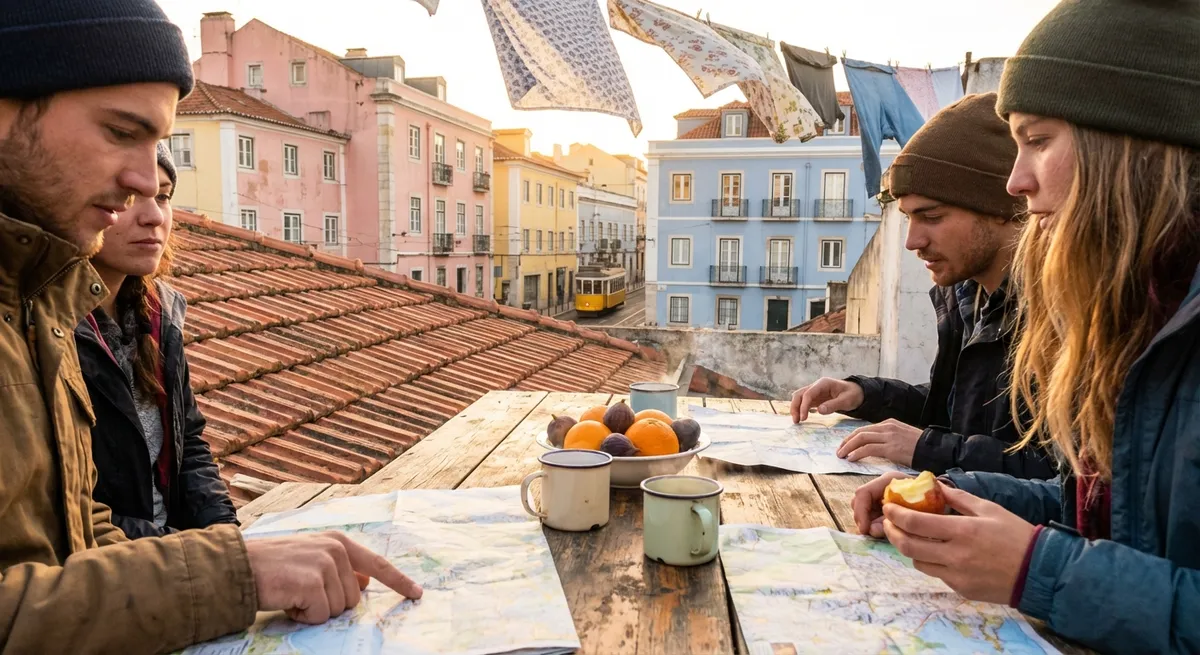
Imagine sipping tea in a rooftop guesthouse while your host circles landmarks on a paper map, telling you where locals actually eat. Or joining a hostel-organized street food walk that costs less than a fancy coffee but ends with new friends from three different continents.
Practical moves:
- Filter for highly rated budget stays with lots of reviews and recent photos.
- Look for words like “communal kitchen,” “free walking tour,” or “family-run.”
- Consider work exchanges or volunteering programs that offer accommodation in return for a few hours of help each day.
- Choose neighborhoods slightly outside the “tourist core” for better prices and more authentic daily life.
Your lodging doesn’t have to be a silent, sealed-off box. On a budget, it can become your doorway into conversations, secret spots, and unexpected invitations.
3. Eat Like You Live There, Not Like You’re Passing Through
Your taste buds don’t care how fancy the restaurant is—they care about flavor, freshness, and story.
One of the biggest money leaks in travel is eating every meal at sit-down restaurants geared toward tourists. Meanwhile, some of the best food in the world sizzles on sidewalks, steams in market stalls, and simmers in family-run hole-in-the-walls with plastic chairs and handwritten menus.
Picture a night market where lanterns glow, grills smoke, and lines coil around the busiest stalls. You follow the crowd, order whatever they’re having, and sit shoulder-to-shoulder with strangers. The meal costs less than your usual takeout, but the flavors are bold, the atmosphere electric, and your memories priceless.
Practical moves:
- Eat your biggest meal midday when many places offer cheaper lunch specials.
- Seek out markets, food courts, and street food zones with high turnover and lots of locals.
- Stay somewhere with a kitchen so you can cook simple meals using local ingredients.
- Ask your host, barista, or taxi driver: “If your best friend visited, where would you send them to eat for cheap but amazing food?”
When you stop chasing “must-try” tourist restaurants and start chasing local flavors, your budget drops while your culinary adventure skyrockets.
4. Turn Transit into the Heart of the Adventure
Instead of thinking of transportation as the boring part between “real” experiences, make it part of the story.
A $3 city bus can double as an urban sightseeing tour. A slow train through the countryside becomes your front-row seat to daily life—clothes flapping on balcony lines, farmers in the fields, children racing their bikes along the tracks. Overnight buses or sleeper trains can replace a night in a hotel, turning necessary movement into both a bed and a memory.
You might not remember the inside of an airport gate, but you’ll remember the open train windows, the roadside fruit vendors at rest stops, the group of strangers who end up sharing snacks and offline playlists on a 12-hour ride.
Practical moves:
- Compare the combined cost of a flight + hotel vs. a sleeper bus/train that covers both.
- Use public transit passes in cities instead of taxis—they’re often unlimited for a day or week.
- Walk or rent a bike whenever it’s safe and practical; you’ll see more and spend less.
- Download offline maps and transit apps so you always know which bus or metro to jump on.
Your journey from A to B doesn’t have to be something you endure. On a budget, it can become where your favorite moments happen.
5. Collect Skills and Stories Instead of Souvenirs
Here’s where budget travel quietly becomes life rewiring.
When money is tighter, you start choosing experiences that give back more than they cost. That might be a free walking tour that unlocks a city’s secret history, a low-cost local cooking class that teaches you a dish you’ll make for years, or a sunrise hike that costs nothing but effort and a wake-up alarm.
Instead of filling your backpack with bulky souvenirs, you fill your life with skills: learning key phrases in another language, mastering a regional dish, navigating foreign transit systems with growing confidence. Each skill reduces your need to spend on “fixes” (like expensive tours or private transfers) next time you travel.
Practical moves:
- Search for free or donation-based city tours and cultural events.
- Prioritize low-cost, high-impact experiences like hikes, museums with discounted days, and community workshops.
- Keep a simple travel journal or photo note app to capture stories, not just scenes.
- Learn basic local phrases—greetings, “thank you,” and “how much?” open doors and smiles.
Over time, you realize your greatest souvenirs aren’t objects at all—they’re courage, curiosity, and the knowledge that you can find your way anywhere.
Conclusion
Budget travel isn’t about squeezing joy out of the journey—it’s about squeezing more life into every dollar, every mile, every moment. When you follow the cheap flight instead of the rigid plan, sleep in places that pulse with local energy, eat where the city actually eats, turn transit into theater, and trade trinkets for skills and stories, the world stops being “too expensive” and starts feeling astonishingly reachable.
You don’t need a perfect time, perfect income, or perfect plan. You need a willingness to be flexible, humble, and wildly curious.
The next adventure doesn’t have to be big, but it does have to begin. Open the map, flip on the “everywhere” setting, and see where the smart, scrappy path takes you next.
Sources
- U.S. Department of State – Travel Advisory & Safety Information - Essential safety, visa, and entry information to check before booking budget trips abroad
- European Commission – Rail Passenger Rights - Helpful overview of protections and tips for travelers using budget-friendly trains in Europe
- Hostelling International - Global network of hostels highlighting affordable, social accommodation options around the world
- Lonely Planet – Budget Travel Tips - Practical strategies and real-world examples for cutting costs while maximizing experiences
- World Food Programme – Food Safety Tips for Travelers - Guidance from health authorities on staying safe while enjoying street food and local cuisine