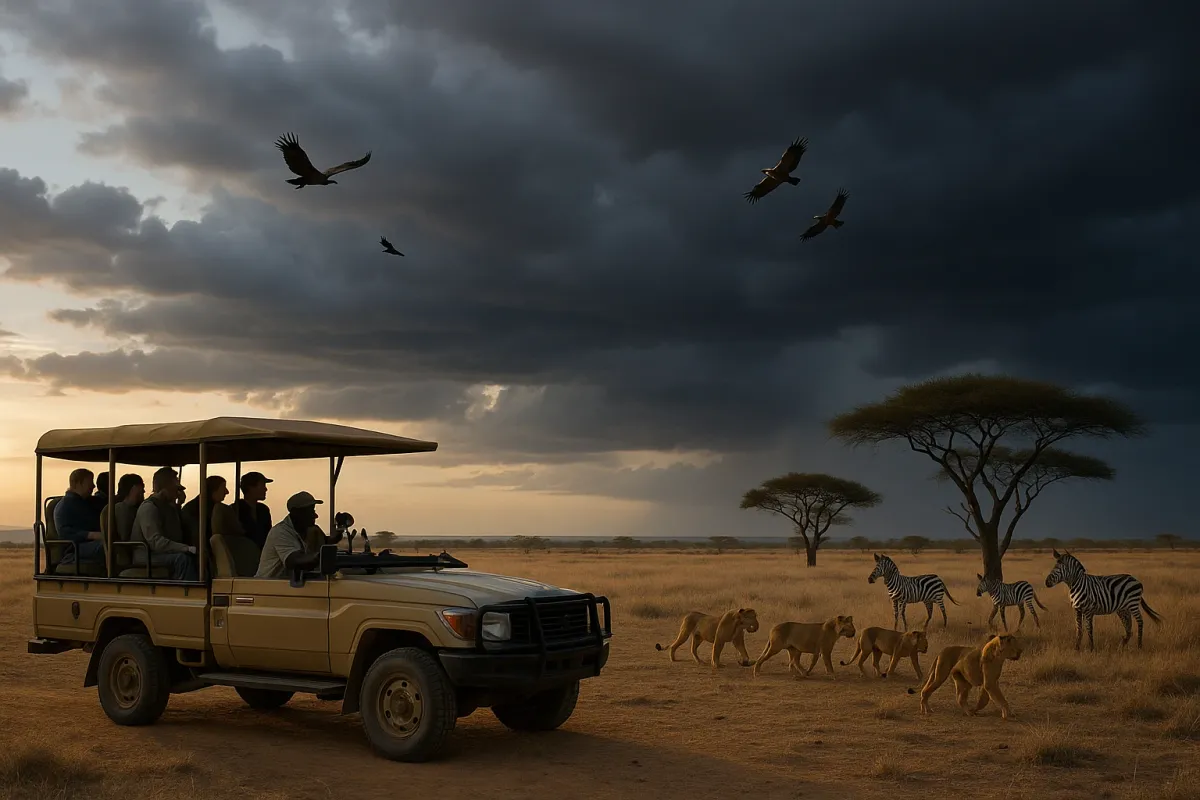
If that headline lit a spark in you—if part of you wants to stand on the edge of the wild and feel very, very small—this is your invitation. Here are five destinations where the world’s most formidable predators still rule, and where you can witness them in their element without becoming part of the food chain (or the problem).
Patagonia’s Pumas: Tracking Ghost Cats At The End Of The World
In the viral predator lists, big cats always dominate the spotlight—and the puma, or mountain lion, is finally getting its share of attention. To feel its presence, head to Patagonia’s Torres del Paine National Park in Chile, where pumas silently patrol below jagged granite towers and wind‑scarred steppe. Over the past decade, a conservation shift—less hunting, more protection—has made this one of the world’s premier places to actually see these elusive predators in the wild.
Travelers base themselves in eco‑lodges or simple estancias and head out at dawn with local trackers, scanning slopes for that telltale tawny silhouette. You’re not chasing a sighting; you’re learning to read a landscape ruled by an invisible cat: fresh prints in the dust, guanaco herds suddenly tense, a flick of a tail on a distant ridge. The wind howls, clouds race, and you realize that here, humans are the guests. Practical tip: Visit from May to September (Patagonian winter) for peak puma sightings—pack layers, a long lens, and book only with operators who follow strict “no baiting, no crowding” ethics.
South Africa’s Wild Coast: When Sharks and Sardines Rewrite the Map
The headline about “most dangerous predators” almost always features sharks, but few people realize you can witness one of the ocean’s most explosive feeding events off South Africa’s Wild Coast: the Sardine Run. Between June and July (timing shifts slightly each year), billions of sardines migrate north, shadowed by sharks, dolphins, whales, and Cape gannets in a swirling, living storm of silver.
Base yourself in coastal towns like Port St. Johns or Coffee Bay, where dive operators and boat crews track bait balls from the air and sea. Even if you never enter the water, racing across heaving swells while gannets torpedo‑dive beside you and common dolphins slice through waves is a full‑tilt adventure. For advanced divers and strong swimmers with reputable guides, snorkeling on the edge of a bait ball—carefully, respectfully—is like dropping into a live nature documentary. Practical tip: This is conditions‑dependent and highly unpredictable. Treat it as an expedition, not a guaranteed show, and prioritize operators who emphasize safety briefings, small groups, and strict no‑touch, no‑chase policies with wildlife.
Arctic Svalbard: On Polar Bear Patrol at the Edge of the Ice
Lists of lethal predators almost always include the polar bear, and for good reason: in the Arctic, you are the vulnerable species. In Svalbard, a Norwegian archipelago between mainland Europe and the North Pole, these apex predators roam sea ice and tundra, hunting seals and navigating a world rapidly reshaped by climate change. It’s both one of the most sobering and soul‑stirring journeys you can make today.
Travelers typically explore Svalbard via small expedition ships out of Longyearbyen, combining land hikes with Zodiac cruises along calving glaciers. Every excursion is led by guides armed not to conquer the Arctic, but to keep humans and bears a respectful distance apart. Seeing a polar bear calmly traverse an ice floe from your ship’s deck is a quiet, life‑altering moment: powerful, solitary, and overshadowed by the knowledge that shrinking sea ice is rewriting its future. Practical tip: Aim for May–August; choose operators that publish transparent climate and wildlife impact policies, and pack as if you’re visiting another planet—thermal layers, windproof gear, and a deep respect for the fact that you are not in charge here.
India’s Wild Triad: Tigers, Dhole, and Leopards in the Sal Forests
The tiger might be the poster child of predator rankings, but some of the most thrilling encounters in Central India’s reserves happen when you see the entire predator cast at work. In parks like Kanha, Bandhavgarh, and Tadoba, sal forests and meadows host not only tigers, but Indian wild dogs (dhole) and leopards—each hunting with a different strategy, each shaping the behavior of everything around them.
Your day starts before sunrise, bouncing through the park gate in an open Gypsy jeep, mist hanging low over the grasslands and langur alarm calls ringing through the trees. A distant roar might lead you to a tiger padding silently down a forest track, while later that same morning, you could watch a coordinated dhole pack fan out through tall grass, their high‑pitched whistles echoing. The thrill isn’t just in a single big sighting; it’s in understanding that you’re moving through overlapping territories, where prey are constantly calculating risk and predators are constantly rewriting the rules. Practical tip: Visit between February and April for clear, dry conditions and better visibility. Insist on guides who follow the park’s speed, noise, and distance regulations—ethical tourism here directly supports India’s hard‑won tiger conservation successes.
Alaska’s Katmai: Front‑Row Seat to the Brown Bear Salmon Show
Grizzly‑type bears regularly headline “most dangerous predator” lists, but in Alaska’s Katmai National Park, they’re also the stars of one of the most joyful wildlife spectacles on the planet: the summer salmon run. You’ve probably seen the viral photos: brown bears standing like sentries atop Brooks Falls, snatching leaping salmon mid‑air. Those images come from a real place you can actually visit—with preparation, patience, and humility.
After flying in via floatplane, you’ll take raised boardwalks to viewing platforms where rangers enforce strict bear‑safety protocols. The result is a rare kind of coexistence: bears focused entirely on the river’s feast while small knots of humans watch, hushed, behind rails. You’ll see different fishing “styles”—dominant boars claiming prime spots, subadult bears practicing clumsy dives, mothers teaching cubs the art of the catch. The air smells of wet fur, river, and spruce; the soundtrack is roaring water and the splash of a thousand silvery bodies fighting upstream. Practical tip: Peak bear activity at Brooks usually runs late June through July. Campsites and lodge spots book out months—sometimes a year—in advance. Pack rain gear, insect repellent, and an attitude that remembers: here, you yield every time.
Conclusion
That trending article about the “most dangerous predators in nature” is a reminder of something too easy to forget in an air‑conditioned, algorithm‑sorted life: vast parts of this planet are still wild enough that humans are not at the top of the food chain. Visiting these predator‑ruled destinations—Patagonia’s puma country, South Africa’s swirling shark seas, Svalbard’s ice realm, India’s tiger forests, Alaska’s bear rivers—doesn’t have to be about adrenaline or fear. It can be about perspective, humility, and standing in front of something bigger than your to‑do list.
If those headlines stirred your curiosity, let them be the spark, not the whole story. The real adventure begins when you swap scrolling for planning: choosing ethical operators, respecting local rules, and traveling with the mindset that your presence should protect what you came to see. Out there, far from the comment sections, you’ll discover the wild truth every apex predator already knows: the world is still astonishing—and you are lucky just to walk through it.