Trading Roofs for Skies: Sleeping Under the Open World
There’s a specific kind of quiet you only hear when you sleep outside: the shuffle of wind in the grass, the distant rush of water, a sky so loud with stars it almost feels like daylight in reverse. Swapping walls for wilderness turns a trip into an experience you feel in your bones.
Pitching a tent by a mountain lake or stringing a hammock between pines isn’t just about aesthetics; it rewires your sense of comfort. You start to realize how little you actually need—shelter, warmth, food, and a view that makes waking up feel like an event, not an alarm.
Go for places where the night sky still belongs to the universe, not the city: dark-sky parks, quiet beaches, high-altitude plateaus. Bring layers, a headlamp, and a healthy respect for local wildlife and weather forecasts. Check park regulations, fire rules, and leave-no-trace guidelines before you go.
The magic isn’t only in the sunrise over your campsite—it’s in every small challenge between you and that view: figuring out your stove, tying a better knot, finding your way by starlight and map instead of notifications and maps apps. Each solved problem becomes a new kind of confidence that doesn’t disappear when you go back home.
Following the Water: Rivers, Coasts, and the Pull of the Unknown
Water has a way of turning any map into a storyline. Follow a river long enough and you move through different climates, cultures, and terrains. Walk a coastline and your world compresses to the rhythm of your steps and the crash of waves, horizon always just out of reach. Adventures near water feel both wild and ancient—people have been following rivers and shores for as long as we’ve walked the earth.
Think multi-day kayak routes, hut-to-hut coastal treks, or simple day hikes that trace a river from a roaring waterfall down to a quiet valley. Start with your comfort level: calm lakes and protected bays if you’re new to paddling, well-marked coastal trails if you’re still building your stamina. Life jackets, tide charts, and local guidance aren’t optional extras—they’re part of the adventure’s backbone.
The reward is the kind of immersion you can’t get from a viewpoint. You’ll feel the water temperature shift, smell the change in the wind, and see how life organizes itself around this moving, living highway. One bend reveals a hidden cove; another, a small village where every story starts with the sea.
Follow the water and you’ll notice something else: it slows you down. You begin to measure the day in currents and sunsets instead of minutes and posts, and that shift might be the most radical part of your journey.
High Trails, Quiet Peaks: Chasing Altitude, Finding Perspective
Mountains have a way of shrinking problems and magnifying possibilities. From the first switchback to the final ridge, they invite you to test your limits without asking for perfection. The trail doesn’t care how many steps you track or photos you share; it just asks a simple question: will you keep going?
High-altitude adventures don’t have to mean summit flags and ice axes. They can be sunrise scrambles up local hills, ridge walks above tree line, or multi-day treks that thread through glaciers, villages, and valleys. Research elevation gain, trail conditions, and seasonal weather before you commit; fatigue and altitude are real, and respecting them keeps the experience exhilarating instead of risky.
Start early, carry more water than you think you need, and layer up—mountain weather has its own clock. Trekking poles can save your knees on the descent, and a simple first-aid kit plus a printed map (yes, paper) can turn an “uh-oh” moment into a story instead of a call for rescue.
What makes high trails unforgettable isn’t just the view from the top—it’s the shift inside you when you realize what your body and mind can handle. Standing above a valley you climbed out of, watching clouds move beneath you, you feel something rare in modern life: the clean, quiet satisfaction of having earned where you’re standing.
Purpose-Fueled Journeys: Adventures That Give Back
Some of the most powerful adventures don’t just change the traveler—they leave a positive mark on the places you pass through. Purpose-fueled travel weaves contribution into the heart of your journey, whether you’re helping maintain a remote trail, supporting local conservation, or learning from communities who’ve lived sustainably for generations.
Imagine spending part of your trip assisting in sea turtle monitoring on a protected beach, joining a reforestation effort in a mountain region, or participating in citizen science projects that track wildlife or water quality. These experiences plug you directly into the living, breathing systems of the places you visit, turning you from a passerby into a participant.
Do your homework: seek organizations with transparent goals, local partnerships, and ethical standards. Avoid “voluntourism” that prioritizes tourist experience over community needs. Look for projects that were created by, or in deep collaboration with, local people, and where your presence fills a real, stated gap instead of a manufactured one.
The adventure here isn’t just physical; it’s emotional. You may leave with calloused hands and tired legs, but also with a sharpened sense of responsibility and gratitude. The landscapes you traverse stop being scenic backdrops and become ecosystems and homes you now feel accountable to.
Micro-Adventures, Big Impact: Turning Ordinary Days into Story Days
Not every adventure demands a flight or a long border crossing. Some of the most memorable journeys are the ones you take between your front door and sunrise. Micro-adventures—compact, close-to-home escapes—turn regular days into story days without needing a sabbatical or a fortune.
Think of catching the last bus to the edge of town, hiking to a nearby hill, and sleeping under the stars just for one night. Cycle a loop you’ve only ever driven. Take a nocturnal urban walk, following rivers and greenways you usually ignore. Jump into a cold lake at dawn and then bike back home before work.
These shorter escapades train your “adventure muscles”: packing light, reading weather, navigating without relying entirely on tech, and embracing uncertainty in controlled, manageable doses. They also reveal a secret—your surroundings might be more magical than you’ve given them credit for.
The more you practice finding wonder in small radiuses, the more prepared you’ll be when a bigger window opens for longer journeys. Adventure becomes less about distance and more about mindset—a habit of asking, “What if I push just a little further than yesterday?”
Conclusion
Adventures don’t wait for you to be ready, rich, or fearless. They wait for one simple decision: to step beyond the known edge of your life, even by a few meters or a few minutes. Whether you’re tracing a river to its delta, sleeping where stars outnumber streetlights, or turning a Tuesday into a mini-expedition, each choice carves a new path through your own limits.
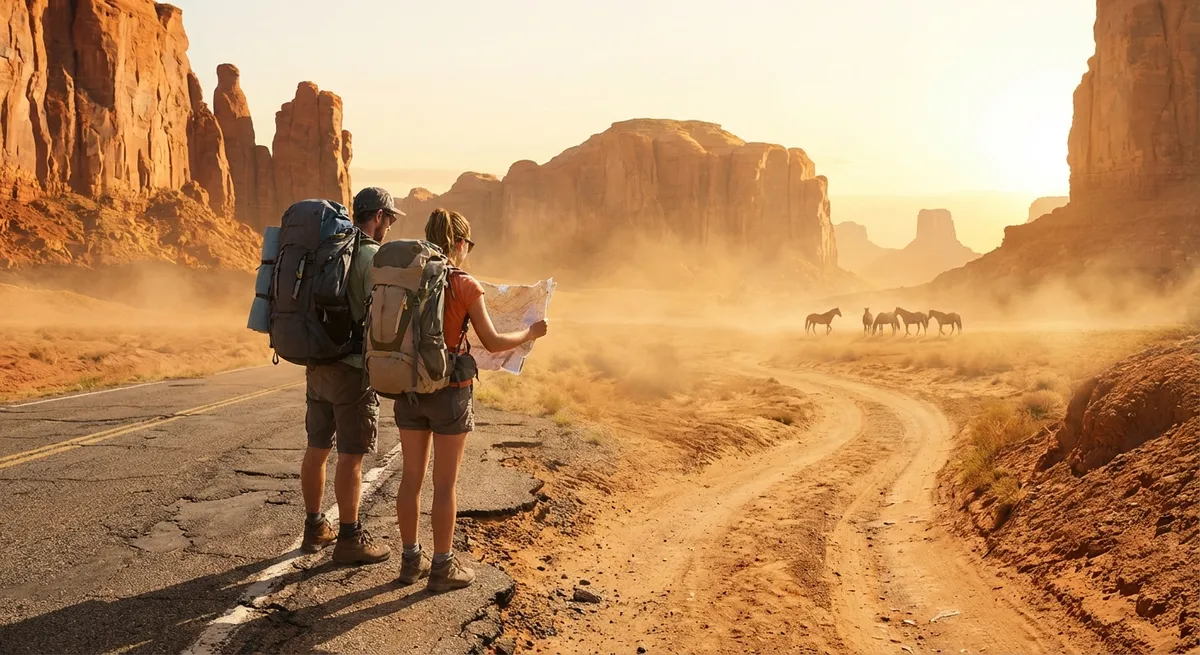
Follow the unpaved lines—up ridges, along coasts, into purpose-driven projects and one-night escapes. Out there, where the concrete ends and the wild begins, you’ll find not just new places but new versions of yourself, quietly waiting to be discovered.
Sources
- National Park Service – Plan Your Visit - Practical guidance on camping, safety, and regulations in U.S. national parks
- Leave No Trace Center for Outdoor Ethics - Core principles for minimizing impact while camping, hiking, and exploring outdoors
- International Dark-Sky Association - Information and locations of certified Dark Sky Places for stargazing and night camping
- Centers for Disease Control and Prevention – Traveling and Outdoor Activities - Health and safety advice for outdoor adventures and active travel
- United Nations World Tourism Organization – Tourism and Sustainable Development - Overview of responsible, community-conscious travel and its global impact