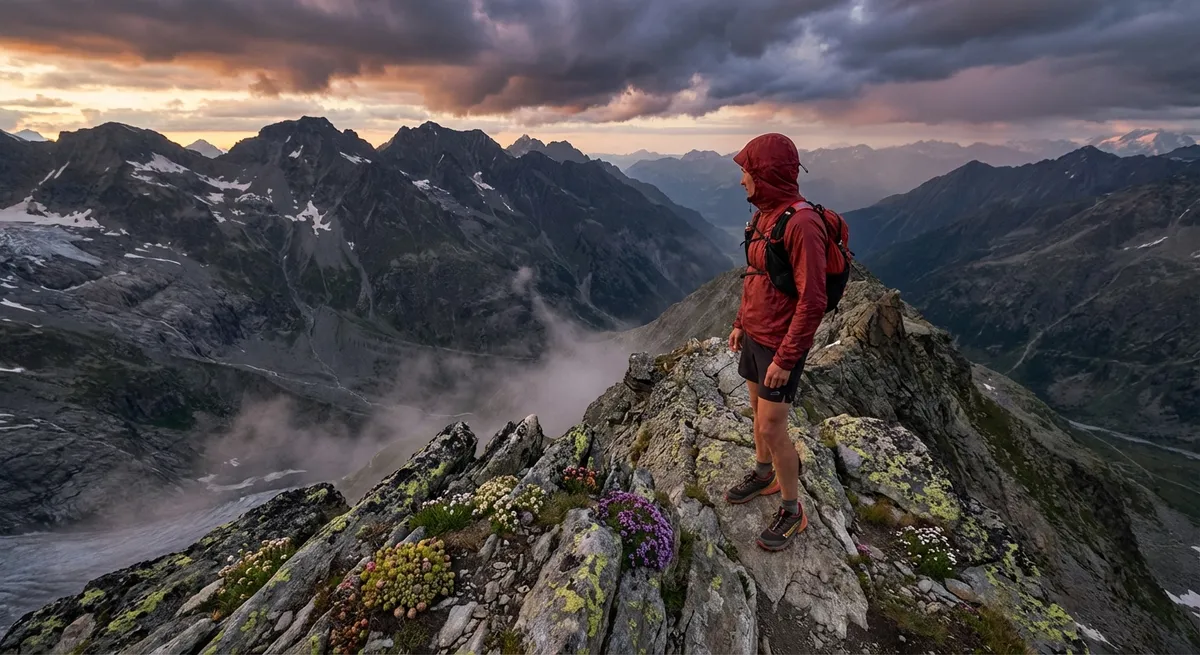
This is your invitation to travel in a way that makes your heart beat faster, your world feel bigger, and your comfort zone just a memory in the rearview mirror.
1. Trade Landmarks for Thresholds
There’s nothing wrong with seeing the “must‑see” sights—but the adventures that stay with you usually begin where the guidebook ends.
Instead of racing from monument to monument, ask: What could I do here that I’ve never done anywhere else? In Iceland, that might mean venturing beyond the popular Golden Circle to hike across cooled lava fields in the evening quiet, watching steam curl from geothermal vents as the sky turns violet. In Vietnam, it could be hiring a small boat at dawn in a lesser‑known bay, gliding past karst cliffs while local fishers set their nets in near silence.
Use landmarks as gateways, not goals. Visit Machu Picchu, then keep going on foot along lesser‑traveled trails in the Sacred Valley, letting tiny villages and terraced hillsides become your main event. Follow the crowds into a famous plaza, but drift out via side streets until the souvenir stands fade and you’re left with old corner cafés, laundry swaying overhead, and the slow rhythm of everyday life.
Threshold adventures begin when you choose curiosity over completion. Instead of asking “Did I see it all?”, ask “Did I cross into something new—inside and out?”
Practical move: When planning, list the big landmarks you’re curious about, then pair each one with a nearby “threshold”: a local neighborhood market, a coastal path, a riverbank, or a hill with a view. Promise yourself at least as much time in thresholds as at ticketed sites.
2. Follow the Elements: Earth, Water, Air, Fire
Designing an adventure around the raw elements turns an ordinary trip into something that feels almost mythic.
Let earth guide your feet. Choose one destination where hiking, scrambling, or simply walking becomes the skeleton of your days. This doesn’t have to mean high‑altitude epics; it might be strolling vineyard trails in Portugal, tracing cliffside paths above the Amalfi Coast, or crossing orange desert dunes in Morocco as the sand cools under your bare feet. The ground under you becomes the story line.
Let water reset your sense of scale. Kayak alongside glaciers in Alaska, where the ice groans and calves into turquoise water. Drift through mangrove forests in Mexico or Sri Lanka, watching herons lift softly from the branches. Even wild swimming in a cold Scottish loch or a hidden Costa Rican waterfall can snap you awake in the best possible way.
Seek air for perspective. Take that sunrise hot‑air balloon ride over Cappadocia’s rock spires, or paragliding above green valleys in Colombia. If heights aren’t your thing, find a simple overlook—a city rooftop, a mountain ridge, a lighthouse platform at dusk—anywhere the wind can hit your face and remind you how big the world is.
Chase fire for awe. Watch lava glow from a safe distance in Hawaiʻi Volcanoes National Park, or sit by a remote campfire in Namibia beneath a sky so star‑streaked it almost doesn’t look real. Fire is also metaphorical: street food sizzling on a Bangkok sidewalk, or the burst of lanterns released into the night during a local festival.
Practical move: Choose one element to be the “anchor” of each trip. Look for activities, day trips, and overnights that express that element in different ways—gentle, intense, urban, wild. Your itinerary becomes not just a route, but a story.
3. Turn Fear into Your Compass (Safely)
The adventures you remember most are often the ones that made you nervous beforehand—and wildly alive afterward.
Start by mapping your edges. Maybe it’s solo travel. Maybe it’s speaking a language you barely know. Maybe it’s trying a new physical challenge, like rock climbing, scuba diving, or multi‑day trekking. You don’t need to hurl yourself into danger; you just need to step somewhere that makes your stomach flutter and your mind say, Can I really do this?
Instead of ignoring fear, interview it. If the fear is “I might get lost,” maybe the adventure is learning to navigate a new subway system in Tokyo or handling your first rental car on winding Irish backroads—with offline maps, backup plans, and plenty of time. If the fear is open water, a guided snorkeling trip with a certified operator in Belize can move you from panic to joy as fish flash by in neon colors.
Trust reputable experts when you’re stretching your limits. Want to raft whitewater in Costa Rica, hike on a glacier in Norway, or summit a non‑technical peak in the Alps? Choose licensed guides, check safety records, and read reviews from other travelers. The goal is not to “prove yourself” by going it alone at all costs; the goal is to open your life to experiences that felt off‑limits.
Every time you do something you once labeled “not for me,” your sense of who you are quietly expands. That’s the real rush.
Practical move: Before your next trip, write down three things that scare you but also secretly excite you. Commit to doing just one of them, with proper preparation. Book it in advance so you can’t back out when comfort starts calling the shots.
4. Make Locals Your Co‑Authors
Your most vivid travel memories won’t come from perfectly staged photos; they’ll come from the unscripted kindness of strangers and the moments when someone lets you step into their world.
Instead of checking boxes like “eat local food,” sit at the counter instead of the safe corner table. Ask the cook what they would order if they had only one meal left in that city. In Oaxaca, that might be a bowl of rich mole negro; in Tokyo, a humble lunch set at a neighborhood diner where office workers crowd in shoulder to shoulder.
Look for experiences built around connection, not performance. Join a community hike advertised on a local bulletin board, a language exchange night in a small bar, or a cooking class run in someone’s home rather than a slick studio. When you show up with curiosity and humility, people respond with stories, recipes, shortcuts, and laughter you’ll never find in an app.
If you stay in family‑run guesthouses, ask about what they love doing on their days off. You might find yourself at a Sunday football match in a Portuguese village, a market day in rural Laos, or a late‑night dessert run in Istanbul where every street corner glows with tea glasses and sugar.
Remember you’re not collecting people for your narrative; you’re briefly weaving into theirs. Respect local customs, dress codes, and rhythms. Learn a few polite phrases. Accept that you’ll make mistakes—and that the willingness to learn from them is its own kind of adventure.
Practical move: For each destination, plan one “people‑first” activity in advance—a workshop with local artisans, a small group food tour, a community‑led hike—then leave space for at least one spontaneous invitation or recommendation from someone you meet on the ground.
5. Design One Moment You’ll Remember for a Decade
Trips blur together unless you intentionally carve out moments that feel like exclamation points. Instead of asking a destination to surprise you with magic, co‑create it.
Think about where your senses come alive. Maybe it’s sound: arranging to hear traditional fado in a tiny Lisbon bar, or jazz in a New Orleans club where the walls shake with brass. Maybe it’s light: timing your visit to Uluru in Australia for sunset, when the rock seems to change color every few breaths, or planning a winter journey to Norway during solar maximum to chase the northern lights curling across the sky.
You can design quiet, inward‑facing moments, too. A solo sunrise on a Greek island rooftop before the streets wake up. Journaling after midnight on a sleeper train across Europe, the carriage rocking gently while strangers snore down the corridor. A night in a desert camp in Jordan where the only light is your campfire and the constellations.
When you build a trip around one unforgettable moment, everything else rearranges itself with surprising ease. Logistics stop feeling like chores and start feeling like the scaffolding for that single, luminous memory.
Practical move: Before you book a single ticket, answer this question: What’s one scene I’d love to replay vividly in my mind ten years from now? Plan your dates, routes, and budget around giving that moment the best chance to happen—then stay open to all the bonus magic that shows up along the way.
Conclusion
Adventure isn’t a personality type; it’s a choice you make, again and again, to lean toward the unknown instead of away from it.
When you trade landmarks for thresholds, travel by the elements, use fear as your compass, invite locals to co‑write your story, and design one unforgettable moment per trip, every journey becomes bigger than its itinerary. You stop crossing borders only on maps and start crossing them inside yourself.
The world is out there—wild, waiting, and more reachable than it looks from your couch. Pick a place, pick an edge, and step toward the version of you that’s already out there on the trail, grinning into the wind.
Sources
- U.S. National Park Service – Hiking Safety Tips - Guidance on preparing for hikes and staying safe on trail‑based adventures
- International Rafting Federation – Safety & Rafting Guidelines - Best practices for choosing reputable operators and understanding whitewater risk levels
- PADI – Beginner’s Guide to Scuba Diving - Overview of training, safety standards, and what to expect from entry‑level underwater adventures
- Icelandic Tourist Board – Responsible Travel in Iceland - Official advice on exploring Iceland’s landscapes safely and respectfully
- UNESCO World Heritage Centre – Visiting World Heritage Sites Responsibly - Recommendations for engaging with iconic sites while supporting local communities and environments