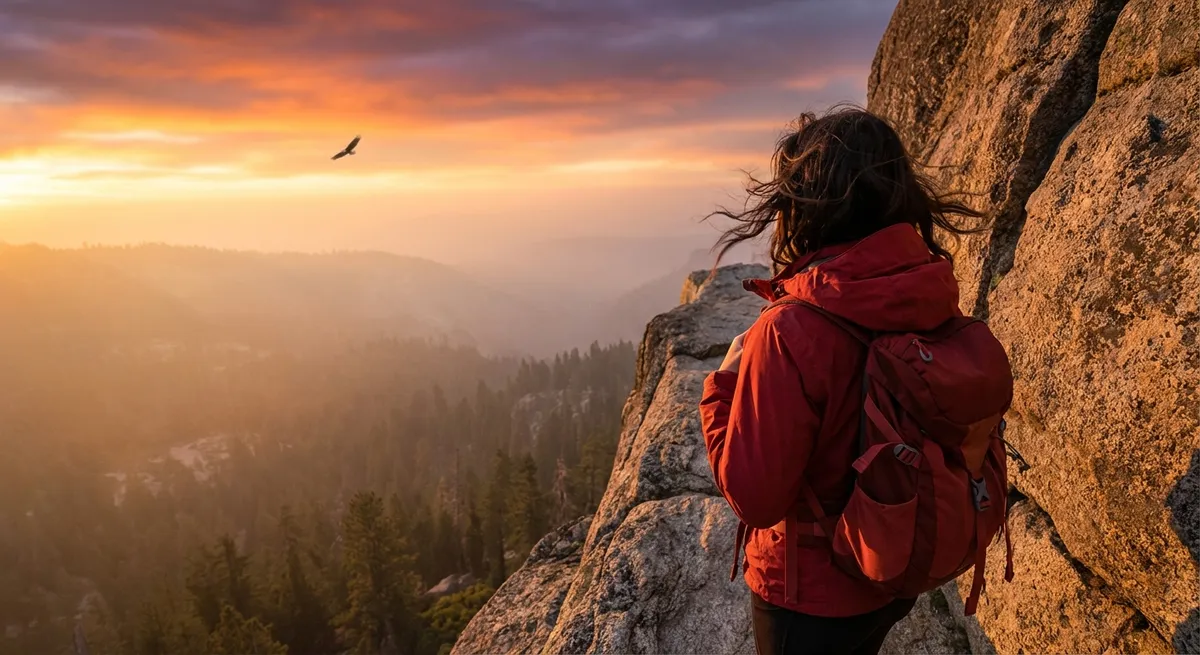
This isn’t about the most extreme stunts or the most expensive gear. It’s about choosing journeys that make you feel vividly, unmistakably alive. Below are five powerful adventure ideas that tap into sight, sound, touch, taste, and even that sixth sense of courage—each one crafted to be both awe-inspiring and actually doable.
1. Follow the Edge: Adventures Where Land Just… Stops
There’s a particular kind of thrill that lives at the edges of the world—where continents crumble into sea, where cliffs drop into mist, where your next step is a reminder that the planet is wild and in motion.
Think of standing on the jagged coastline of Portugal’s Algarve as waves detonate against the rock 40 meters below. Or hiking Ireland’s Cliffs of Moher at sunrise, watching the sky bleed from violet to gold while seabirds carve spirals in the air. These aren’t just “views”; they’re visceral body experiences. Your feet feel the solid ground. Your chest tightens with altitude. Your eyes can’t find an easy end point, so they just… keep going.
To tap into this kind of adventure:
- Seek coastal or canyon trails that offer safe but dramatic exposure—look for maintained paths with railings or clear signage if you’re just starting out.
- Start early or late. Sunrise and sunset transform an already impressive view into something cinematic.
- Layer up. Wind is part of the drama at the edge of the world—and it can sap your energy fast if you’re underdressed.
- Build in silence. Put your phone on airplane mode for at least 20 minutes and just listen to the water, the wind, the birds. Let the scale of it all sink in.
You don’t have to be a hardcore mountaineer to feel the charge of the frontier. Even a short cliffside walk, a drive along a rugged coast, or a lookout point above a deep valley can reset your sense of perspective in a single breath.
2. Sleep Where The World Still Feels Untamed
Adventure shifts completely when the sun goes down. Cities glow; wild places darken—and that’s exactly where some of the richest travel memories are hiding. Spending the night somewhere that still feels untamed shakes you out of routine in all the right ways.
Picture unzipping a tent in Patagonia to see the first light turn ice-blue peaks into fire. Or lying in a desert camp in Wadi Rum, Jordan, as the Milky Way spills across the sky so brightly it almost feels loud. In these spaces, the usual noise of your life falls away, and you notice things again: the coolness of the earth, the rustle of leaves, the slow arc of constellations.
Ways to step into wild nights without needing Everest-level skills:
- Try “soft wild” stays like eco-lodges, cabins, or yurts near national parks or nature reserves. You get creature comforts with a front-row seat to the wild.
- Choose official campsites with clear rules, water access, and local guidance if you’re new to sleeping outdoors.
- Learn the basics of night safety: headlamp, warm layers, knowing local wildlife norms, and keeping food sealed.
- Make darkness a feature, not a bug. Seek out certified Dark Sky Parks or reserves where stargazing is the main event.
In a world that rarely switches off, letting the wilderness set the rhythm of your evening—sunset, stars, first light—is its own kind of rebellion.
3. Answer the Call of Moving Water
Rivers and oceans have a way of finding the parts of you that have gone sluggish and shaking them awake. Moving water demands your full attention: Where is the current pulling? How does the wave feel under your feet or your raft? What’s happening under the surface?
Whether you’re paddling a kayak through Norway’s fjords, surfing beginner waves in Morocco, or whitewater rafting in Costa Rica, you’re plugging directly into the planet’s pulse. Your heart rate rises to meet it. Your muscles adapt in real time. And afterward, the memory of that motion stays in your body long after you dry off.
To safely chase water-powered adventure:
- Match the activity to your skill level—flatwater kayaking, stand-up paddleboarding, or guided rafting trips are perfect for beginners.
- Book with certified local operators who provide safety gear, briefings, and guides trained in first aid.
- Respect the water’s mood. Weather, tides, and river levels change quickly; trust local advice even if it means canceling or rerouting.
- Give yourself time to float. Balance high-adrenaline moments with slow, quiet stretches—drifting downriver or sitting on a shoreline rock just watching waves.
You don’t need to become a full-time surfer or mount an epic expedition to feel this magic. Even a half-day paddle on a local lake or a guided rafting trip can reset your nervous system in the best possible way.
4. Chase Flavors That Don’t Exist Back Home
Adventure isn’t only cliffs and kayaks. Sometimes the bravest thing you can do is sit down at a tiny street stall and point to something on the menu you can’t pronounce. Your taste buds are wired for exploration too.
Imagine slurping steaming pho at dawn in Hanoi while scooters hum past, or tasting just-baked injera in Addis Ababa, still warm and spongy in your hands. Maybe it’s trying curdled yak milk tea in a Himalayan village or biting into your first perfectly ripe mango on a Caribbean beach. These are micro-adventures that happen on your tongue, your nose, your fingertips.
To turn food into a full-sensory adventure:
- Eat where locals line up. A long line of residents is usually a better signal than any review site.
- Book a food walk or cooking class with a local guide—you’ll get both safety and stories.
- Learn a few key phrases around allergies and preferences so you can push your boundaries without pushing your luck.
- Say yes to at least one dish per trip that surprises you—something you’d never find in your home grocery store.
Traveling through flavor lets you taste landscapes, histories, and traditions in a way nothing else can. Your memories won’t just be photos—they’ll be textures, spices, and aromas that stay with you for years.
5. Step Into Silence So Big You Can Hear Your Own Thoughts
Some adventures roar with sound—rushing rivers, city streets, thumping helicopter blades. Others whisper, and those are often the ones that shift you on the deepest level. When you enter a landscape where the loudest thing is your own heartbeat, you realize how rarely you give yourself that kind of space.
Think of walking across a frozen lake in Lapland where the snow absorbs every echo. Or sitting on a boulder in Utah’s red desert, mid-hike, realizing you haven’t heard a car in hours. Or pausing on a forest trail in Japan as wind moves through the canopy like distant surf. This isn’t emptiness; it’s a different kind of fullness—the world, minus your usual static.
To build intentional silence into your adventures:
- Choose trails or parks known for low visitor numbers, or visit popular ones at off-peak times and seasons.
- Try a “phone-off window” each day of your trip—an hour or two with no photos, no messages, no music, just presence.
- Practice slow hiking: shorter distances, longer pauses, more attention to small details (moss, tracks, pattern of light).
- Consider guided experiences like forest bathing walks or meditation hikes if you want structure without screens.
In that wide-open quiet, new ideas surface. Old problems shrink. You remember what it feels like to be a person, not just a schedule.
Conclusion
Adventure isn’t a contest. It’s not about who climbs highest, goes furthest, or collects the most passport stamps. It’s about how awake you’re willing to be to the world around you and the world inside you.
Stand at the edge where land falls away and let your sense of scale reset. Sleep where the dark sky still belongs to the stars. Let rivers and oceans lend you their momentum. Taste stories you can’t read in any guidebook. Step into silence big enough to hear what you’ve been too busy to notice.
Your next move doesn’t have to be dramatic—it just has to be intentional. Pick one of these five threads and follow it on your next trip. Let it tug you into experiences that sharpen your senses, stretch your courage, and remind you that you’re built for a life that feels vivid, not just efficient.
The world is not waiting for “someday.” It’s out there right now—wild, imperfect, unforgettable—ready for your next hop.
Sources
- U.S. National Park Service – Hiking Safety & Trip Planning – Guidance on preparing for hikes, staying safe on cliffs, and planning adventures in national parks
- International Dark-Sky Association – Dark Sky Places – Directory of certified dark-sky parks and communities ideal for stargazing and night-sky adventures
- American Whitewater – Safety Code – Best practices and safety considerations for river and whitewater activities
- Centers for Disease Control and Prevention – Travelers’ Health – Up-to-date health, food, and safety advice for travelers exploring new destinations and cuisines
- Adventure Travel Trade Association – Adventure Travel Trends & Insights – Research and reports on global adventure travel, including demand for nature, culture, and active experiences