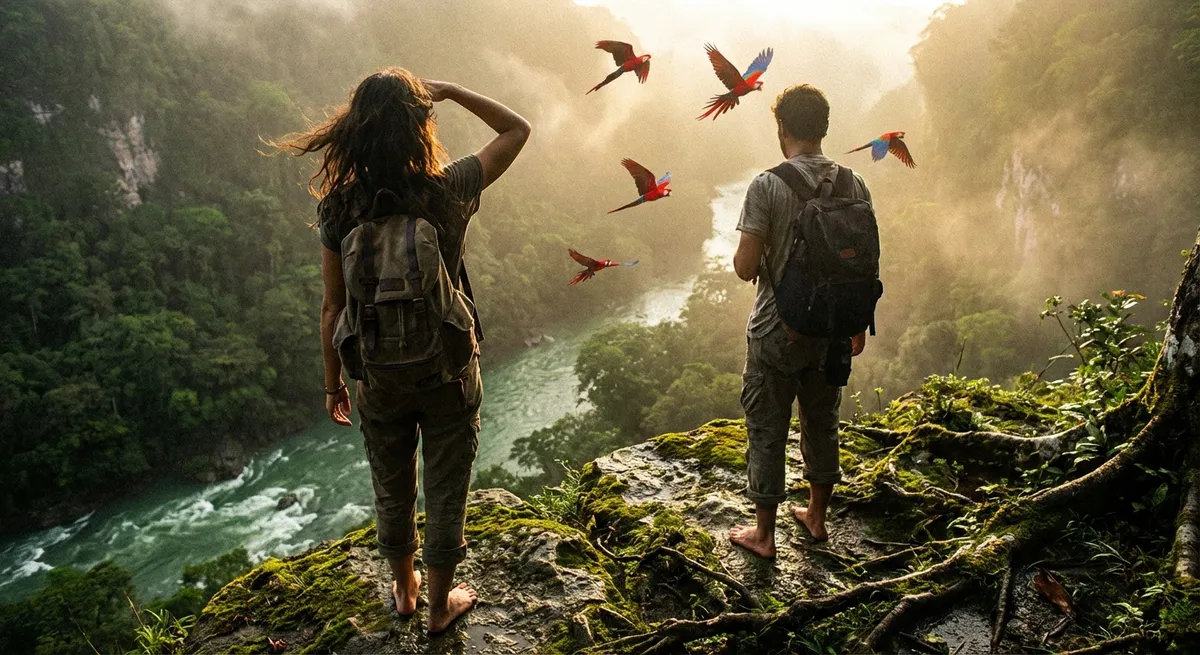
Below are five kinds of destinations—each a different flavor of wild—that can crack open your routine and pull you into a more vivid version of yourself.
Oceans That Roar Back: Coasts Where the Sea Is a Character
Some coastlines whisper. Others roar—and those are the ones that change you.
Picture standing on a black-sand beach in southern Iceland, waves pounding like the heartbeat of a giant you can’t see. The wind is sharp and salted, the sky an endless dome of shifting gray and silver. You’re tiny here, but you’re not insignificant—you’re part of the same fierce system.
Or think of South Africa’s Wild Coast, where the land drops into the Indian Ocean in raw cliffs and empty coves. Cows stroll the beaches. Dolphins cut through the surf at sunrise like streaks of liquid steel. The trail isn’t marked for Instagram; it’s worn into the soil by generations who walked it because that was simply how you moved through the world.
How to tap into it fully:
- Swap resort strips for rugged shores: think Iceland’s Reynisfjara, Portugal’s Alentejo coast, South Africa’s Wild Coast, or Chile’s Pacific edges.
- Travel in shoulder seasons to feel the sea’s power without the crush of crowds.
- Walk the coastline rather than just visiting a single beach—follow a day-long or multi-day coastal path.
- Pack layers, a windproof shell, and shoes that love getting wet and muddy; you’re not here to stay pristine.
- Let the elements dictate your day: tide charts over timetables, sunrise over brunch.
These coasts don’t just offer views; they challenge you to weather them, to listen to them, to let their wild rhythm seep into your own.
Cities That Hum After Dark: Destinations Built for Night Wanderers
Not every wild place is remote. Some glow neon and never sleep.
Think of Tokyo’s Shinjuku at midnight—lanterns glowing under alleyways no wider than a single outstretched arm, the hiss of grills searing yakitori, the steady rumble of trains even as the clock crawls past twelve. You don’t visit the city; you plug into it.
Or Medellín, wrapped in Colombian mountains, where cable cars float silently over neighborhoods lit like constellations. Street musicians, late-night arepa stands, conversations spilling onto sidewalks—the city hums in a key that invites you to sing back.
How to tap into it fully:
- Choose neighborhoods, not just “central” hotels: Shinjuku or Shimokitazawa in Tokyo; Laureles or El Poblado in Medellín; Gràcia in Barcelona.
- Wander without a list. Let smells, sounds, and small crowds pull you down side streets.
- Ride public transit at night where it’s safe and well-used—subways, trams, and cable cars show you a city’s real heartbeat.
- Eat late. Skip the 6 p.m. dinner and aim for the hours when locals fill the tables.
- Carry a small notebook or use your phone to jot “night fragments”: a phrase of overheard conversation, a neon sign, a scent. These become the story you bring home.
In these cities, the destination isn’t a monument or a square—it's the electric feeling of belonging, briefly, to a place that pulses without pause.
High Places That Steal Your Breath (Twice): Mountain Worlds Above the Noise
Mountains don’t negotiate. They ask questions like: How much do you want this view? How willing are you to earn it?
Picture the Himalayas at dawn in Nepal—peaks lit in quiet fire, prayer flags cracking in thin, icy air. Or Peru’s Sacred Valley, where terraced slopes and ancient footpaths pull you upward, one deliberate step at a time, until clouds feel like something you can almost reach out and rearrange.
Being in the mountains is less about conquering a summit and more about learning to move at the pace of altitude, weather, and your own limits.
How to tap into it fully:
- Choose base towns with trail access and local culture: Chamonix (France), Pokhara (Nepal), Huaraz (Peru), or Queenstown (New Zealand).
- Start with day hikes to feel out altitude and terrain before committing to longer treks.
- Ditch the obsession with a single viewpoint—mountain magic is in the in-between: the forest you pass through, the chill settling as the sun swings behind a ridge, the shared silence with strangers at a lookout.
- Respect the science: hydrate, ascend gradually, and learn the signs of altitude sickness before you go.
- Stay long enough to watch the mountains change personality with the weather—moody cloud days, crystal blue skies, and thunderstorms that roll in like drums.
Mountains give you a simple, radical trade: fewer distractions for more presence. You leave with legs that ache and a mind that, finally, doesn’t.
Waterways That Rewrite Your Sense of Distance: Rivers, Canals & Hidden Channels
Some destinations ask you to trade roads for currents.
Imagine gliding along the back canals of Kerala in southern India, palms leaning lazily over glassy water, villagers waving from steps that disappear into the river. Life rearranges itself around the waterline: tea stalls, schoolboats, floating markets.
Or drifting through Vietnam’s Mekong Delta, where the morning market rises with the mist—boats stacked with pineapples, melons, greens—trading in a choreography older than any highway.
How to tap into it fully:
- Look for towns built around water: Alleppey (India), Can Tho (Vietnam), Ljubljana (Slovenia), or Stockholm’s island web.
- Explore by small boat, kayak, or canoe rather than only large tourist cruises; the slower you move, the more you see.
- Time outings for early morning or late afternoon when light is soft and daily routines spill onto the water.
- Carry a waterproof dry bag for phone, camera, and notebook so you can lean into the spray without anxiety.
- Accept that river time runs differently—delays, drifting, detours. That’s the point.
On the water, you’re forced to surrender your usual speed. In that surrender, new layers of a place—its work, its rituals, its quiet moments—rise to the surface.
Edges of Light: Destinations Built Around Sky Phenomena
Some places aren’t defined by what’s on the ground, but by what the sky decides to do.
Imagine standing in Arctic silence in northern Norway or Finnish Lapland, snow squeaking under your boots, when the first pale smear of green starts to ripple above you. The aurora isn’t polite—it flickers, twists, flares, then vanishes without apology. You realize how small your schedule is compared with solar winds.
Or the Atacama Desert in Chile, where the Milky Way doesn’t just shimmer—it dominates the sky, a bright river of stars pouring from horizon to horizon. You see constellations that never appear back home, and your sense of being tethered to a single point on Earth starts to loosen.
How to tap into it fully:
- Choose destinations famous for a specific sky show: northern Norway, Iceland, or Finnish Lapland for auroras; Chile’s Atacama or Hawaii’s Mauna Kea region for stargazing.
- Plan flexible nights: the sky follows physics, not your spreadsheet. Build in extra evenings to improve your chances.
- Go with a local guide who understands weather patterns, dark-sky zones, and safe routes.
- Dress for standing still: the cold bites harder when you’re not moving, so over-prepare with layers, gloves, and warm footwear.
- Learn a bit of the science before you go—knowing why the sky behaves this way only deepens the wonder.
These are destinations that don’t guarantee a spectacle—only the chance of one. And that chance is exactly what makes the experience feel so electric.
Conclusion
The world doesn’t run out of wild; we just forget to go looking for it.
You don’t need a flawless itinerary or a viral shot. What you need is a willingness to stand in front of a coastline that howls, a city that never blinks, a mountain that slows your stride, a river that redirects your day, or a sky that refuses to be just background.
Destinations like these don’t just give you memories—they recalibrate your sense of what’s possible. The next move is yours: pick a place where the world still feels unruly, step into it with open eyes, and let it rewrite the way you travel from here on.
Sources
- Iceland Official Tourism – South Coast & Black Sand Beaches – Background on Iceland’s dramatic coastal landscapes, including Reynisfjara
- Japan National Tourism Organization – Tokyo Neighborhoods Guide – Overview of key districts like Shinjuku and their atmosphere, especially at night
- CDC – High-Altitude Travel & Altitude Sickness – Practical, science-backed guidance on staying safe and healthy in mountain regions
- Kerala Tourism – Backwaters of Kerala – Official information on the culture, routes, and experiences in Kerala’s waterways
- European Southern Observatory – Atacama Desert & Dark Skies – Details on why Chile’s Atacama region is one of the best stargazing destinations on Earth