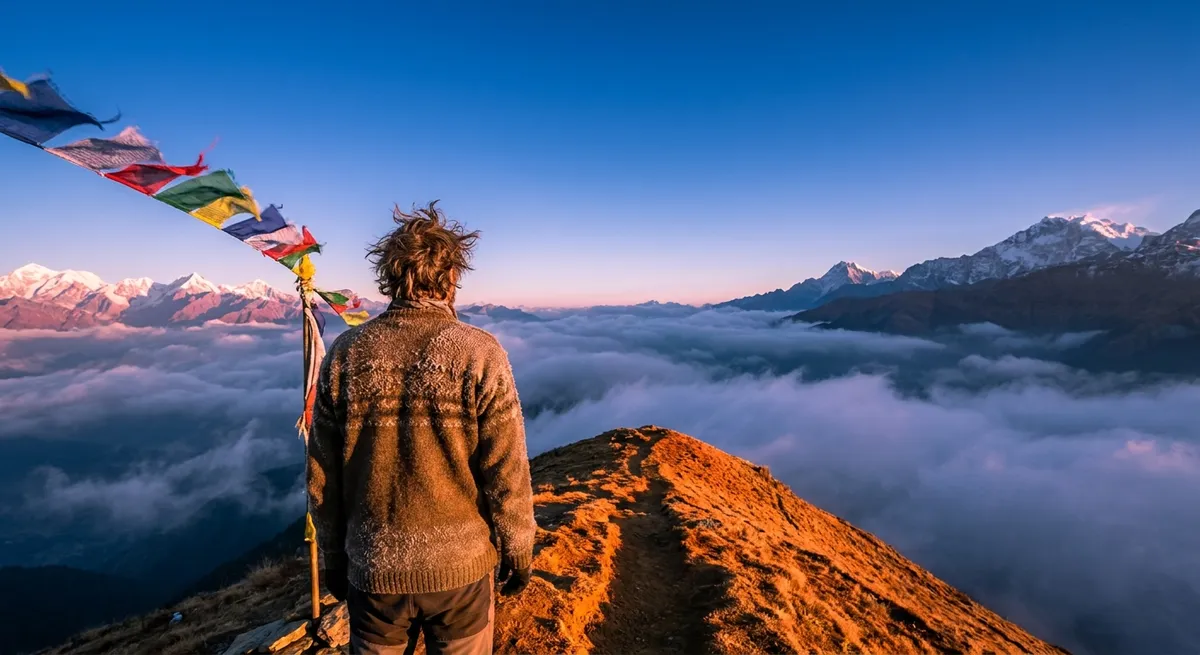
Below are five kinds of places that don’t just fill your passport—they rewire your sense of what’s possible, with vivid experiences and practical tips to help you actually get there.
1. Volcano Dawn on Indonesia’s Fiery Ridges
There’s a moment just before sunrise on Mount Bromo in East Java when the air feels electric. The crater smolders below, a thin veil of smoke rising into a sky that’s slowly flushing from ink-black to molten orange. You’re standing on the lip of a living volcano, boots dusted with ash, watching the earth breathe.
The Bromo–Tengger–Semeru National Park is a natural amphitheater of otherworldly peaks and calderas. At night, the Milky Way arcs over the ridges; by day, the volcanic sand sea feels like a Martian desert. With an early start from the village of Cemoro Lawang, you can hike or ride a motorbike to viewpoints like Penanjakan, then trek across the ash plain to the crater itself. Wear a buff or mask for the sulfur, layer up (it gets cold before dawn), and bring a headlamp for the pre-dawn climb.
What makes this destination unforgettable isn’t just the spectacle—it’s the contrast. The quiet Javanese villages, the gentle cadence of morning prayers, and then, suddenly, the raw, humming presence of the volcano. If you’ve ever wanted to feel the edge between calm and chaos, between human time and geologic time, this is where to stand.
Captivating point: Watch the sun erupt over a ring of volcanoes while the crater below exhales smoke under your feet.
2. Arctic Silence Under Norway’s Winter Sky
In Norway’s far north, the air sounds different. It’s not really “silent”—you hear the crunch of snow under your boots, the soft hiss of your breath, the occasional low murmur of a reindeer herd—but the usual city noise is gone. Above you, the northern lights coil and unravel in green, violet, and white ribbons that look almost close enough to touch.
Base yourself in Tromsø or venture even farther to the Lofoten Islands or Alta. Winter brings long nights and the highest chances of aurora, but also dog sledding, snowshoeing, and silent boat rides through frost-laced fjords. Dress in layers (merino base, insulating mid, windproof outer), protect your extremities, and keep your camera battery warm so it doesn’t die in the cold. Choose a tour or car route that gets you away from light pollution—your eyes need the dark to catch the cosmic show.
The magic here is in the slowness. You wait. You watch. Sometimes the sky stays still and gray. And then, without warning, the heavens ignite—and suddenly, every journey, every shiver, every hour in the cold feels worth it.
Captivating point: Stand in Arctic darkness as the sky unravels in shifting curtains of green and violet light.
3. Jungle Meets Ancient Stone in Guatemala’s Lost Cities
Deep in Guatemala’s Petén jungle, howler monkeys roar like distant thunder while mist coils around stone temples older than most countries. At Tikal, steep pyramids slice above the canopy, and the air is thick with birdsong and the scent of wet earth. Climbing Temple IV at dawn feels like surfacing into another era—the jungle a vast green sea below you, the ruins glowing gold as the sun breaks through.
The town of Flores on Lake Petén Itzá makes an ideal jumping-off point. From there, guided tours or public transport can get you into Tikal National Park in time for sunrise or sunset. Wear sturdy shoes, bring insect repellent, and carry at least a liter of water per person—humidity here is relentless. If you’re after a quieter, even more “lost world” feel, consider lesser-known sites like Yaxhá, where you might have entire temple plazas nearly to yourself.
This destination pulls you into a dialogue with time. You’re tracing pathways once walked by Maya astronomers and builders, listening to a jungle that has reclaimed what humans left behind. It’s not a theme park; it’s an invitation to feel small in the best possible way.
Captivating point: Watch the sun rise over temple peaks as howler monkeys roar through a waking jungle canopy.
4. Desert Stars and Red Rock Silence in Jordan’s Wadi Rum
In Wadi Rum, the night sky looks like it’s been turned up to maximum. The Milky Way is a white river across the black, and the sandstone cliffs loom like dark ships on a rust-colored sea. Bedouin guides brew strong, cardamom-laced tea over an open fire, and the only sounds are laughter, wind, and the shifting of sand.
This protected desert in southern Jordan is a playground of towering rock arches, echoing canyons, and dunes that melt under your feet as you climb them. From the village entrance, arrange a jeep tour, camel ride, or multi-day trek with a Bedouin camp stay. Bring sunglasses, a scarf for the sun and dust, and plenty of sunscreen. Nights get surprisingly cold—even after 40°C days—so pack a warm layer to watch the stars from your tent’s threshold.
Wadi Rum is about learning to listen to “empty” spaces. You begin to notice light changes, shadow shapes, and subtle shifts in temperature. Adventure here isn’t frantic; it’s expansive. It invites you to trade constant stimulation for a raw, minimalist grandeur that lingers in memory long after you’ve washed the sand from your shoes.
Captivating point: Fall asleep in a Bedouin desert camp beneath a sky so bright with stars it feels almost unreal.
5. Coastal Trail Dreams on Portugal’s Wild Atlantic Edge
Portugal’s southwest corner doesn’t shout for attention—it waits for you to step onto the path. The Rota Vicentina and Fishermen’s Trail trace a rugged coastline of wind-shaped cliffs, secret coves, and villages where time seems to move at the pace of ocean waves. Here, your days are measured in footsteps, sea breeze, and the crunch of sand and wild herbs under your boots.
Start from towns like Porto Covo or Vila Nova de Milfontes and follow well-marked trails that hug the Atlantic. You’ll pass fields of wildflowers in spring, storks nesting on precarious sea stacks, and beaches where you might be the only person for kilometers. Carry a lightweight daypack with water, snacks, and a hat—shade can be scarce. Public buses and local guesthouses make it easy to hike point-to-point without a car.
This destination offers adventure that isn’t about adrenaline, but endurance and presence. Every bend in the trail reveals a new perspective: another bay, another cliff, another whisper of how big and restless the ocean really is. You finish each day tired in the best way, with salt on your skin and a new understanding of “coastal escape.”
Captivating point: Hike cliff-edge paths above a pounding Atlantic, ending your day in a whitewashed village with fresh seafood and sunset.
Conclusion
The world is full of places that can fill a photo album. But some places do more—they tilt your inner compass. A volcano ridge at dawn, an Arctic sky in motion, a jungle temple swallowed by green, a silent desert of glowing rock, a wild coast where the trail feels endless…these aren’t just stops on an itinerary. They’re turning points.
You don’t need to see everything. You just need to start somewhere that makes you feel more awake, more curious, more alive than when you left home. Pick one horizon that scares you a little and excites you a lot—and step toward it. The map will never look the same again.
Sources
- [UNESCO World Heritage Centre – Bromo Tengger Semeru National Park (Indonesia)](https://whc.unesco.org/en/tentativelists/6013/) - Background on the volcanic landscape and its significance
- [Visit Norway – Northern Lights Guide](https://www.visitnorway.com/things-to-do/nature-attractions/northern-lights/) - Practical information on when and where to see the aurora in Norway
- [UNESCO World Heritage Centre – Tikal National Park (Guatemala)](https://whc.unesco.org/en/list/64/) - Detailed overview of Tikal’s history, ecology, and importance
- [UNESCO World Heritage Centre – Wadi Rum Protected Area (Jordan)](https://whc.unesco.org/en/list/1377/) - Information on Wadi Rum’s geology, culture, and protected status
- [Rota Vicentina Official Site](https://rotavicentina.com/en/) - Official trail maps, stages, and planning resources for hiking Portugal’s southwest coast