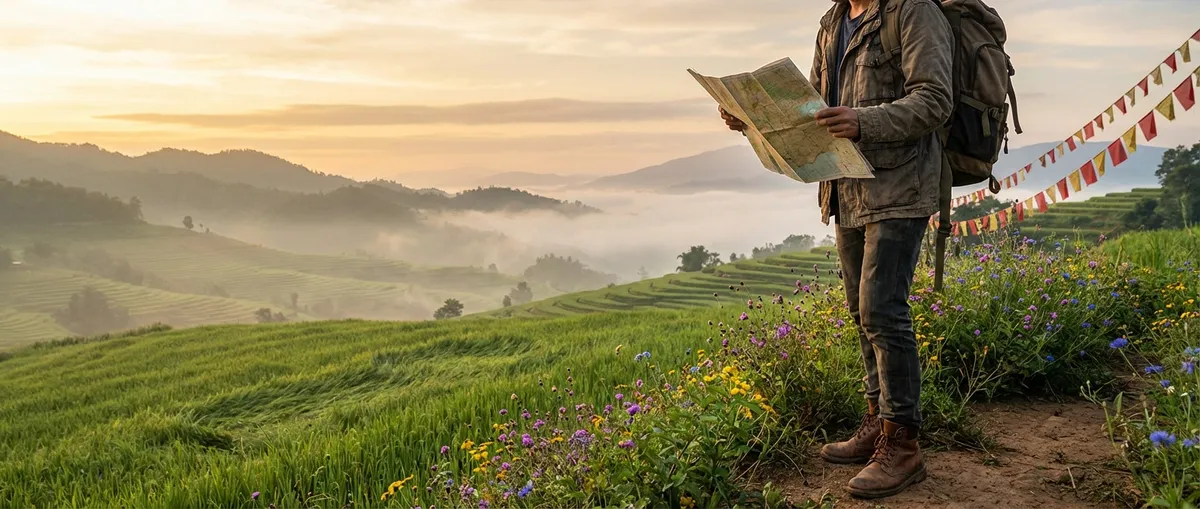
Below are five kinds of places that don’t just fill your camera roll; they fuel your courage, curiosity, and sense of wonder.
1. Cities That Never Sleep, but Make You Feel Alive
There’s an electricity you can only find in cities that pulse long after midnight—places where street vendors are still grilling, trains are still running, and conversations spill out of cafés at 2 a.m.
Think of neon-lit neighborhoods in Tokyo, the rhythmic chaos of Mexico City, or the night markets of Bangkok. These cities invite you to wander without a script: follow the scent of food into a side street, step into a tiny bar where you’re the only foreigner, or jump on a subway line just to see where it ends.
To tap into their magic:
- Stay central enough to walk as much as possible—your feet are your best guide.
- Ride public transport at least once; you’ll understand the city’s real heartbeat.
- Eat where the line is longest and the menus are shortest. Locals voting with their feet rarely get it wrong.
Urban destinations like these remind you how big, busy, and brilliantly diverse the world really is—and how quickly you can feel at home in the unfamiliar.
2. Wild Coasts Where the Ocean Rewrites Your Priorities
Stand at the edge of the sea long enough and your timelines and to-do lists start to feel very small. Wild coasts—rugged cliffs in Ireland, black-sand beaches in Iceland, or the wind-whipped shores of South Africa—are natural reset buttons.
Here, the soundtrack is the crash of waves and the shriek of seabirds, the scenery is endless horizon, and the pace is governed by tides, not meetings. Long coastal trails turn into moving meditations. A sunrise surf lesson becomes a lesson in humility. A simple picnic on the rocks feels like a feast.
To get the most from oceanfront destinations:
- Pack layers and embrace the elements rather than hiding from them. Salt spray on your face is part of the story.
- Walk a stretch of coastal path without headphones; let the wind narrate.
- Wake up for at least one sunrise or stay out for one sunset—coastlines wear these hours best.
When you finally turn away from the water, you bring back more than photos. You carry a calmer heartbeat and a new sense of what really matters.
3. High Places That Teach You How Small (and Strong) You Are
Mountains have a way of humbling you and strengthening you at the same time. Whether you’re winding through the Alps, catching your breath in the Andes, or watching the sunrise from a Himalayan guesthouse, the altitude shifts your perspective.
Up here, your phone signal weakens while your awareness intensifies. You notice how your lungs work a little harder, how your pace slows, how each step earns a view that never quite fits in a frame. The thin air strips away unnecessary noise and leaves you alone with your thoughts—and a panorama worth climbing for.
To travel well in high-altitude destinations:
- Ascend slowly and hydrate more than you think you need; your body is doing extra work.
- Swap packed itineraries for flexible plans—weather and altitude don’t negotiate.
- Pack one comfort item (a familiar snack, a favorite playlist, a good book) for evenings when the silence feels vast.
You’ll come down from the mountains with tired legs, a full memory card, and a quiet realization: you are capable of more than you assumed.
4. Old Worlds That Make Time Feel Elastic
Some destinations feel like portals—places where centuries overlap and the present walks hand in hand with the past. Cobblestoned European quarters, ancient temple complexes in Southeast Asia, or fortified desert cities in North Africa all share this gift.
In these destinations, every doorway and stone step hints at stories you were never taught in school. You wander through medieval alleys, past carved wooden balconies, into courtyards scented with spices or incense. Modern cafés tuck into buildings older than your passport’s entire lineage. The boundaries between “then” and “now” blur in the best way.
To immerse yourself in these timelines:
- Take at least one guided walking tour with a local historian or guide; the stories unlock the stones.
- Visit early in the morning or late in the evening when crowds thin and the atmosphere thickens.
- Put your phone away for stretches of time and let your imagination do the time travel.
You leave these places with the sense that your own life is one thread in a much older tapestry—and somehow that makes your choices feel both lighter and more meaningful.
5. Remote Corners Where the Night Sky Steals the Show
There are destinations where the main event doesn’t happen on land at all—it unfolds overhead. Remote deserts, high plateaus, small islands, and far-north or far-south latitudes can reveal a night sky that city dwellers barely know exists.
Under truly dark skies, the Milky Way stops being a concept and becomes a river of light. Satellites glide silently overhead. Shooting stars carve brief, bright signatures across the black. In some regions, the aurora paints the sky in shifting greens and purples that make you forget to breathe.
To let these nocturnal destinations work their magic:
- Choose accommodations away from major light pollution and ask locals about their favorite stargazing spots.
- Give your eyes 20–30 minutes to adjust to the dark; the sky slowly fills with more stars.
- Bring warm layers, a headlamp with a red-light setting, and, if you have one, a basic stargazing app to help identify constellations.
Nights like these recalibrate your sense of scale. You realize how tiny and temporary you are—and how lucky you are to be here, on this planet, under this sky, right now.
Conclusion
The most unforgettable destinations don’t just impress you; they change you. They’re not defined only by guidebook rankings or social media snapshots, but by what they awaken in you—curiosity in sleepless cities, peace on raw coastlines, courage in high places, perspective in ancient streets, and awe under star-soaked skies.
You don’t have to see everything. You just have to start choosing places that make you feel more vividly alive.
Wherever you head next, let your destination be more than a dot on a map. Let it be a turning point in your story.
Sources
- UN World Tourism Organization – Global Tourism Highlights - Data and trends on where and how people are traveling around the world
- National Geographic Travel - In-depth features and photography on cities, coasts, mountains, and cultural destinations
- International Dark-Sky Association – Dark Sky Places - Official listings and information about the world’s best stargazing destinations
- U.S. National Park Service – Hiking & Outdoor Safety - Practical guidance on staying safe and prepared in mountainous and remote environments
- UNESCO World Heritage List - Authoritative information on historically and culturally significant sites around the globe