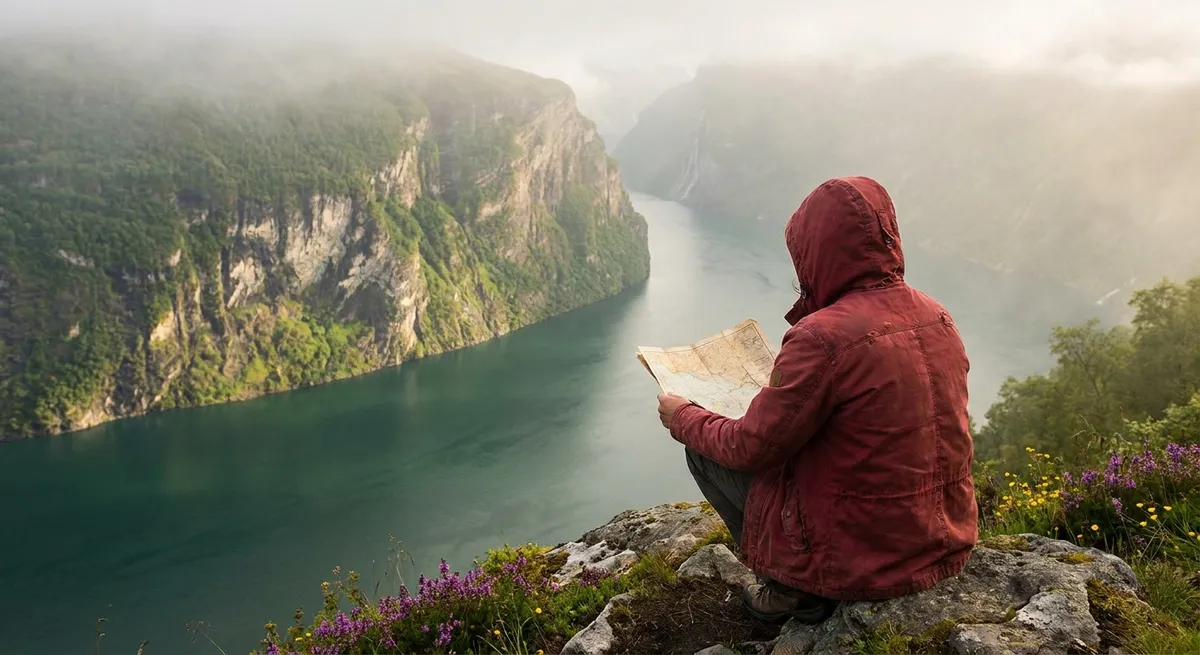
For travelers who crave more than a passport stamp, the magic lives in places where the air feels different, the nights hum with new sounds, and the ground under your feet insists you notice it. These are destinations that don’t simply ask you to “see” them—they dare you to feel them.
Below are five kinds of destinations—and vivid examples of each—designed to change your pace, wake up your senses, and make your next hop feel like a turning point, not just a trip.
1. Cities That Never Sleep… Quietly: Urban Energy with Hidden Calm
Some cities buzz so loudly they feel like they run on electricity instead of daylight. Think Tokyo, Mexico City, or Istanbul—places where neon, traffic, and human momentum blur into a constant, exhilarating hum. At first glance, they’re overwhelming. Stay a little longer, and you discover the secret: each has a quieter heartbeat tucked just below the noise.
In Tokyo, you can slip from Shibuya’s famous scramble crossing into Meiji Jingu’s forested shrine in minutes—trading billboards for birdsong and incense. Mexico City’s chaotic avenues open into lush oases like Chapultepec Park and peaceful neighborhoods like Coyoacán, where cobblestone streets and courtyard cafés feel like another century. In Istanbul, the call to prayer cuts across the traffic, and a wrong turn can land you in a backstreet tea house where time seems to pause between tiny tulip-shaped glasses.
What makes these destinations so powerful is the contrast. You learn to move between currents: joining the crowd on metro lines and night markets, then peeling off into quiet temples, neighborhood parks, and hidden viewpoints. The practical move? Build your days with pockets of stillness—early-morning walks before rush hour, mid-afternoon breaks in leafy squares, sunset views from rooftops or hills. These cities teach you how to thrive in intensity without losing your own rhythm—and that’s a skill you carry into every future journey.
2. Wild Horizons: Places Where the Land Is the Main Character
Some destinations remind you how small you are—and somehow, that’s comforting. Stand on the lip of the Grand Canyon at dawn, watching shadows retreat from layer upon layer of rock, and your problems shrink to their true size. Hike the raw paths of Patagonia in Chile or Argentina and you’ll feel the wind staggering you sideways, glaciers creaking in the distance, peaks sharper than any skyline.
These landscapes don’t need a theme park or a curated experience. The drama is built-in: Iceland’s volcanic plains and waterfalls, New Zealand’s fjords, the high deserts of the American Southwest, or the Scottish Highlands cloaked in mist. Out here, the weather is a co-traveler—sometimes an ally, sometimes a challenge. A clear night becomes an invitation to find the Milky Way. A sudden storm forces you to wait, watch, and realize you aren’t in control.
To really feel these places, trade speed for immersion. Skip racing between viewpoints and instead hike a single trail deeply, camp near one breathtaking cliff or lake for multiple nights, or join a guided trek that slows you to a walking pace. Pack layers, learn basic outdoor safety, and respect local rules on conservation. These destinations reward awareness: the way light changes over a valley, the sound of wind weaving through rock formations, the silence that isn’t empty but full of subtle life. You don’t go to wild horizons to conquer them; you go to remember that the world is vast and wonderfully indifferent—and that your own courage can stretch to meet it.
3. Water Worlds: Shores, Islands, and Cities Built on the Tide
The right destination by the water doesn’t just give you a view—it rewrites time around the tide. Venice, with its maze of canals and car-free life, moves at a walking pace that feels like an echo from another era. Greece’s islands drift between whitewashed afternoons and golden-hour tavernas, while the Norwegian fjords carve deep, calm paths inland where cliffs rise like cathedral walls. In the Maldives or French Polynesia, the ocean isn’t a backdrop; it’s the main stage, under and above the surface.
Water destinations invite a different kind of exploration. Instead of highways, you follow ferry routes, river paths, boardwalks, and beaches. Your schedule starts to sync with ferry departures, sunrise swims, and the quiet hush of late-night harbors. One of the most captivating parts of these places is perspective shift—you see cities and cliffs from the waterline, you snorkel into underwater worlds, you kayak along shorelines that feel unreachable by land.
To get the most from these destinations, think beyond the postcard view. Try a night paddle or boat trip, when reflections double the lights. Learn a new water skill there—diving, stand-up paddleboarding, sailing basics—or join a local guide who can read the currents better than any map. Respect marine life scrupulously: choose reef-safe sunscreen, keep your distance from wildlife, and support organizations protecting local ecosystems. Water destinations reveal how deeply our lives trace the edge of the sea—and how vital it is that we learn to live with it, not just beside it.
4. Living Time Capsules: Destinations that Guard Old Rhythms
There are places in the world where history doesn’t feel like something you read—it’s something you walk through, smell, and taste. Wander Morocco’s medinas, where spice-laden alleys twist around centuries-old riads; step into the old quarters of cities like Kyoto, where wooden machiya houses and lantern-lit lanes keep a quiet watch; or trace the stones of Rome and Athens, where traffic hums alongside ruins that have seen empires rise and fall.
These destinations aren’t museum pieces. They’re living organisms, with people hanging laundry beside ancient walls and children kicking soccer balls in courtyards older than modern countries. The thrill is in the layering: a contemporary café tucked into a building that predates your home nation, or a high-speed train station feeding into a city core designed long before cars existed.
To engage with these places deeply, slow your expectations. Instead of racing through checklist attractions, let yourself get lost on foot (within basic safety common sense). Notice how locals actually use their historic spaces: where they pause, where they gather, what they protect. Book at least one local-led experience—like a history walk by a certified guide, a cooking class using regional recipes, or a craft workshop with artisans preserving traditional skills. These living time capsules show you that progress and preservation don’t have to fight; they can, at their best, lean on each other.
5. High-Altitude Havens: Destinations That Literally Take Your Breath Away
There’s a specific kind of thrill that only comes when the air thins and the sky feels unusually close. Mountain destinations like the Peruvian Andes around Cusco and Machu Picchu, the Himalayas in Nepal, or the Swiss Alps do something profound: they raise you physically and mentally at once. Views stretch for miles, villages cling to slopes you can barely believe, and every step can feel like both a challenge and a victory.
These destinations demand respect. Altitude is more than a number; it’s a force. You might find yourself walking slower, sleeping harder, or needing more water than usual. But in that slower movement, everything sharpens: prayer flags fluttering in the Himalayan wind, cowbells echoing across Alpine fields, terraced farms cascading down Andean valleys like green staircases for giants.
Practicality is part of the adventure here. Give yourself time to acclimate—spend a couple of lower-altitude days before hitting your highest stops. Drink water, know the basic signs of altitude sickness, and listen to both your body and local advice. Don’t underestimate sun exposure; thin air means stronger UV. And if you’re not an experienced hiker, hire a guide. They don’t just keep you safe; they unlock stories—the names of peaks, legends of valleys, and quiet details you’d walk past alone. High-altitude destinations remind you that effort can be part of joy, and that some of the clearest mental breakthroughs happen when your lungs and legs are working hard.
Conclusion
The most powerful destinations don’t just offer “stuff to do.” They invite you into a different pace of life: the pulse of a restless city with hidden stillness, the steady breath of a wild landscape, the tidal rhythm of waterside worlds, the layered heartbeat of living history, or the deliberate step-by-step climb of mountain air.
You don’t have to quit your life to feel transformed by travel. You just have to choose places that ask something of you—your attention, your patience, your courage to slow down or push a little further. The next time you’re scanning a map, listen for the places that seem to whisper back. That subtle pull is often the sign that this isn’t just another trip; it’s your next turning point.
Where you hop next doesn’t have to be the farthest or the most famous. It just needs to be somewhere that changes your pace—and in doing so, quietly changes you.
Sources
- [Japan National Tourism Organization – Tokyo Travel Guide](https://www.japan.travel/en/destinations/kanto/tokyo/) – Official overview of Tokyo’s neighborhoods, attractions, and cultural highlights, including parks and temples that offer calm within the city
- [U.S. National Park Service – Grand Canyon National Park](https://www.nps.gov/grca/index.htm) – Detailed information on trails, viewpoints, safety, and seasonal conditions in one of the world’s most iconic wild landscapes
- [UNESCO World Heritage Centre – Venice and its Lagoon](https://whc.unesco.org/en/list/394) – Background on Venice’s history, cultural significance, and the challenges of preserving a city built on water
- [UNESCO World Heritage Centre – Historic Sanctuary of Machu Picchu](https://whc.unesco.org/en/list/274) – Context on the Andean highlands, cultural heritage, and conservation considerations for high-altitude travel
- [Centers for Disease Control and Prevention – High-Altitude Travel & Altitude Illness](https://wwwnc.cdc.gov/travel/page/travel-to-high-altitudes) – Practical health guidance for safely traveling to and acclimating in high-altitude destinations