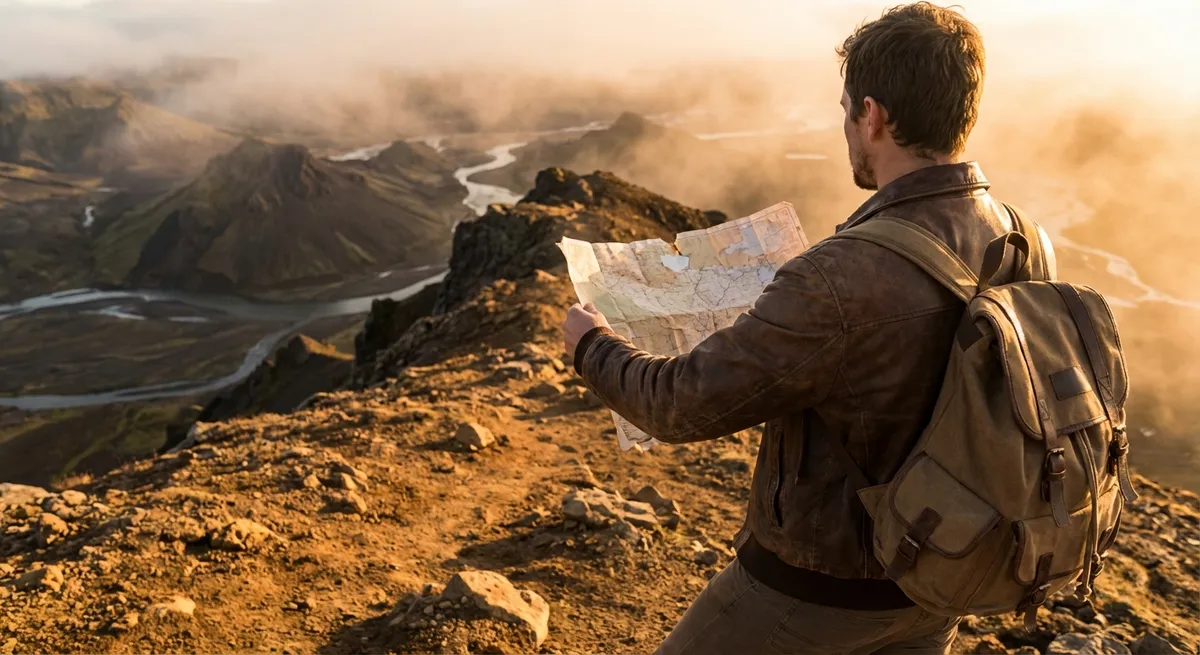
Below are five destination ideas that don’t fit neatly into a brochure. Each one is a gateway to something bolder—wilder landscapes, richer cultures, and unexpected versions of yourself that only appear when you go just a little further than “normal.”
1. Volcanic Front Rows: Islands Where the Earth Still Builds Itself
There are places on the planet where you can literally watch the world being created beneath your feet. Volcanic destinations like Iceland, Hawaii’s Big Island, and Sicily’s Mount Etna region feel less like vacations and more like front-row tickets to the planet’s backstage.
Imagine soaking in a steaming geothermal pool under Iceland’s midnight sun, black lava fields stretching into the horizon. Picture yourself trekking along the slopes of Etna, where vineyards thrive on ancient ash and villages live in quiet conversation with a rumbling giant. On Hawaii’s Big Island, you can hike through hardened lava, snorkel with manta rays at night, and listen to locals tell stories that braid together myth, geology, and identity.
Practical tips: Pack layers—volcanic landscapes can swing from hot to icy in hours. Book guided hikes with certified local operators for safety and deeper insight into the land’s living history. Respect closures and warning signs; volcanic regions are beautiful precisely because they’re powerful. Travel in shoulder seasons for quieter trails and more open conversations with locals who live in the shadow of the lava.
2. High-Altitude Cities That Teach You How to Breathe Again
Some cities don’t just sit on the map; they float above it. High-altitude destinations like La Paz (Bolivia), Cusco (Peru), and Lhasa (Tibet) invite you to slow down, breathe deeper, and discover that altitude isn’t just a number—it’s a new way of moving through the world.
In La Paz, cable cars glide over a canyon of terracotta rooftops, turning your commute into an airborne panorama. Cusco, once the heart of the Incan empire, balances between ancient stonework and lively markets where the scent of fresh coca tea hangs in the air. In Lhasa, the Potala Palace rises from the plateau like a memory carved into the sky, and prayer flags flutter like confetti for the wind.
Practical tips: Plan extra days to acclimatize—think “wander” instead of “rush.” Hydrate constantly, avoid heavy alcohol at the start, and listen to your body. Choose accommodations that highlight local architecture and views; a balcony or rooftop can become your favorite high-altitude observatory. Spend time people-watching in main squares; they’re the heartbeat of these cities and the best place to feel the altitude of culture, not just of air.
3. Desert Horizons Where Silence Becomes Its Own Soundtrack
Deserts are often misunderstood as empty, but when you step into them, you realize they’re overflowing—with colors, stars, and a kind of silence that rearranges your thoughts. Whether it’s the rose-red canyons of Wadi Rum in Jordan, the sculpted dunes of Namibia’s Sossusvlei, or the salt flats of Bolivia’s Salar de Uyuni, these landscapes feel like the world stripped down to its most honest self.
Picture riding in the back of a 4x4 as the sun melts into Wadi Rum’s sandstone cliffs, then sleeping under a sky so bright with stars it feels like a second desert above you. Or climbing a dune before sunrise in Namibia, your footprints the only marks on a canvas of gold. On Uyuni’s salt flats after rain, the horizon disappears and you walk inside a perfect reflection of the sky—it feels less like travel and more like stepping into a dream the Earth forgot to wake up from.
Practical tips: Temperatures swing hard, so bring sun protection, a warm layer, and a scarf or buff for wind and sand. Choose reputable local guides—many desert communities depend on sustainable tourism, and they know how to navigate safely while sharing the stories that live in the landscape. Time your visit around moon cycles; a new moon means darker skies and a galaxy-level night show.
4. River Roads Through Cities That Grew Up on the Water
Some of the most unforgettable destinations aren’t built beside rivers—they’re woven into them. Journeying through river cities like Porto on Portugal’s Douro, Budapest on the Danube, or Chiang Mai along the Ping River reveals places that think in currents and move to the rhythm of the water.
In Porto, traditional rabelo boats rest along the Douro as tiled facades lean over the river like they’re listening for stories. Cross a bridge at dusk and watch the city light up, one window at a time, as if the river is reflecting a thousand small beginnings. In Budapest, the Danube splits Buda and Pest into two personalities: one more historic and hilly, the other buzzing and urban. Night cruises reveal the Parliament building glowing like a crown above the water. In Chiang Mai, riverside cafés, markets, and lantern festivals pull daily life down to the water’s edge, blending calm and celebration.
Practical tips: Seek out river walks, bike paths, and ferries instead of defaulting to taxis. Many cities offer river passes or public boat systems that double as cheap sightseeing tours. Plan at least one sunrise or sunset by the water—a simple coffee on the riverbank can be as memorable as any big-ticket attraction. And in flood-prone seasons, check local advisories to stay flexible with plans.
5. Borderlands Where Cultures Overlap and Identities Blur
Some of the most fascinating destinations sit not in the middle of countries, but at their edges. Border regions—like the Basque Country between France and Spain, the tri-border area of Argentina-Brazil-Paraguay near Iguazú, or the Thai-Lao border along the Mekong—aren’t just lines on a map; they’re living conversations between cultures.
In Basque Country, you’ll hear a language unrelated to any other in Europe, taste pintxos that feel like edible art, and hike coastal trails that tie fishing villages to modern cities. Near Iguazú Falls, you can cross borders while tracing the thunder of one of the world’s most powerful waterfalls, experiencing how three nations share a single natural wonder. Along the Mekong, night markets, temples, and riverboats reveal how food, faith, and trade flow easily where borders look rigid on paper.
Practical tips: Carry your passport and know visa requirements well in advance—border crossings can be easy or complex depending on your nationality. Travel with curiosity first: ask locals how they identify and what being “from here” means to them. Consider staying in smaller towns instead of just the big border hubs; you’ll often find more authentic cross-cultural experiences in the in-between places where tourists don’t linger.
Conclusion
The destinations that stay with you are rarely the ones that felt familiar. They’re the ones that challenged your pace, rearranged your assumptions, and made you feel small in the best possible way—standing on a lava field, squinting at stars over the desert, catching your breath in a high-altitude square, tracing the curve of a river, or crossing an invisible line between cultures.
You don’t have to go everywhere. You just have to go somewhere that nudges you into a bigger version of yourself.
Start with one wild idea: a volcanic island, a sky-high city, a desert horizon, a river-lit neighborhood, or a borderland that speaks more than one language at once. Let that idea pull you onto a plane, a train, or a night bus.
The map is waiting—but the real question is: which version of you do you want to meet out there?
Sources
- Icelandic Tourist Board – Nature & Geography – Overview of Iceland’s volcanic landscapes and geothermal features
- U.S. National Park Service – Volcanoes – Educational information on volcanic activity and safety in volcanic regions
- Centers for Disease Control and Prevention – High-Altitude Travel & Altitude Illness – Practical health advice for traveling to high-altitude destinations
- UNESCO World Heritage Centre – Iguazu National Park – Background on Iguazú Falls and the surrounding tri-border region
- UNESCO World Heritage Centre – Namib Sand Sea – Information on Namibia’s desert ecosystem and its global significance