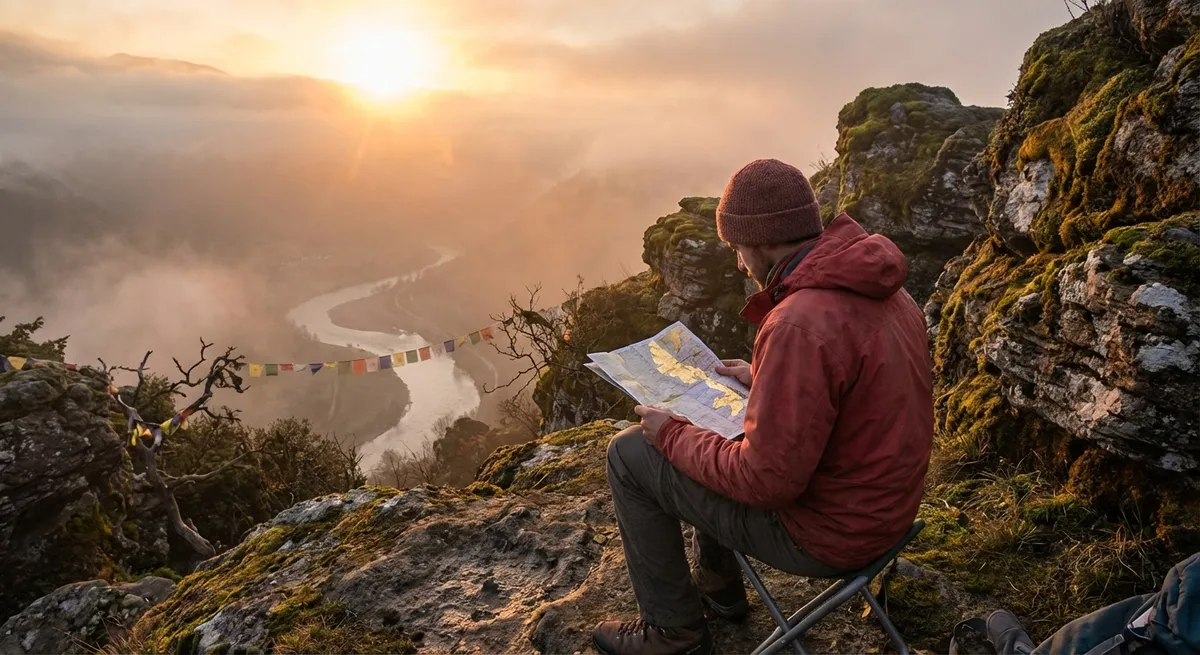
Below are five kinds of places—each with a real-world example—that don’t just give you views; they hand you a new story to live in.
1. Edge‑of‑the‑Earth Coasts: Where Land Runs Out and Courage Begins
There’s something electric about standing where the continent simply stops and the ocean roars its endless reply. Edge-of-the-earth coasts feel like open invitations to rethink how big your life can be.
Picture the wind-lashed cliffs of the Wild Atlantic Way in Ireland: waves detonating against rock, roads that cling to the shoreline like a dare, tiny villages that glow with pub lights when the weather turns wild. Or the dramatic Pacific coast of Big Sur in California, where the highway seems to hover between mountain and sea. These places demand that you slow down: pull over at viewpoints, walk to hidden coves, let the horizon reset your sense of scale.
Practical moves: rent a small car and build in extra time for spontaneous stops—coastal roads often have traffic and weather surprises. Pack layers; conditions flip fast near the sea. And don’t over-script your day. The magic usually appears in the unplanned: a fog bank rolling in, a pod of dolphins off the rocks, a stranger sharing a local legend in a seaside café.
Edge-of-the-earth coasts remind you that your “limits” are usually just lines you drew on an old map. Go there to redraw them.
2. High-Altitude Worlds: Cities and Trails Above the Clouds
High places change your perspective—literally and mentally. Move your life a few thousand meters higher and everything slows, sharpens, and hums with a quiet intensity.
Consider Cusco in Peru, gateway to the Sacred Valley and Machu Picchu, or La Paz in Bolivia, cradled in a bowl of mountains with cable cars crossing the sky like veins of light. Streets rise almost vertically, and suddenly walking becomes a deliberate act. Even everyday errands feel like tiny expeditions.
Spend time in high-altitude destinations and you’ll notice your senses recalibrate. Colors pop under thin, clear air. Night skies crackle with stars. Local markets brim with coca leaves, thick wool, and foods designed to fuel life “up there.” Treks—from short acclimatization hikes to multi-day routes—become a ritual of patience and presence.
Practical moves: plan for acclimatization days; altitude sickness is real and can ruin a rushed itinerary. Drink more water than you think you need, go easy on alcohol the first days, and keep your walking pace deliberately slow. When booking, look for guesthouses with access to outdoor terraces—sunrises and sunsets from that high are part of the reason you came.
High-altitude destinations teach you the art of moving slowly but bravely—an approach that travels home with you.
3. Living Heritage Cities: Where the Past Walks Beside You
Some cities feel like history museums. Others feel like history that never stopped breathing. Those are the places where every alley, courtyard, and street vendor hints at stories still unfolding.
Take Kyoto in Japan, where glassy modern stations coexist with silent bamboo groves, lantern-lit alleys, and wooden machiya townhouses. Or Fez in Morocco, whose walled medina is a living maze of workshops, spice markets, and hidden riads. You don’t just “see” heritage here; you bump into it buying breakfast, riding public transit, or getting lost on your way to dinner.
The adventure isn’t only in monuments—it’s in everyday rituals: a tea ceremony, a traditional public bath, a neighborhood festival that appears in the square without ever making it onto tourist brochures. Say yes to the small, local invitations: sit on a low stool to try a street snack you can’t pronounce, watch a craftsman at work, join a crowd listening to a street musician play a song older than any building you’ve seen.
Practical moves: book lodging inside or right beside the historic core, even if it’s slightly more expensive—the after-dark atmosphere is worth every extra dollar. Take one guided walking tour early in your stay; it unlocks context you’ll keep seeing everywhere. Then gift yourself unscripted wander time, offline map in hand, with no destination but curiosity.
Living heritage cities remind you that the past isn’t behind you—it’s beside you, whispering new ways to belong to the places you visit.
4. Water-Lit Worlds: Lakes, Fjords, and Islands That Rewrite Stillness
When land breaks apart and water floods in, the world rearranges itself into something quietly spectacular. Lakes framed by peaks, fjords carved by ancient ice, island chains that look like scattered emeralds from the air—these are the places where stillness feels powerful, not empty.
Imagine Norway’s fjord country: glassy waterway corridors flanked by vertical cliffs, tiny farms clinging improbably to green shelves, waterfalls unspooling from clouds. Or the Dalmatian islands off Croatia, where terracotta-roofed towns melt into clear, swimmable coves. The pace shifts with the tide; your plans bend to ferry schedules, sunrise paddles, and long dinners that last as long as the daylight.
The adventure here is in changing your vantage point. See the same landscape by foot, by paddle, and by boat, and it becomes three different worlds. Early mornings on lakes and fjords are especially potent: mist curling off the surface, the soundscape reduced to birds and the soft dip of oars.
Practical moves: prioritize at least one slow form of transport on the water—a kayak, canoe, stand-up paddleboard, or small local boat tour. Pack a lightweight dry bag and layers that can handle wind and spray. When planning, check shoulder season options; many water destinations are less crowded and more affordable just before or after peak months, while still offering good conditions.
Water-lit destinations teach you that calm doesn’t mean dull. It means fully awake to small shifts: the angle of light, the shape of waves, the way silence carries farther over water.
5. Wild Thresholds: Destinations Where Cities End and Wilderness Begins
Some of the most thrilling destinations sit exactly on the seam between civilization and the wild. One bus ride, one gravel road, and suddenly the glow of the city dissolves into forests, tundra, or desert stretching to the horizon.
Think of Patagonia’s gateway towns like El Chaltén in Argentina—little clusters of lights at the foot of jagged peaks—or places like Banff in Canada, where a main street backs directly into trailheads and alpine lakes. In these liminal zones, you can spend your morning nursing an espresso and your afternoon tracing the edge of a glacier or scanning a valley for wildlife.
What makes these destinations compelling is choice. Every day offers a spectrum: short hikes or technical climbs, scenic drives or multi-day treks, easy viewpoints or ambitious routes. You decide how far into the wild you step. Even the weather becomes part of the adventure; clouds roll in, and the mountain you saw yesterday vanishes, reminding you nature calls the shots.
Practical moves: base yourself in towns with strong trail infrastructure and visitor centers. Stop by on day one to ask about current conditions and safety updates—trails can close due to weather, wildlife, or maintenance. Rent gear locally when you can; it supports the community and saves you from hauling heavy equipment. And always have a “plan B” for low-visibility or stormy days, like hot springs, museums, or scenic drives.
Wild-threshold destinations nudge you to live closer to the edge of your own comfort while still offering a safe place to return each night—a perfect training ground for bolder leaps later.
Conclusion
Destinations aren’t just coordinates. They’re catalysts—places that tilt your inner compass a few degrees and quietly reroute the path ahead.
Chase the cliffs where land runs out, the cities in the clouds, the alleys where history walks beside you, the waters that mirror your own stillness, and the wild thresholds that blur the line between town and untouched earth. Go not to escape your life, but to expand it—so when you return, your world back home feels a little wider, a little wilder, and a lot more possible.
Your next leap doesn’t have to be perfect. It just has to be taken. Pick one destination that tugs at you, circle a date, and let the map start turning gold.
Sources
- Wild Atlantic Way – Official Site - Official information on Ireland’s coastal route, including highlights, maps, and travel tips
- CDC Travelers’ Health: High Altitude - Medical guidance on preparing for and coping with high-altitude destinations
- Kyoto City Official Travel Guide - Detailed information on cultural sites, neighborhoods, and events in Kyoto
- Visit Norway – Fjords - Overview of Norway’s fjord regions, activities, and seasonal advice
- Parks Canada – Banff National Park - Official resource on trails, safety, and planning for Banff and surrounding wilderness areas