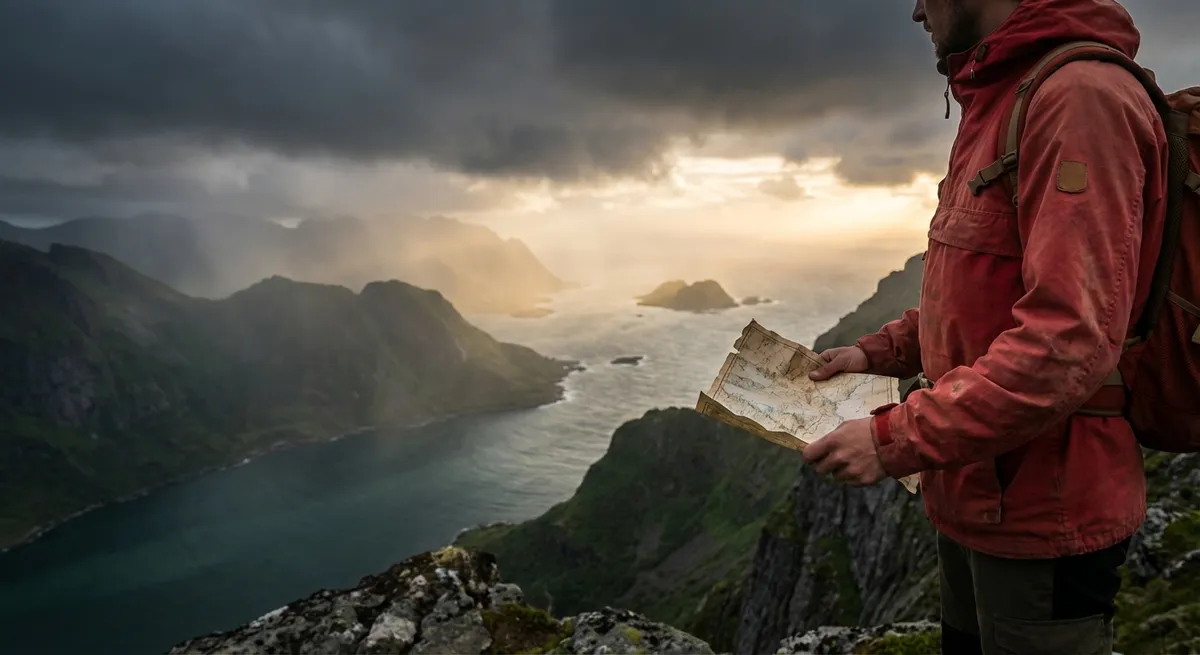
1. Fjords at the World’s Edge: Norway’s High-Latitude Magic
Sailing through Norway’s fjords feels less like a cruise and more like wandering between the pages of an epic you didn’t know you were part of. Sheer cliffs rise straight from the water, villages cling to the shoreline in splashes of red and yellow, and the light—especially in late spring and summer—lingers so long it’s as if the day refuses to end. In the far north, beyond the Arctic Circle, you can chase the midnight sun, watching it skim the horizon without ever quite setting.
Adventure here is all about perspective. Take a ferry through Geirangerfjord and look up at waterfalls tumbling from impossible heights. Hike to Preikestolen (Pulpit Rock) near Stavanger and stand at a sheer drop above Lysefjord, the water a narrow ribbon below you. Travel in shoulder seasons (May–June or September) for fewer crowds and more space to breathe. Use regional ferries and trains instead of flying between cities; the journey through tunnels, over bridges, and along the coast is part of the story.
Pack layers and weather-proof gear—Norway’s beauty is woven with rain, mist, and sudden changes in temperature. But that shifting weather is what makes the light dramatic and the photos unforgettable. Keep evenings flexible: the best moments often happen when you decide to follow a side road to a tiny harbor or linger longer in a town you meant to pass through.
2. Night-Fueled Cities: When the After-Dark Hours Become the Destination
Some destinations truly wake up when the sun goes down, turning streets into rivers of neon and conversation. Think of Tokyo’s Shinjuku and Shibuya districts, where every alley hides a tiny bar or ramen shop, or Bangkok’s riverside and backstreets, where food carts, markets, and music fill the humid night air. In these cities, you don’t just explore places—you explore layers of energy.
The magic is in walking without a rigid plan. Duck into the busiest food stall and point to what looks amazing. Follow the locals: where lines form, flavor usually follows. In Tokyo, let yourself wander through Omoide Yokocho or Golden Gai for impossibly small bars with room for just a handful of people and stories. In Bangkok, step beyond the famous night markets and head to neighborhoods like Ari or Chinatown, where local life and nightlife blend.
Practical moves keep the adventure safe and smooth. Bookmark your hotel on an offline map, carry small cash for late-night street food, and learn a few basic phrases in the local language—they go a long way after dark. Most importantly, give yourself a night to just drift: no must-see checklist, just you and the city, trading curiosity for surprise.
3. High-Altitude Frontiers: Where Every Breath Feels Earned
There’s a special kind of clarity that comes with thin air and wide horizons. Destinations like Peru’s Sacred Valley, Nepal’s trekking routes around the Annapurna region, or Colorado’s high passes are less about ticking off peaks and more about discovering how far your feet—and your resolve—can carry you. Villages appear like mirages, clouds roll by below you, and each step is a quiet pact with yourself to keep going.
In places like the Sacred Valley, you can blend culture and altitude: wander ancient terraces at Pisac, ride local colectivo vans between hillside towns, or take a leisurely acclimatization day in Ollantaytambo before tackling higher trails or heading toward Machu Picchu. In Nepal, teahouse treks make the mountains unexpectedly social—you can hike by day and trade stories with trekkers and locals over dal bhat and ginger tea at night.
The key here is respect—for the land, for your body, and for the communities that make these regions livable. Ascend gradually, hydrate more than feels natural, and build “rest days” into your route as non-negotiable, not optional. Invest in good boots and break them in before your trip; your future self at 3,500 meters will thank you. And remember, turning back when needed isn’t failure—it’s proof that you’re listening, and that means you’ll get to chase more horizons later.
4. Islands That Run on Local Time: Slow-Current Escapes
Not all islands are about resorts and rigid itineraries. Some are defined by ferries that come when they’re ready, markets that open when the morning feels right, and sunsets that gather whole communities along the shore. Picture places like the Azores in the North Atlantic, the far-flung corners of Greece outside the top-billed hotspots, or the quiet, green corners of Hawaii away from the main resort corridors.
Here, adventure looks like renting a car or scooter and allowing curiosity to dictate your route. In the Azores, you might drive from a volcanic crater lake to natural hot springs and end the day eating limpets and fresh fish in a tiny harbor restaurant. On a smaller Greek island, your biggest decisions might be which cove to swim in and which seaside taverna to adopt as “yours” for the week.
Travel light and flexible: ferry schedules can change with the weather, and that’s part of the charm. Book your first few nights, then let the rest of your stay evolve based on conversations with locals and other travelers. Try shopping in local markets and cooking at least once; it pulls you into the everyday rhythm of the island and can stretch your budget while deepening your connection to the place.
5. Cities That Feel Like Living Museums—With a Pulse
Some cities wear their history out in the open, yet still move at a modern beat. Walking through places like Istanbul, Mexico City, or Lisbon feels like flipping between centuries: one moment you’re in a centuries-old bazaar or plaza, the next you’re sipping coffee in a minimalist café or listening to live music in a repurposed warehouse.
Use your days to trace the layers. In Istanbul, drift between the domes of the Blue Mosque and the Grand Bazaar, then cross the water to Kadıköy for street art, cafés, and nightlife. In Mexico City, stand amid the ruins of Templo Mayor, then wander into La Roma or Condesa for leafy streets, galleries, and inventive food. Lisbon lets you ride rattling trams through steep streets in the morning and watch sunset from a miradouro, guitar music echoing off the tiles, in the evening.
To make the most of these destinations, balance “anchor” sights with unscripted wandering. Book timed entry for major attractions, then deliberately leave wide open blocks in your day to follow your senses: the smell of bread from a side street, music drifting from a doorway, a crowd gathered around a street performer. Public transit is often your greatest ally here; not only does it keep costs down, it drops you into the heart of local life, one ride at a time.
Conclusion
The world is full of places that still feel like discovery—not because no one’s ever been there, but because no one has been there as you. From fjords bathed in endless light to alleyways that buzz after midnight, from high-altitude trails to unhurried islands and layered cities, these destinations don’t just offer scenery—they offer transformation. The map is already waiting. Your only job is to choose a direction, pack your curiosity, and step toward the next horizon.
Sources
- Visit Norway – Official Travel Guide - Detailed information on Norwegian fjords, regions, transport, and seasonal travel tips
- Japan National Tourism Organization - Official insights on Tokyo neighborhoods, nightlife, and cultural etiquette
- U.S. Centers for Disease Control and Prevention – Travelers’ Health - Guidance on high-altitude travel, acclimatization, and health precautions
- Azores Tourism – Visit Azores - Official resource on island activities, nature, and logistics in the Azores
- UNESCO World Heritage Centre - Background on historically significant cities and sites such as Machu Picchu, Istanbul, and others mentioned