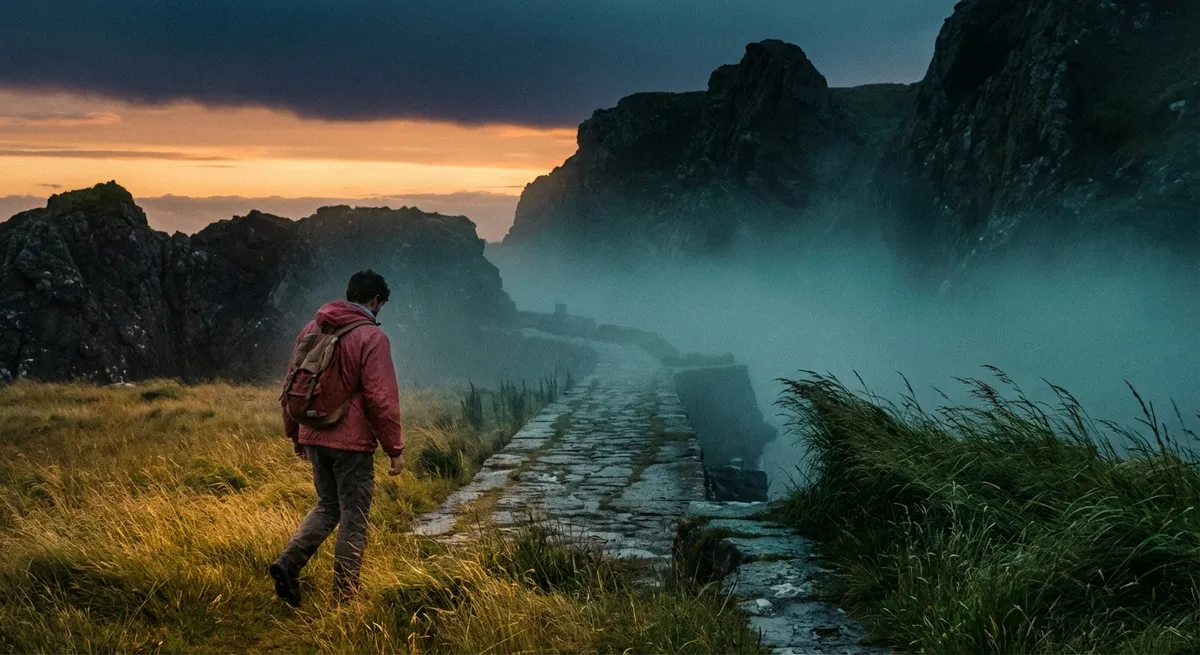
This isn’t about bucket-list clichés. It’s about five kinds of places around the world where the landscape, the culture, and the energy invite you to step over a threshold—out of autopilot, into something wilder, braver, and more awake.
1. Fjord-Edge Towns in Norway: Where Mountains Fall Into the Sea
Imagine standing on a wooden pier, the air so crisp it feels like you could bite it, cliffs rising straight out of ink-dark water, and a silence that’s broken only by gulls and the slow churn of a distant boat. Norway’s fjord towns—places like Flam, Geiranger, and Aurlandsvangen—don’t just offer views; they deliver a sense of raw, vertical scale that resets your idea of “grand.”
Travelers come here for the drama: jagged peaks, waterfalls dropping like white ribbons down cliffs, and village lights twinkling against slate-blue water at night. But what makes these destinations truly threshold-worthy is how accessible the wild feels. You can wake up in a cozy cabin, grab a coffee, and within an hour be kayaking past sheer rock walls or hiking to a viewpoint where the entire fjord curls beneath you like a painted backdrop.
Practical tip: Base yourself in a small town instead of a big city. Use local ferries and scenic rail routes like the Flam Railway to see the fjords slow and close-up, instead of rushing through on a single-day bus tour. Layer up—weather can shift fast—and always check local hiking and safety advice from tourist offices or park rangers before heading out.
2. Night-Deep Deserts: Where the Sky Finally Looks Infinite
In the world’s great deserts—like the Sahara in Morocco, the Atacama in Chile, or Wadi Rum in Jordan—the horizon doesn’t just stretch; it erases your usual sense of boundary. During the day, there’s a stark, almost lunar beauty: wind-sculpted dunes, copper cliffs, salt flats that shimmer like mirrors. But it’s at night that these destinations really flip a switch in your brain.
Far from city lights, the sky goes from familiar to overwhelming. The Milky Way looks like a river of light flung across the black, and constellations you only know from apps suddenly feel close and sharp. Sitting around a campfire at the edge of the dark, you get that rare sensation of being tiny but not insignificant—just one small dot in a universe of many, deeply alive in the moment.
Practical tip: For a more grounded experience, book with local guides or community-run camps. They know the landscape, the weather, and the safest routes. Pack layers (desert nights get surprisingly cold), bring a scarf or buff for sand and sun, and download offline star maps to help you navigate the night sky without cell service.
3. Volcanic Islands: Standing on Earth That’s Still Becoming
There’s something electrifying about standing on land that’s still in motion—geologically speaking. Volcanic destinations like Iceland, Hawaiʻi’s Big Island, or the Aeolian Islands in Italy give you a front-row seat to Earth’s slow (and sometimes not-so-slow) act of creation.
Here, the ground hisses with steam, the air smells faintly of minerals, and you might hike across hardened lava flows younger than you are. In Iceland, you can soak in geothermal pools while snow falls around you; on the Big Island, you might trace old lava paths down to black-sand beaches; in Stromboli, Italy, you can watch a volcano flicker red against the night sky from a boat just offshore. These places don’t feel static—they feel alive, shifting, and deeply elemental.
Practical tip: Always respect local safety closures and warning signs. Volcanic landscapes can be unpredictable, and conditions change quickly. Book at least one guided excursion with a certified local operator; you’ll learn more about geology, history, and safe routes than you ever would doing it fully solo. Footwear matters here—solid hiking shoes with good grip are non-negotiable.
4. River Cities With Two Speeds: Historic Cores and Wild Banks
Some destinations live in two different centuries at once, and you feel it most along their rivers. Think of places like Porto on the Douro River, Budapest on the Danube, or Chiang Mai along the Ping River. In the heart of the city, lights and conversations swirl; walk a little further along the water, and suddenly the tempo drops.
You might spend your morning wandering old neighborhoods, tracing tiled facades or crumbling castles, and your afternoon biking or walking along quieter river paths fringed with greenery. Bridges become your lookout points, where you can shift from city buzz to reflective calm in a few steps. The river stitches together food, history, nightlife, and quiet escapes into one fluid experience.
Practical tip: Treat the river like your compass. Rather than planning only around must-see monuments, ask locals where they go to sit by the water, run, or watch sunset. Take ferries or small river cruises where available to see the city from a new angle, and time at least one stroll for blue hour—the brief window when the city lights up and the sky still holds a hint of color.
5. High-Route Rail Journeys: Destinations That Are Also the Journey
Some of the most unforgettable “destinations” are stitched together by a single steel thread of track. Think of train routes like the Swiss Glacier Express, India’s Kalka–Shimla Railway, or Japan’s coastal and alpine rail lines. These aren’t just ways to get from A to B—they’re moving viewpoints that carry you across altitudes, climates, and cultures in a matter of hours.
On these journeys, you’re not trapped in transit; you’re immersed in it. You watch valleys give way to snowfields, rice paddies blur into forested hills, fishing villages flash past between tunnels. The rhythm of the train forces a gentler pace: you read, journal, share snacks with fellow travelers, or just press your forehead to the glass and let the scenery rearrange your thoughts.
Practical tip: When planning, don’t just book the famous route—look for local or regional lines that connect smaller towns. These often cost less, feel more authentic, and offer richer glimpses of everyday life. Reserve window seats where possible, pack light snacks and a refillable water bottle, and download offline maps so you can track your journey and mark spots you might want to return to later.
Conclusion
The destinations that stay with you aren’t always the ones everyone’s posting about; they’re the places where something inside you quietly clicks into a new position. A fjord village that makes silence feel majestic. A desert camp where the night sky finally makes sense. A volcanic coast where the ground hums with hidden heat. A river city that flows at two different speeds. A rail line that turns “getting there” into its own adventure.
You don’t have to wait for a perfect moment, a perfect budget, or a perfect plan. Pick one threshold to cross—a landscape, a sky, a route—and step into it fully. The map will still be there when you come back, but you won’t be quite the same traveler who unfolded it.
Sources
- Visit Norway – Fjords Overview - Official tourism information on Norway’s fjord regions, including travel logistics and activities
- International Dark-Sky Association – Dark Sky Places - Details on certified dark-sky reserves and parks ideal for desert and stargazing trips
- Iceland Tourist Board – Geothermal and Volcanic Regions - Background on Iceland’s volcanic landscapes, safety considerations, and key regions to visit
- Swiss Travel System – Glacier Express - Official information about one of Europe’s iconic scenic rail routes, including routes and practical tips
- UNESCO World Heritage Centre – Wadi Rum Protected Area - Context on the cultural and natural significance of Jordan’s Wadi Rum desert region