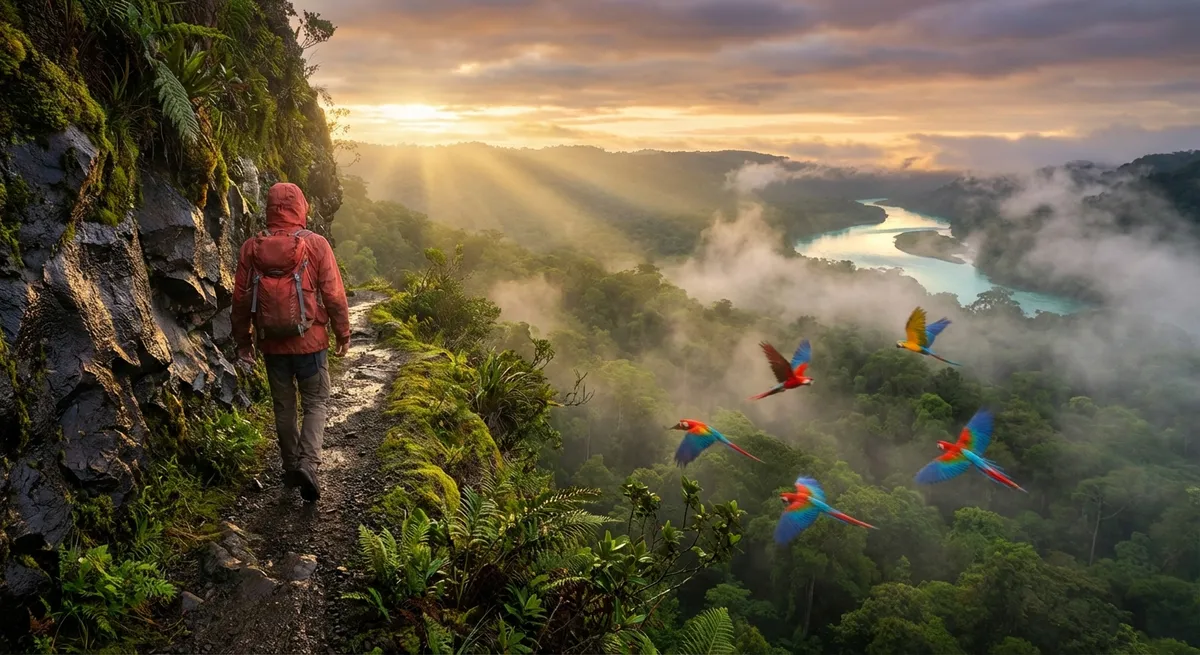
If you’re craving adventure that doesn’t just fill your camera roll but rewires your sense of what’s possible, these five destination ideas are your invitation. Each one offers a different kind of wild—untamed nature, deep-rooted culture, or quietly epic landscapes—plus practical moves to help you get there without turning it into a logistical nightmare.
1. Volcanic Edges: Islands Forged by Fire
There’s something primal about standing on land that didn’t exist a few million years ago—and in some places, is still being born. Volcanic islands feel alive: sulfur in the air, black sand underfoot, steam rising from the earth like the planet is exhaling. Destinations like Iceland, Hawaii (Big Island), and the Canary Islands turn geology into a front-row experience instead of a diagram in a textbook.
Imagine soaking in a geothermal hot spring while snow-covered peaks rise in the distance, or hiking along cooled lava fields that look like frozen waves. On the Big Island of Hawaii, you can walk over ancient flows in Hawaii Volcanoes National Park and watch the coastline where lava once met the ocean. In Iceland, you can chase waterfalls born from glacier melt and wander between tectonic plates in Þingvellir National Park.
Practical move:
Base yourself in one hub (like Reykjavik or Hilo) and book day trips that combine multiple elements—hiking, hot springs, and viewpoints. This keeps logistics simple while maximizing variety. Pack layers, a waterproof shell, and shoes with solid grip; volcanic landscapes can be sharp, slippery, and exposed to fast-changing weather.
2. High-Altitude Silence: Mountain Towns Above the Clouds
Some destinations don’t shout; they whisper at thin air. High-altitude towns—from the Himalayas to the Andes to the Alps—offer a rare mix: breathtaking drama outside your window and a slower, humbler pace of life in the streets. The air is cooler, the light hits differently, and the stars feel like they’ve moved closer.
In Peru, towns like Cusco or Ollantaytambo place you at the crossroads of Inca routes and modern-day Andean life. In Nepal, hubs like Pokhara or Namche Bazaar sit in landscapes that redefine the word “vast.” You wake up to the sound of bells, boots, and the low hum of communities that have long balanced survival and spirituality among the peaks.
Practical move:
Respect the altitude. Build in 2–3 acclimatization days when you arrive—walk slowly, drink water constantly, and avoid going straight from sea level to intense hikes. Use those days to wander local markets, taste regional food, and learn a few key phrases in the local language. You’ll protect your health and deepen your connection to the place instead of treating it like a backdrop.
3. Desert Horizons: Where Distance Becomes the Main Attraction
Deserts strip everything down to essentials: sand, stone, sky, light. In places like Wadi Rum in Jordan, the Atacama Desert in Chile, or Namibia’s dunes, scale does something strange—your sense of distance stretches until yesterday’s worries feel very small. Days are golden and sun-soaked; nights are cathedral-dark and star-drenched.
Picture riding in a 4x4 or on camelback past red rock towers and endless dunes, or standing on a salt flat while dusk turns the landscape pink and blue. In the Atacama, you can see some of the clearest night skies on Earth. In Namibia’s Sossusvlei, climbing a dune at sunrise feels like walking on the spine of a sleeping giant. These places are both otherworldly and deeply grounding.
Practical move:
Treat desert travel like a partnership with the environment, not a conquest. Hydrate before you’re thirsty; cover your skin with breathable layers; protect your eyes with good sunglasses. Book at least one guided outing with a local expert—they’ll help you navigate safely, share stories of the land, and point out details you’d miss on your own, from ancient rock art to hidden wildlife tracks.
4. River Worlds: Cities and Villages Built on the Flow
Some destinations are defined not by a skyline, but by a river that quietly scripts daily life. Think of the Mekong threading through Southeast Asia, the Danube winding past Central European capitals, or the Nile cutting its ribbon through Egypt. In these places, boats replace buses, and the rhythm of the water shapes meals, markets, and movement.
River cities give you a layered kind of adventure: gliding past centuries of history in a single afternoon, docking in villages where time moves slower, and watching sunsets flare across water instead of concrete. A simple ferry ride can feel like an urban safari—temples and skyscrapers sharing the same horizon, fishermen and office workers sharing the same currents.
Practical move:
Instead of booking only big-ticket cruises, mix in local water transport. Take public ferries, short river taxis, or evening boat rides run by community operators. It’s cheaper, more flexible, and more connected to real life along the river. Always check safety standards: look for life jackets, confirm capacity limits are respected, and read recent traveler reviews before booking.
5. Edge-of-Map Coasts: Where Land Runs Out and Stories Begin
Coastal edges—where land simply stops and ocean takes over—have a way of stirring up big questions. Rugged headlands in places like Portugal’s western coast, New Zealand’s South Island, or Ireland’s Wild Atlantic Way feel like natural punctuation marks at the end of continents. Wind, cliffs, and endless blue conspire to remind you how small—and how free—you are.
Imagine driving narrow roads that unravel along sea cliffs, pulling over to hike down to hidden coves, or watching storms roll across the horizon from a lighthouse viewpoint. In many of these destinations, small fishing villages still anchor the shoreline: boats bobbing, seafood drying, local bars filled with stories. The mix of raw nature and human resilience is intoxicating.
Practical move:
Schedule “weather days” into your trip. Coastal edges can be unpredictable—fog, wind, and storms often arrive unannounced. Instead of overpacking your itinerary, allow flex days where your only plan is: follow the light. On calm days, hunt for swimming spots and long walks; when the sea is wild, head for higher viewpoints and cozy cafés where you can watch the waves rewrite the shoreline.
Conclusion
The world’s most powerful destinations don’t just give you new scenery—they give you new settings for your own story. Volcanic islands that feel alive under your feet. Mountain towns that teach you to move slowly at altitude. Deserts that reset your sense of scale. Rivers that carry centuries of history on their currents. Coastlines where the map fades into open water and whatever comes next.
You don’t need to chase every corner of the planet at once. Start with one kind of wild that’s calling you right now. Pick the destination that makes your pulse quicken a little, plan just enough to stay safe and present, and leave space for the unexpected. Because the real magic of these places isn’t only what you see when you arrive—it’s who you are when you finally come back.
Sources
- U.S. National Park Service – Hawaii Volcanoes National Park - Official information on volcanic landscapes, safety, and hiking on the Big Island
- Iceland Travel Guide – Visit Iceland (Official Tourism Site) - Detailed insights on geothermal areas, weather, and planning volcanic and coastal trips in Iceland
- Centers for Disease Control and Prevention – High Altitude Travel & Altitude Illness - Evidence-based guidance on safe travel and acclimatization in mountain destinations
- European Space Agency – Atacama Desert Observations - Background on the Atacama Desert’s extreme environment and clear skies
- UN World Tourism Organization – Tourism and Coastal Destinations - Overview of coastal tourism dynamics and sustainable travel considerations for shoreline regions