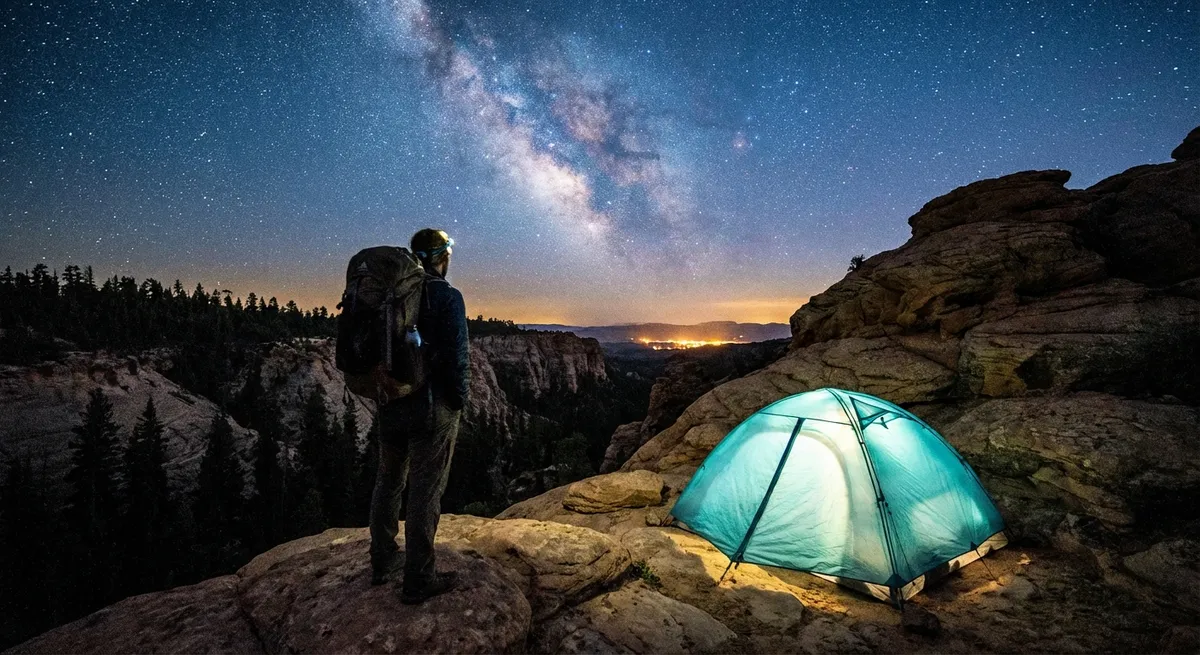
These are the destinations where your plans revolve around moonrise, not check‑in times. Where you learn to read the horizon by starlight, warm your hands around midnight tea, and suddenly realize how small your everyday worries look beneath a billion burning suns. If you’re ready to trade neon signs for constellations, these wild night‑sky escapes will reset your sense of adventure.
Desert Horizons That Glow After Sunset
In the desert, sunset isn’t the end of the day—it’s the opening act. As the heat drains from the sand, the sky deepens from cobalt to velvet, and suddenly you’re under a dome so clear it feels like you could physically step into it. Desert destinations far from major cities—think high plains in Chile, vast emptiness in Namibia, or quiet pockets in the American Southwest—are some of the darkest places you can still reach without a degree in mountaineering.
Settle into a dune or rocky outcrop, switch off every light you brought, and just wait. The Milky Way doesn’t sneak up on you—it erupts. Satellites drift by like moving stars, meteors flash unexpectedly, and familiar constellations look sharper, older, more mythic. Practical move: pack a lightweight red‑light headlamp so you can navigate camp without destroying your night vision. Plan your visit around new moon dates, and check local astronomy tours—many desert lodges offer telescopes and guides who can turn that sparkling chaos overhead into a story you’ll carry home.
Island Shores Where The Ocean Glows Back
Some coastlines don’t just offer dark skies—they offer glowing water that answers the stars. Bioluminescent bays and plankton‑rich shorelines transform night swims and quiet paddles into something straight out of science fiction. Picture sliding a kayak through inky blackness and watching electric‑blue swirls explode around your paddle. Or standing ankle‑deep on a quiet beach as each wave rolls in like a bright, liquid shadow of the Milky Way above.
Destinations with bioluminescence are often remote enough that the mainland glow can’t reach them, which means your reward is a double‑show: the stars above and the seas below. Look for locally run night tours using non‑motorized boats to protect the fragile ecosystem—and wear dark clothing so you can see the water light up against your hands. Keep your camera expectations low and your senses high; some magic is better stored in your memory than on your phone screen.
Mountain Villages That Sleep Under A River Of Stars
High‑altitude villages are where human life and wild sky still coexist on friendly terms. When the sun drops behind craggy peaks, these places don’t blast the darkness away with stadium lights—they dim down, tuck in, and let the mountains and stars take over. Imagine sipping strong tea or a local spirit on a creaking wooden balcony while the last voices in the valley fade into silence and a shimmering river of stars slowly sharpens overhead.
Thin mountain air makes the night sky look closer and cleaner, and even a casual glance up can show you satellites, distant planets, and shooting stars that would be erased by city haze. Choose guesthouses or lodges outside the main village center and ask about local stargazing spots—often a short uphill walk will take you to an open pasture or viewpoint with a full 360° horizon. Bring warm layers you can easily add or peel off; staying outside long enough for your eyes to fully adapt to the dark is when the real magic begins.
Ancient Ruins That Turn Into Nighttime Time Machines
Some historical sites don’t close when the sun does—they change costumes. After dusk, crowds vanish, heat dissolves, and the stones start to glow faintly under the stars. Standing among ruins with a sky unpolluted by city light can feel eerily similar to what ancient sky‑watchers might have seen above the same pillars and pathways centuries ago. Suddenly, the constellations aren’t abstract—they’re linked to temples, altars, and long‑forgotten rituals.
Seek out destinations where night access is allowed through guided tours or special permits—archaeological zones in rural areas or small historic towns are often your best bet. Scout your angles during the day, then return after dark with a tripod if you’re into photography, or just a blanket if you’re more of a lie‑on‑the‑ground‑and‑stare traveler. Respect quiet hours, stay on marked paths, and let the combination of old stones and ancient light shrink time into something you can feel on your skin.
Northern Latitudes Where The Sky Starts To Dance
Far from the equator, the night sky doesn’t just glitter—it moves. Polar and sub‑polar destinations offer rare nights when the sky feels alive, shifting and pulsing with ribbons of color. While everyone dreams of catching a perfect aurora show, the real adventure lies in the chase: bundling up, stepping into crunching snow or frozen ground, and waiting in the cold quiet as clouds drift and stars rearrange themselves overhead.
Head to out‑of‑town cabins, lakeside lodges, or remote villages where the nearest bright light might be a single porch lamp. Many accommodations now offer “aurora alerts” so you can grab a nap and still wake up if the lights appear. Dress with the patience of a stargazer: insulated boots, windproof outer layers, and a thermos filled with something hot enough to keep your hands and resolve warm. Even on nights when the sky doesn’t dance, you’ll gain something rare—several uninterrupted hours of deep, unhurried looking at a sky we’re usually too busy to notice.
Conclusion
Travel will always be about the landscapes, the food, the stories—but there’s a whole layer of adventure floating above every destination, waiting for anyone willing to step into the dark. When you choose places where the stars still write the headlines, your nights stop being the blank space between activities and become the main event.
Pack a warm layer, a sense of childlike curiosity, and a promise to your phone that it doesn’t have to capture everything. Then point yourself toward the edges of the map where the city’s glow finally gives up—and let the wild sky take over the itinerary.