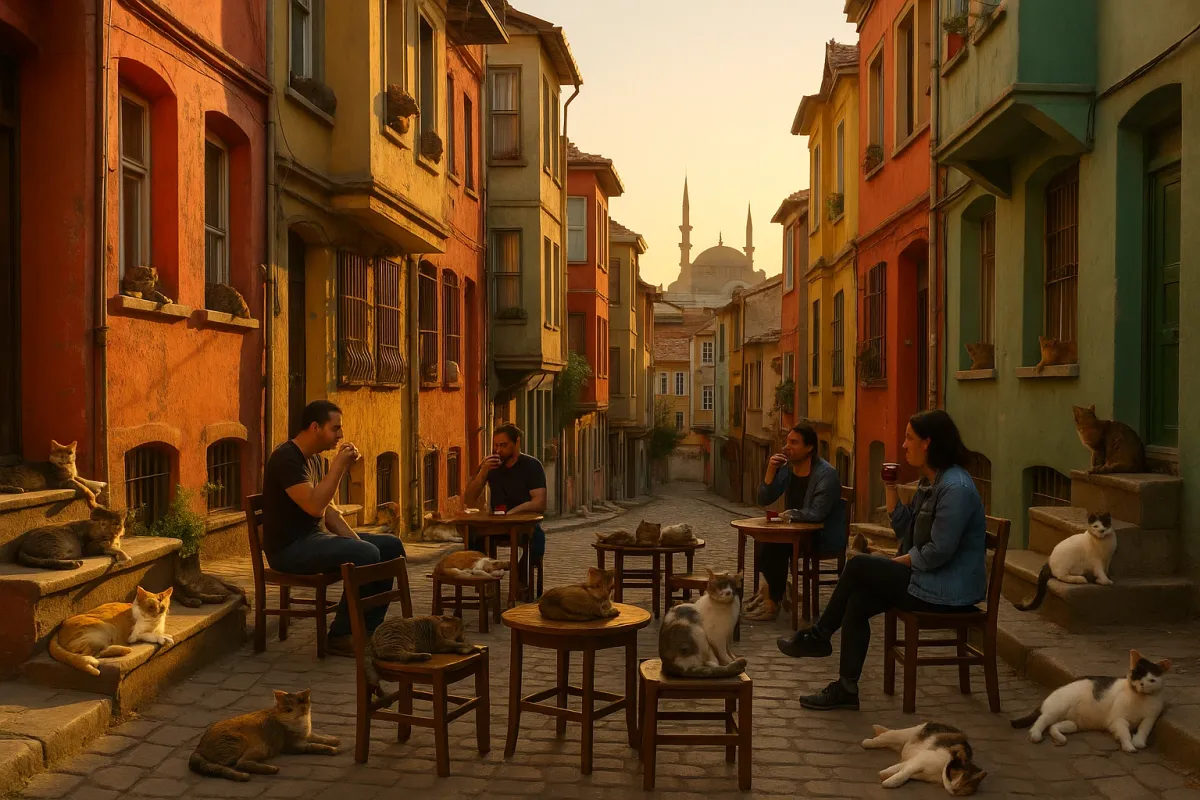
If you’ve been scrolling past those cat photos thinking, “Is Istanbul really that magical?”—the answer is yes, and then some. The city’s feline fame is just the hook. The real story is how Istanbul blends history, community, food, water, and street life into one endlessly explorable destination that feels both mythic and incredibly alive in this exact moment.
A City Where Street Cats Are Part of the Culture
In today’s social feeds, Istanbul’s cats are everywhere: sunbathing on mosque steps, curled up on bookshop counters, trailing fishermen along the Bosphorus. Those viral photos aren’t staged—they’re a glimpse into a real urban culture where animals and humans share the streets with uncommon ease. Locals leave out food and water bowls, build tiny cat houses, and treat neighborhood felines as a kind of furry public good.
Walking through Istanbul, you don’t just see the city, you’re constantly interacting with it. A cat hops onto your café bench as the waiter brings your Turkish coffee. Another winds through the crowd outside a spice shop in the Grand Bazaar. It turns a standard sightseeing day into something softer and more cinematic—you’re not just a visitor; you’re a character in the city’s ongoing story. Pack a small, sealable bag of dry food if you want instant feline friendships, and always ask shopkeepers before feeding “their” local cats.
Where Continents Collide: Turn Every Ferry Ride Into a Micro‑Adventure
While the internet obsesses over Istanbul’s cats, travelers are rediscovering something else about the city right now: how thrilling it feels to literally cross continents in your everyday movements. Short, inexpensive ferry rides shuttle you between Europe and Asia in under 20 minutes, with the skyline of domes, minarets, and modern towers unfolding around you like a moving postcard.
Instead of treating ferries as simple transport, build them into your adventure. Start one morning in Karaköy on the European side, wander past galleries and coffee bars, then catch a ferry to Kadıköy on the Asian side just as the light softens. On board, sip hot tea from a tulip‑shaped glass, watch seagulls dive for simit crumbs, and feel the wind carry the call to prayer across the water. Use Istanbulkart (the city’s transit card) to hop between lines—ferries, trams, and metros—turning the entire city into your playground for just a few lira per ride.
Markets That Feel Like Time Travel (With Modern Energy)
The latest photo sets of Istanbul’s cats often capture them perched in markets—on sacks of lentils, beside hanging lanterns, under pyramids of spices. That’s because the city’s bazaars are still beating hearts, not museum pieces. In 2025, they’ve become even more dynamic: old‑world stalls selling copper, carpets, and ceramics sit beside hip design shops and third‑wave coffee stands.
Plan to lose yourself deliberately. Start at the Grand Bazaar, one of the world’s oldest covered markets, but don’t rush—talk to carpet sellers about regional patterns, ask about the symbols woven into kilims, and let yourself be drawn down smaller alleys where fewer tourists wander. Then drift to the nearby Spice Bazaar, where you can taste lokum, sample pomegranate tea, and watch locals shop for everyday staples. The trick is to pick one small “mission” for each visit—find the perfect hand‑painted bowl, the best pistachio baklava, or a single piece of jewelry you’ll wear for years—so the overwhelm becomes a focused treasure hunt.
Street Food Safaris From Dawn to Midnight
While portraits of Istanbul’s cats go viral, the real secret stars of the city might be the street food vendors quietly feeding both locals and travelers from sunrise to well past midnight. In an era when travelers are chasing “authentic” flavors, Istanbul delivers nonstop—and you don’t need a luxury budget to eat incredibly well here.
Start your day with simit—sesame‑crusted bread rings—bought from a street cart and eaten on a bench overlooking the Bosphorus. For lunch, follow office workers to small lokanta where steaming trays of home‑style dishes line the counter. Order with your eyes: braised beans, stuffed eggplant, pilaf, and yogurt. At sunset, join the queue at a balik ekmek (fish sandwich) stall near the water, then finish your night with a late‑hour lahmacun or döner wrap in a busy side street. Watch where lines form—that’s your best guide. And if in doubt, ask the vendor, “What do you eat here?” and order exactly that.
Neighborhoods That Turn Wandering Into an Art Form
The photos of Istanbul’s cats lounging on colorful staircases and cracked stone walls hint at something deeper: this is a city of neighborhoods, each with its own rhythm and personality. Right now, travelers are moving beyond the classic hotel zone and staying in real districts, turning every errand, coffee run, and evening stroll into a low‑key adventure.
In Beyoğlu, you’ll find steep cobbled lanes, tiny bars, vintage shops, and music drifting from open windows. In Balat and Fener, freshly painted facades mix with crumbling houses and old churches, giving photos a saturated, storybook quality that’s perfect for sharing. Over in Kadıköy, murals, record shops, and packed meyhanes (taverns) make the streets buzz late into the night. Choose one area as your “home base” and commit to exploring it on foot: note the corner grocer’s cat, the bakery with the best poğaça, the tea garden where old men play backgammon. Your trip becomes less about ticking off landmarks and more about building a lived‑in relationship with a single slice of the city.
Conclusion
Those viral images of Istanbul’s street cats are more than just cute content—they’re invitations. They point to a city that refuses to be just a backdrop, a place where animals, architecture, water, and daily life collide in ways that feel both ancient and sharply of-the-moment.
If you’re craving a destination that can give you history without stiffness, beauty without pretense, and adventure without requiring a luxury budget, Istanbul is ready right now. Come for the cats if you must. Stay for the ferries, the food, the neighborhoods—and for that electric feeling of standing at the crossroads of worlds, knowing your next step could take you to an entirely different continent, café, or story.