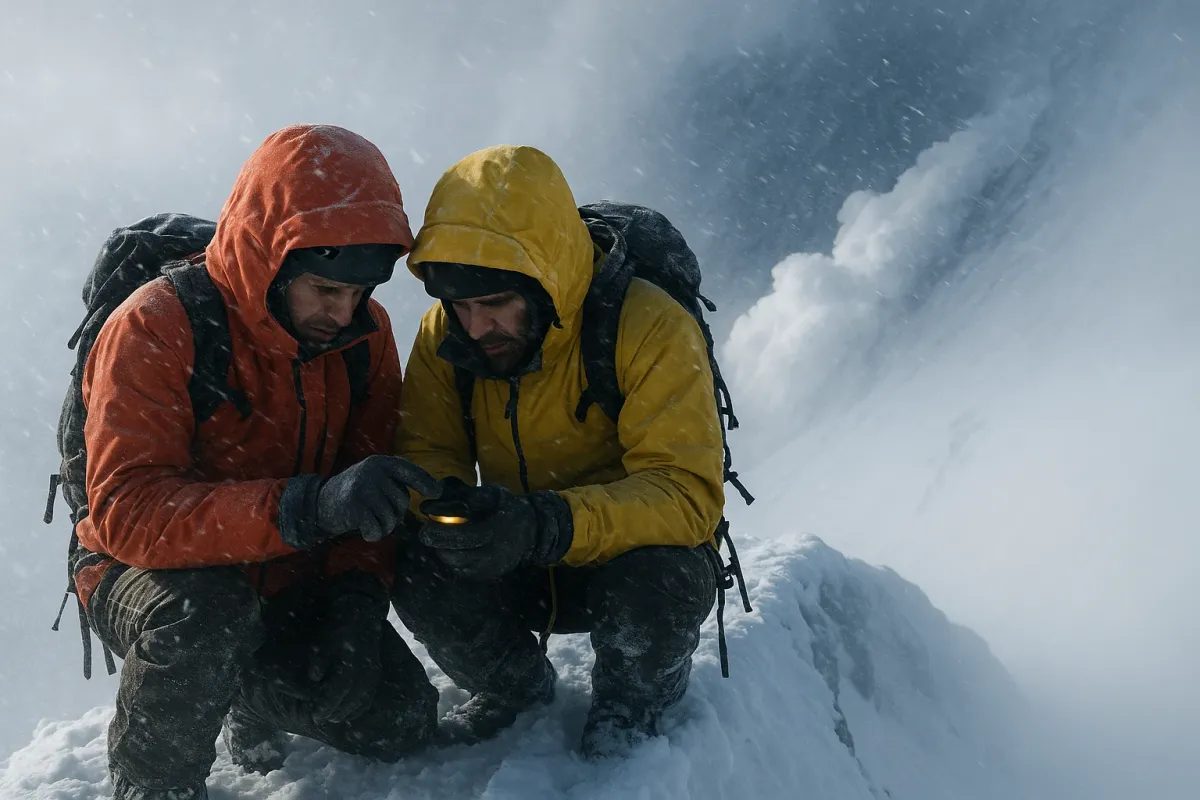
If you love winter hikes, alpine summits, or backcountry snow adventures, Kerstin’s story isn’t a distant tragedy. It’s a mirror held up to every one of us who chases thin air and sharp ridgelines. Here are five powerful, practical lessons every cold‑weather adventurer should take from this moment—so your next summit push doesn’t turn into a headline.
Put People Above Peaks—Every Single Time
On Großglockner, investigators say Kerstin’s boyfriend continued on and left her behind in brutal alpine conditions. That decision didn’t just break an unwritten rule of the mountains—it broke the most basic code of adventure: you never abandon your partner.
In winter, hypothermia can shut a body down terrifyingly fast. Someone who was strong an hour ago can suddenly be confused, clumsy, or unable to speak clearly. That’s your cue to slow things down, not speed up. Turn around together, call for help together, shelter together. The summit will always be there next season; your people might not.
Before any trip, say it out loud with your crew: “No summit is worth a life. We finish together or we turn back together.” Decide in advance that if anyone feels unsafe—cold beyond control, dizzy, panicked—you treat that as your new objective. Getting everyone back to warmth becomes the summit.
Respect Winter Like It’s a Living Force
Austria’s high peaks, the Rockies, the Alps, the Himalayas—the winter version of any of these is a different planet. Winds tear away your body heat. Snow hides crevasses, ice sheets, and deadly drop‑offs. A clear morning can disintegrate into a whiteout by afternoon. The line between “epic” and “emergency” is razor thin.
Treat winter as a force, not a backdrop. Study the forecast from multiple sources—not just a friendly weather app. Look at wind chill, avalanche bulletins, recent storm cycles, and freezing levels. If you see phrases like “storm front,” “whiteout conditions,” “high avalanche danger,” or “rapid temperature drop,” rethink your route or your date.
Plan conservative turn‑around times. In winter you move slower, rest more, and burn more energy staying warm. Build in a buffer—then double it. That way, if clouds roll in, snow deepens, or someone struggles, you’re not racing the dark across exposed ridges.
Gear Is Not Optional—It’s Your Lifeline
Stories like Kerstin Gurtner’s hurt so much because many of us know, deep down, that the right call and the right gear could have tipped the outcome. Cold doesn’t fight fair: once your core temperature drops, your judgment goes with it. That’s when bad decisions snowball.
Think of your winter kit as a survival system, not a fashion checklist:
- Redundancy for warmth: Always carry one more insulating layer than you think you’ll need—and an extra pair of gloves. Wet hands in alpine wind can end a trip fast.
- Emergency shelter: A small bivvy sack, emergency blanket, or ultralight shelter can be the difference between “a long night” and “they didn’t make it.”
- Navigation that doesn’t need a battery: Phone maps are amazing—until they’re not. Bring a paper map, a compass, and the skills to use them.
- Lighting for the unexpected: Winter days are short. A headlamp with fresh batteries is non‑negotiable, even for “just a day hike.”
- Communication and backup: In popular European alpine regions, rescue services and huts can be surprisingly close—if you can reach them. A fully charged phone, a power bank, and, where possible, an emergency beacon or satellite communicator add extra layers of safety.
Then practice. Put your gloves on and see how hard it is to open your pack in the cold. Time how long it takes to build a windbreak, deploy your emergency shelter, or boil water on your stove. In an emergency, nerves and numb fingers will make everything harder—you want muscle memory on your side.
Choose Partners Who Treat Adventure Like a Shared Pact
The Großglockner case has sparked heated conversations in climbing forums and mountaineering clubs across Europe: What kind of partner leaves someone behind on a glaciated peak? The harsh truth is that the time to find out who you’re roped to is before the storm hits.
On your next adventure, pay attention to these red (and green) flags:
- Red flag: They brag about “pushing through” when others wanted to turn back.
- Red flag: They minimize risk: “It’s just a hike,” “Everyone does this,” “The weather apps are always dramatic.”
- Red flag: They blame others when trips go wrong—never themselves.
- Green flag: They ask about your experience, fears, and limits—and share theirs honestly.
- Green flag: They talk openly about contingency plans, escape routes, and “no‑ego turn‑around points.”
- Green flag: They treat safety gear, route planning, and weather checks as exciting parts of the adventure, not chores.
Before committing to a big winter objective with someone new, test your partnership on smaller trips. See how they handle discomfort, delays, or near‑misses. Trust your gut. You deserve partners who see your life as more important than their summit photo.
Turn This Tragedy Into Your Next Great Adventure Plan
Kerstin Gurtner’s name is now forever tied to Großglockner and to a legal case that will likely influence how European authorities view negligence in the mountains. But her story can also change how you move through wild places, starting now.
Instead of letting this headline scare you away from winter, let it sharpen you. Use it as the spark to finally book that avalanche course, join that alpine club, or learn crevasse rescue. Make an honest gear audit, upgrade the weak links, and start planning routes with more bailout options. Invite friends to a “safety night” where you trade stories of close calls and build better habits together.
Adventure was never meant to be safe. That’s why our hearts race on icy ridges and quiet snowfields. But risk doesn’t have to be reckless. When you choose partners wisely, respect winter’s power, carry real lifelines in your pack, and put people above peaks, you don’t kill the magic—you deepen it.
Conclusion
Right now, somewhere in the Alps, a rope team is crunching across early‑morning snow, headlamps glowing, breath steaming in the cold. They’re tied together not just by a nylon line, but by a promise: we go up together, we come down together.
Let Kerstin’s story be the moment you tighten that same promise in your own life. The next time you step into the winter wild—on a snowy forest trail, a frozen lake crossing, or a full‑on alpine ascent—carry this with you: the bravest thing you can do out there is not to push through at all costs, but to turn back in time, hold onto your people, and live to chase a hundred more horizons.