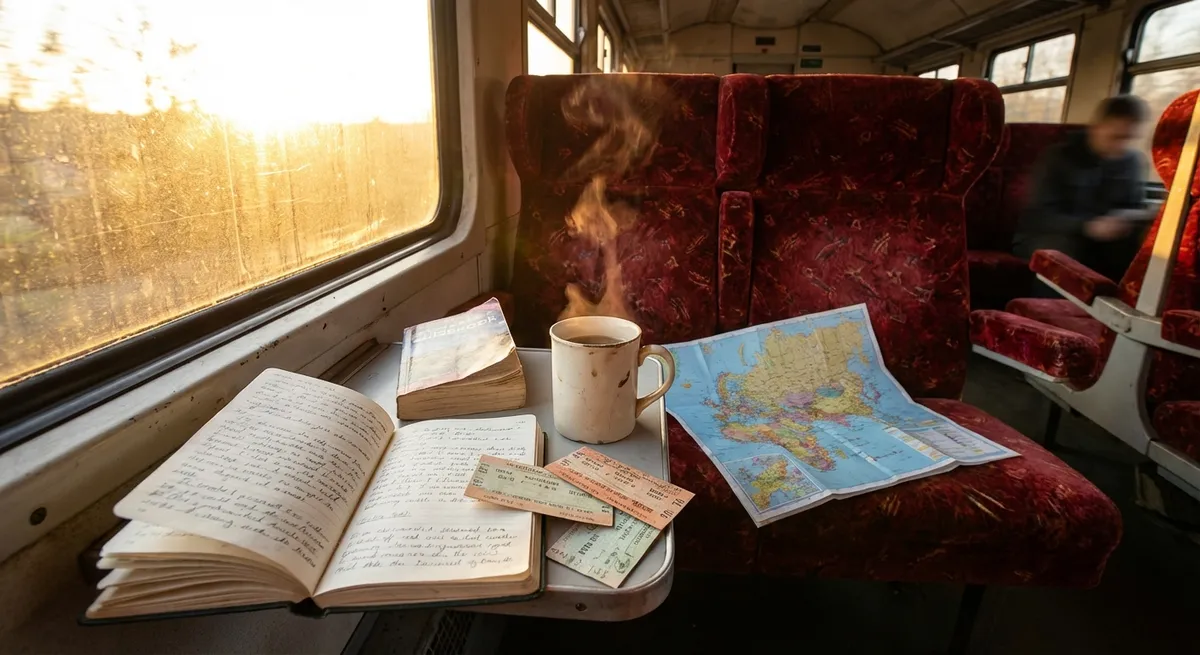
These five travel moves will help you turn every leg of the journey into something memorable, meaningful, and share‑worthy—without needing a bigger budget or more vacation days.
1. Arrive With a “First Hour Ritual,” Not a Rushed Checklist
The first hour after you land can set the emotional tone for your entire trip. Instead of sprinting from baggage claim to your first attraction, build a ritual that slows you down and drops you into the moment.
Choose a simple, repeatable pattern: find a local café within walking distance, order something you can’t pronounce perfectly, and sit where you can watch the city move. Jot down your first five impressions—the sounds, the smells, the way people greet each other, the colors of the street. This tiny pause rewires you from “airport mode” to “explorer mode.”
Practical tip: Screenshot a nearby café or park on an offline map before you land. When your feet hit the ground, you know exactly where your ritual begins—no frantic searching, just a gentle slide into the adventure.
Social share idea: A photo of your drink, the view, and a quick caption: “First hour, no rush. Just listening to the city breathe.”
2. Let One Local Question Design an Unscripted Day
Instead of asking, “What should I do here?” try asking locals one focused, playful question and letting their answers create a surprise itinerary. For example:
- “If you had a free afternoon and no responsibilities, where would you go?”
- “Where do you take someone you actually like who’s visiting for the first time?”
- “What’s the one spot here that’s better at sunrise than sunset—or vice versa?”
Ask three to five different people: the barista, the street food vendor, the hostel receptionist, the rideshare driver. Watch for repeat answers. When a place comes up twice, that’s your anchor. When you hear something oddly specific (“the bridge no one uses after 9 p.m.” or “the quiet temple on top of the bus stop”), that’s your side quest.
Practical tip: Keep a note on your phone titled “Local Dares” and list every suggestion. Build an unplanned day just from that list. You’re not sightseeing anymore—you’re following a trail of human recommendations that don’t exist in any guidebook.
Social share idea: Split‑screen story: “What Google said vs. what the bartender said” with photos of both places.
3. Turn Layovers and Long Rides Into Micro‑Challenges
Long layover? Endless bus ride? You can either fight the clock or make it part of the story. Micro‑challenges give your brain something fun to do and often lead to unexpected interactions.
Try challenges like:
- The 3‑Word Food Hunt: In the airport or station, find a meal that includes three words you’ve never seen together on a menu before.
- The 10‑Smile Mission: See if you can get ten people to genuinely smile—by offering to help with a bag, sharing a snack, or complimenting something specific.
- The “Window Only” Photo Rule: On a train, bus, or ferry, only take photos through the window. Let motion blur, reflections, and unexpected landscapes become your art style for that segment.
Practical tip: Pack a tiny “transit kit” in an easily accessible pocket: a pen, a small notebook, earplugs, a light scarf or hoodie, and something analog to do (a deck of cards, a language cheat sheet, a paperback). When your phone dies or Wi‑Fi fails, your story doesn’t.
Social share idea: A carousel of window photos with a caption: “Nothing but the in‑between, and it’s already worth the trip.”
4. Create a “Five Senses Map” of Every New Place
Most travel memories fade into vague highlight reels—“That beach was nice,” “The city felt busy.” A five senses map turns each place into a vivid snapshot your brain doesn’t forget.
When you arrive somewhere new, take ten slow minutes and tune in:
- Sight: What color do you see the most? (Laundry on balconies? Neon signs? Forest green?)
- Sound: Is there a repeating sound? (Bicycle bells, temple bells, waves, vendors calling?)
- Smell: Street food? Rain on hot pavement? Exhaust? Incense?
- Touch: Is the air heavy or dry? Are the cobblestones smooth or uneven?
- Taste: What’s the very first local flavor you try there, even if it’s just a basic snack?
Sketch or write a rough “map” in your journal: not directions, but sensory anchors. Note what’s on your left, right, above, and below as if you’re freeze‑framing that moment in time.
Practical tip: Use your phone’s voice memos if you’re too tired to write. Record a quick 30‑second description while you walk—future you will feel like stepping back into that exact street years later.
Social share idea: Reel with quick, one‑second clips for each sense, overlaid with text: “This is what [city name] felt like.”
5. Carry One “Conversation Object” That Invites Stories
Some of the best travel moments begin with a stranger’s curiosity. Instead of waiting for serendipity, carry something that quietly invites interaction—a “conversation object.”
This could be:
- A tiny instant camera and a habit of offering prints to the people you photograph.
- A small flag, patch, or pin from your home country attached to your bag.
- A notebook in which you ask people to write a phrase in their language.
- A simple foldable map instead of always using your phone—people love giving directions on a physical map.
Practical tip: Keep the object visible—on the outside of your backpack, on your table at a café, in your hands while waiting in line. When someone comments, ask them a question that opens a door: “What’s one place most visitors skip that they really shouldn’t?” or “What’s your favorite thing about living here that tourists never notice?”
Social share idea: Build a series called “Strangers of [Country/City]” with short quotes (get consent if you share faces). You’re not just collecting photos—you’re gathering a chorus of local voices.
Conclusion
Adventure doesn’t begin at the trailhead or the hotel check‑in desk; it starts the moment you decide that every step, delay, detour, and conversation belongs to the journey. When you shape your first hour, invite local voices, gamify transit, map your senses, and carry something that sparks connection, travel stops being a break from your life and starts becoming a brighter extension of it.
The world is not waiting for you only at the destination. It’s waiting in the customs line, on the bus seat, at the snack kiosk, and in the glance of the person sitting across from you. Treat the in‑between as sacred, and your travels will feel fuller, deeper, and wilder—before you’ve even unpacked.
Sources
- U.S. Department of State – Travel Tips - Official guidance on staying prepared and informed while traveling abroad
- Centers for Disease Control and Prevention – Travelers’ Health - Health recommendations, vaccines, and safety advice for international trips
- Lonely Planet – Travel Inspiration & Planning - Articles and ideas for seeing destinations beyond the typical tourist lens
- BBC Travel – Travel Features & Stories - In‑depth narratives on local cultures, meaningful encounters, and unconventional travel experiences
- National Geographic Travel - Exploratory pieces that highlight immersive, sensory‑rich ways of experiencing the world