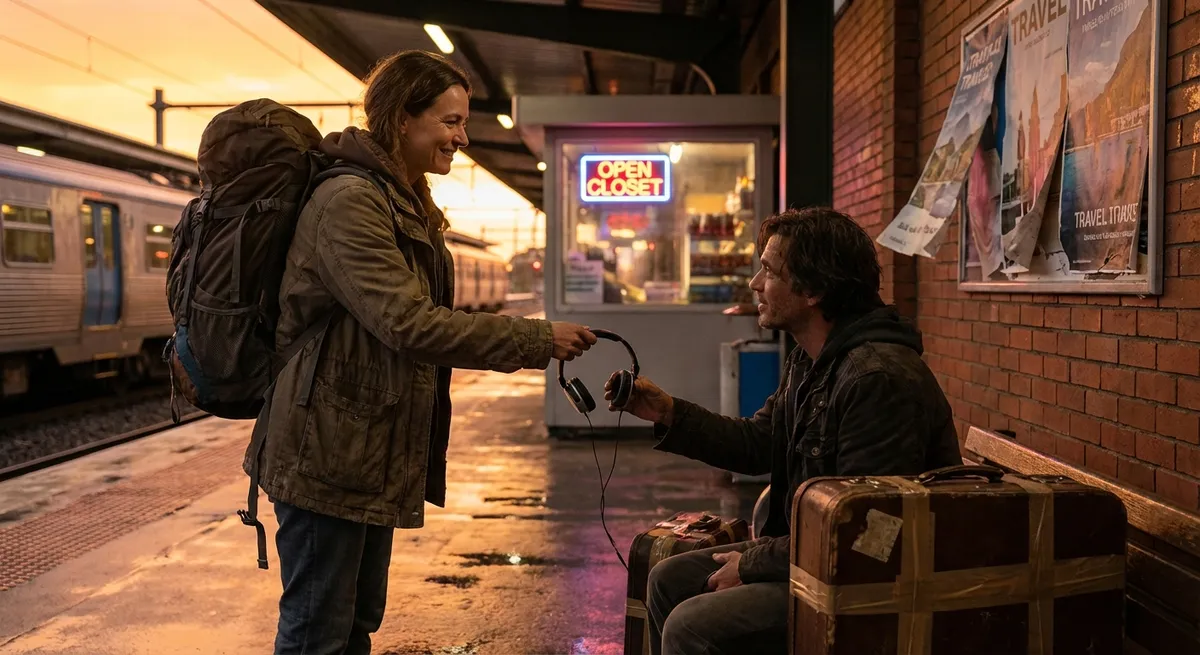
This is your invitation to travel like a connector: to chase not just places, but the stories that live inside the people you meet.
1. Follow the Unplanned Invite
The most electric travel moments rarely live in your itinerary. They hide in the unplanned invitations: “Come eat with my family,” “We’re driving to the coast at sunrise—want in?” or “We’re heading to a hidden waterfall; there’s space in the car.”
Saying yes—thoughtfully and safely—to these invitations can reroute your entire day, sometimes your entire trip. A casual chat with a barista could lead to an underground music show. Small talk on a night train might turn into a shared trek the next morning. These moments give you something guidebooks can’t: access to local rhythms, real homes, genuine traditions.
Practical moves:
- Keep flexible pockets in your schedule so you can accept spontaneous plans.
- Establish safety boundaries: share your live location with a trusted friend, meet in public first, trust your instincts, and say no when it doesn’t feel right.
- Learn a few phrases in the local language—simple words like “join,” “together,” and “later” can turn awkward nods into actual plans.
Adventure isn’t only about where you go. It’s about having the courage and wisdom to step into unscripted moments when they knock.
2. Turn Transit into a Story Factory
Airports, train stations, metro lines, overnight buses—these are not just holding rooms between “real” experiences. They’re story factories, full of people in motion: backpackers chasing sunrise, workers commuting home, families beginning long-awaited holidays.
Instead of sinking into your screen, look up. Ask the person next to you where they’re heading and why. Trade recommendations with a local about their city’s best late-night food. Offer to help a confused traveler read a map. These small interactions can dissolve the boredom of transit and sometimes bloom into genuine friendships.
Practical moves:
- Carry a small deck of cards or a travel-sized game—games are instant icebreakers on long journeys.
- Keep a note in your phone of favorite places from home to recommend when people ask where you’re from.
- Use offline translation apps to bridge language gaps; even clumsy attempts usually spark laughter and connection.
When you treat transit as social terrain instead of dead time, even a delayed train can become part of your adventure narrative.
3. Join Local Rituals Instead of Just Watching
Every destination has daily rituals: morning markets, evening walks along the river, pickup soccer games, dance classes, temple visits, neighborhood festivals. Don’t just photograph them from a distance—step into them with respectful curiosity.
Joining a local ritual deepens your understanding of a place in ways that tourist circuits never will. Running with a community jogging group at dawn, helping set up chairs before a village celebration, or learning the basics of a regional dance can anchor your memories in textures, sounds, and conversations, not just scenery.
Practical moves:
- Check community boards, local Facebook groups, or meetup-style apps for gatherings open to visitors.
- Ask hostel staff or guesthouse owners about regular neighborhood events and whether travelers are welcome.
- Observe first: mimic local etiquette, dress codes, and behavior; then ask polite questions to make sure your presence is appropriate.
The goal is to participate, not perform. When you fold yourself gently into everyday life, the world stops being a stage and starts feeling like a shared living room.
4. Trade Skills Instead of Souvenirs
You’re carrying more than a backpack—you’re carrying skills that might be surprising or valuable to someone else. Maybe you play guitar. Maybe you’re good at photography. Maybe you can teach a card trick, help someone refine an English presentation, cook a dish from home, or show the basics of yoga or stretching after a long hike.
Trading skills turns you from observer to contributor. A quick impromptu guitar session on a hostel terrace, a sunset photo walk with fellow travelers, or a language exchange over street food can leave deeper imprints than any souvenir. In return, people might teach you traditional recipes, local games, or phrases that never appear in phrasebooks.
Practical moves:
- Pack one portable “connection tool”: a small instrument, a deck of cards, a foldable frisbee, or art supplies.
- When you introduce yourself, mention something you love doing, not just where you’re from and where you’re going.
- Respect boundaries: offer what you can, but never pressure anyone to participate or be “on show” for your benefit.
Adventure grows when you stop asking only, “What can I get from this place?” and start asking, “What can I share while I’m here?”
5. Build Your Own Global Trail of Friends
One of the quiet superpowers of adventurous travel is the community it leaves behind. Over time, your journeys can create a living map of friendships across borders: the couple you met in a mountain hut, the artist who showed you their favorite alleyway café, the group you hiked with for a single afternoon but still message years later.
Staying in touch turns one-off encounters into a network of future possibilities. Maybe a friend you met on a boat in Southeast Asia shows you their city in Europe two years later. Maybe you plan a reunion trek with people from three different continents. These relationships make the world feel both vast and intimately connected.
Practical moves:
- Before saying goodbye, connect on a platform you actually use—social media, messaging apps, or email—and note how you met.
- Follow up with a photo or a short message soon after: “This is us at the viewpoint—thanks for sharing that day.”
- Create a simple digital map or note listing people you’ve met and where they live; it’s an adventure planning tool disguised as a contact list.
The more you tend this global web, the more your future journeys will be shaped by familiar faces in unfamiliar places.
Conclusion
Adventures aren’t just made of mountains, markets, and monuments—they’re written in shared meals, unexpected invitations, and the courage to say “hello” when it would be easier to stay silent. When you start traveling as a connector, every city becomes a tapestry of stories waiting for your thread.
Your next unforgettable memory might not come from the view at the top of the trail, but from the person hiking beside you, swapping life stories between each breath.
Pack your curiosity. Guard your safety. Lead with respect. Then step out the door ready not just to see the world, but to meet it.
Sources
- U.S. Department of State – Travel Advisories - Guidance on staying safe abroad, including tips relevant when meeting new people
- Centers for Disease Control and Prevention – Travelers’ Health - Health recommendations for international travel, useful when joining local activities and events
- BBC Travel – The Art of Talking to Strangers - Explores how connecting with strangers can enrich travel experiences
- Lonely Planet – How to Travel Responsibly - Covers ethical and respectful ways of engaging with local communities
- National Geographic – The Transformative Power of Travel - Discusses how meaningful interactions on the road can change perspectives