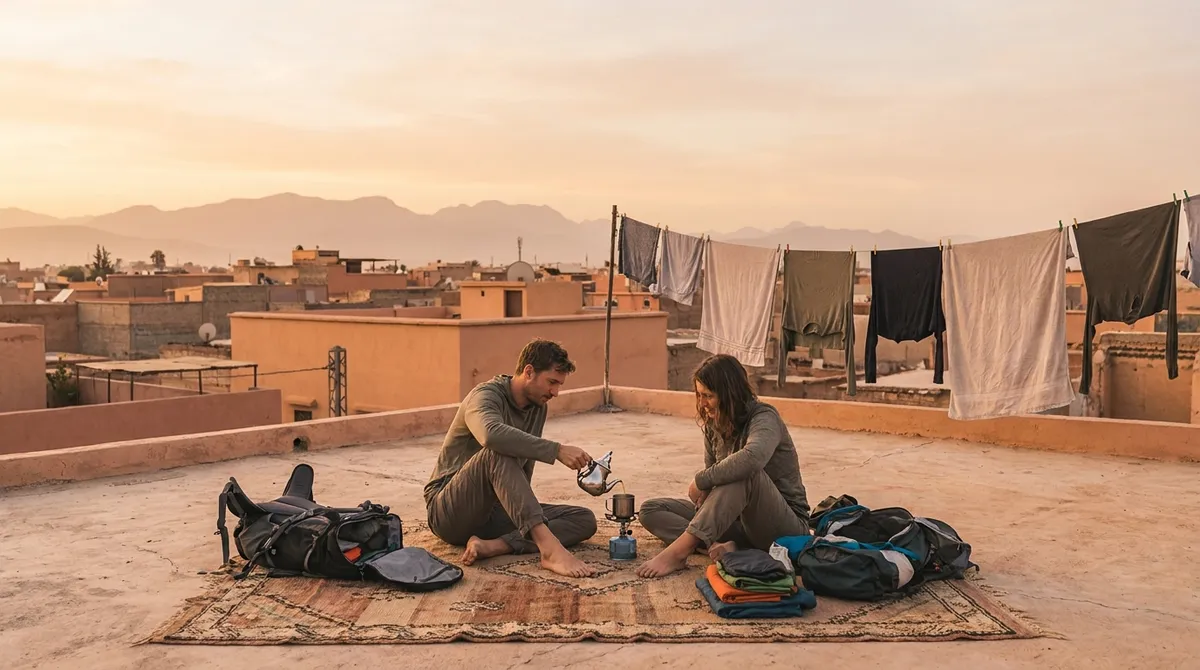
Rethink “Luxury”: Make Experiences Your Currency
The most valuable parts of a journey aren’t plated in gold—they’re lived in full color. Instead of asking, “Can I afford this destination?” ask, “What does feeling rich on the road mean to me?”
Maybe it’s sipping street coffee on a plastic stool in Hanoi while scooters weave around you like a school of fish. Maybe it’s a $5 ferry ride that gives you a front-row seat to a city’s skyline, or watching a free outdoor concert in a public square while locals dance you into their circle. When you define luxury as time, freedom, and curiosity, a modest budget suddenly has serious buying power.
Start by building each day around one or two “anchor experiences” and let everything else be fluid. Choose simple accommodations but splurge on a cooking class where you actually roll the dough, cut the spices, and share the meal. Opt for public transport and use what you save to join a local walking tour that explains the city’s heartbeat. The less you spend on passive comforts, the more you can invest in stories you’ll still be telling a decade from now.
Point One: Follow the Off-Hours, Not Just the Off-Season
You’ve heard of traveling off-season to save money—but timing your days can stretch your budget even further. The world’s great sights and cities behave differently at dawn, late afternoon, and after dark, and those rhythm changes can be your budget superpower.
Visit major attractions right after opening or late in the afternoon, when lines are shorter and “skip the line” fees become unnecessary. Many museums around the world offer discounted or even free entry during specific hours or days; some European cities host monthly free museum nights that feel like cultural festivals. Plan your city days around these windows, and suddenly your tight budget becomes a backstage pass.
Off-hours also help you see the soul of a place without paying a premium. Watch fishermen unload their catch at sunrise at a harbor, wander markets just as locals are shopping for dinner, or walk through neighborhoods during evening stroll time when families gather outdoors. These moments cost nothing, but they give you more insight into a destination than any expensive observation deck ever could.
Point Two: Ride the World’s Everyday Routes
Budget travel is often decided by what you’re willing to share: space, time, and small discomforts. Public transport and slow travel options—buses, night trains, shared vans, ferries—aren’t just cheaper ways to move; they’re moving windows into real life.
Instead of a quick flight between cities, consider a night train where your ticket is both your transport and your accommodation. You’ll save on a hotel night and wake up in a new region, watching the scenery shift outside your window as you sip instant coffee from a tiny cup. Intercity buses across South America, Eastern Europe, and Southeast Asia often include snacks, movies, and reclining seats for a fraction of a short-haul flight.
Inside these shared spaces, you’re no longer a detached observer; you’re part of the living, breathing flow of the country. You’ll hear lullabies from the next seat, see school kids commuting, and maybe share snacks with someone eager to practice a few English phrases. The journey stops being a blank line between points on your map—and becomes the part you remember most.
Point Three: Sleep in Places That Tell a Story
A room is not just a place to drop your backpack; it’s a chapter in your travel story. When you’re on a budget, choosing where you sleep can shape your entire relationship with a destination.
Hostels aren’t just for students anymore—they’ve evolved into design-forward, community-centered hubs where you can book a quiet private room but still share kitchens, lounges, and rooftop terraces. Many run free walking tours, language exchanges, or family-style dinners that erase the need for paid excursions and pricey restaurants. Guesthouses and homestays often include breakfast and heartfelt conversations with hosts who can point you to their favorite local spots that never show up on glossy lists.
Want a deeper connection? Volunteer exchanges, farm stays, and work-trade programs allow you to trade a few hours of your skills for a bed and meals. You might help harvest olives in the Mediterranean, assist with surfboard rentals in a beach town, or teach your native language at a family-run lodge. Your budget stays intact, but your experience becomes richer than any high-end resort can offer.
Point Four: Let Street Food and Markets Be Your Gourmet Feast
Food is where budget travel shines brightest. You don’t need a reservation at a Michelin-starred restaurant to taste a place’s soul—you just need to follow your nose to where the locals eat on their lunch break.
Street food stalls and local markets are often culinary treasure maps. For only a few dollars, you can try fresh empanadas from a vendor who’s been perfecting their recipe for decades, slurp noodle soup at a steaming cart while scooters hum past, or bite into fruit so ripe it tastes like sunshine. Markets also double as cultural classrooms: you learn what grows nearby, how people bargain, what families cook on Sundays.
To keep your stomach happy on the cheap, look for spots that are busy with locals, have high turnover, and display prices clearly. Use supermarkets for picnic-style meals—bread, cheese, fruit, and local snacks can become a sunrise breakfast at a viewpoint or a sunset dinner on a pier. Each modest meal becomes part of a bigger feast: memories of flavors you’d never find back home.
Point Five: Design Days Around Free Wonders
Some of the world’s greatest travel experiences still don’t have turnstiles, tickets, or price tags. If you’re willing to walk, listen, and look up, entire days can cost almost nothing and still feel overflowing.
Build itineraries anchored around free or low-cost experiences: city parks where locals practice tai chi at dawn, historic neighborhoods best explored on foot, riverside paths, coastal trails, open-air temples, and public viewpoints. Many cities offer free walking tours where you tip what you can; they’re a goldmine of local stories and orientation for budget travelers.
Nature, especially, is the ultimate budget luxury. Hiking paths, beaches, lakesides, and mountain lookouts are usually free or inexpensive to access. A simple day of following a coastal trail, stopping to swim in little coves, and drying off on warm rocks feels as extravagant as any spa—only here, the waves do the talking. When you let sunlight, fresh air, and city life be your main attractions, your budget has space for the occasional special splurge that truly matters to you.
Conclusion
Travel on a small budget is not a consolation prize; it’s a different way of being in the world. It asks you to trade polished surfaces for real textures, scripted tours for spontaneous detours, and rigid plans for open-ended curiosity. When you chase off-hours instead of off-limits, ride alongside everyday commuters, sleep in places where people remember your name, eat with your hands at crowded stalls, and weave your days around free wonders, the map stops feeling distant and starts feeling personal.
Your budget may be limited, but your capacity for awe is not. With a bit of strategy and a lot of openness, you’re not just cutting costs—you’re carving your own wild, unforgettable path across the planet.
Sources
- U.S. Department of State – Tips for Traveling Abroad - Practical pre-trip guidance on documents, safety, and preparation
- Lonely Planet – Budget Travel Tips - Expert suggestions for saving money while maximizing travel experiences
- BBC Travel – Why Slow Travel Is the Smartest Way to See the World - Explores the benefits of slower, more immersive journeys
- National Geographic – The World’s Best Food Destinations - Context on how local and street food shape travel experiences
- Hostelling International – Why Stay in a Hostel? - Overview of the social and budget advantages of hostel-style accommodations