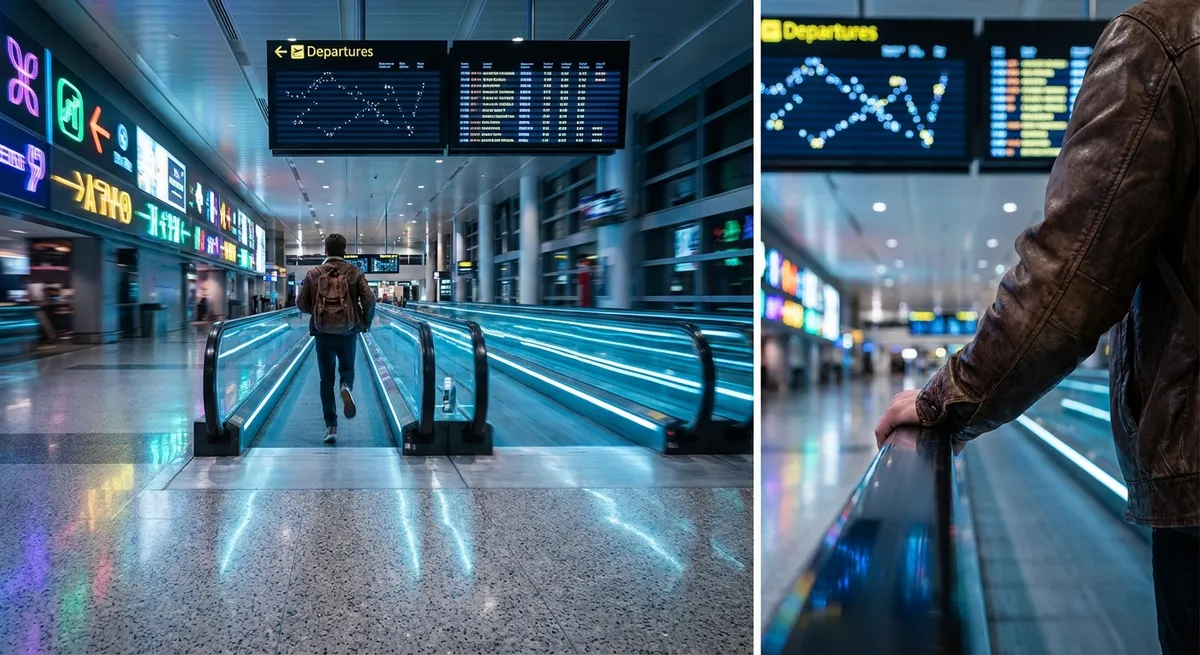
This isn’t about killing time with duty-free perfume samples. It’s about reshaping how you think about transit itself—turning delays, waits, and airport limbo into bonus experiences, surprise stories, and even mini-quests that most travelers never unlock.
Scout The Stopover City As A Side Quest, Not An Accident
Stop treating layovers as random punishments and start picking them like destinations. Many airlines let you choose connecting cities; buried in those flight options is a menu of bonus adventures. That 8-hour pause in Istanbul, Doha, Singapore, or Reykjavik can become your unofficial “Episode 0” or “Secret Level” for the main trip. Before you book, search routes that intentionally pass through places you’re curious about, then cross-check visa rules, airport distance to the city, and transit options into town. Download offline maps and pin three must-see spots within one neighborhood so you’re not racing all over the city. Think of it as an urban speed-run: one local snack, one sensory hit (viewpoint, temple, waterfront, market), and one slow moment—a coffee, a park bench, a harbor wall where you just breathe and realize you’ve added a whole country to your life in a single afternoon.
Build A “Transit Kit” That Turns Any Gate Into A Basecamp
The difference between a soul-sucking delay and a strangely magical layover is what you pull out of your bag when the departure board flips to “Delayed.” Design your carry-on like a mobile basecamp. Pack a lightweight scarf that becomes a blanket, pillow, makeshift curtain, or shoulder cover in conservative countries. Add a compact power strip or multi-USB hub so a single outlet becomes a charging station—which conveniently attracts fellow stranded travelers and sparks easy conversation. Bring a tiny “reset kit”: toothbrush, face wipes, deodorant, fresh socks, and one ultra-comfortable shirt you only wear in transit so your body associates it with calm. Save a couple of offline playlists for specific moods: one for focus (planning, journaling, trip logistics), one for wandering (staring out windows, walking terminals), one for grounding (when stress spikes). You’re not just surviving the in-between; you’re outfitting yourself to thrive in it.
Turn Every Wait Into A Micro-Mission You Can Brag About Later
Instead of scrolling yourself into a trance at the gate, give your layover a theme and a task. Decide on a micro-mission: “Find the best cheap snack within this terminal,” “Photograph five tiny details that prove I was here,” or “Collect one story from a stranger willing to share their most unforgettable trip moment.” Walk every reachable concourse like it’s a new district in a city you’re mapping. If the airport has an observation deck, yoga room, art gallery, or shower facilities, make it a quest to find and use them—and document the journey like a mini travel episode. Turn currency exchange leftovers into a game: how much local food or experience can you get with what’s in your pocket before your next flight? These small, intentional challenges rewire your brain from “stuck” to “exploring,” and by the time you board, you’ll have tiny, vivid memories where most people just have a blur of plastic seats.
Use Time Zones As A Secret Weapon, Not A Jet Lag Curse
Time zones can feel like thieves, stealing sleep and clarity from your trip. But with a mindset shift and a bit of planning, you can actually make them work for you. Before you fly, look at your full route and notice where your energy naturally peaks: are you a night-owl who can turn a midnight layover into a quiet, cinematic walk through a calm terminal? Or a morning person who can use a sunrise arrival to reset your body clock with a strong coffee and bright outdoor light in a new city? Shift your schedule slightly a day or two before travel—go to bed an hour earlier or later—to start bending your internal clock ahead of time. On layovers, eat light and move: walk escalators, stretch in quiet corners, or climb stairs instead of using elevators. Each transit break becomes a controlled reset point instead of a chaotic interruption, and you’ll arrive at your final destination already halfway synced instead of wrecked.
Treat Stranded Moments As Story Fuel, Not Travel Failure
Flights get canceled, weather rolls in, systems crash. You can’t control that chaos—but you can control the narrative you’ll tell later. When everything goes sideways, consciously switch from “Why is this happening to me?” to “Okay, this is the plot twist—how do I make this interesting?” Ask gate agents calmly about meal vouchers, hotel options, and rebooking routes; sometimes the “inconvenient” new flight gives you a sunrise over a different continent or an unexpected stop in a city you’d never have chosen. Keep a running “delay diary” in your notes app: strange announcements you hear, quirky characters you observe, small acts of kindness you witness or offer. Offer help: watch someone’s bag while they grab food, share a charger, trade snacks. Those tiny human moments turn what could be pure frustration into connective tissue in your travel story—the part you retell later with a grin instead of a grimace.
Conclusion
Travel isn’t just the highlight reel—you don’t only live when you step out of the final airport. The long walks between gates, the surprise overnights, the three-hour delays under flickering screens: those are raw, unwritten spaces where your attitude has more power than your itinerary. When you treat layovers and transit as stages for side quests, experiments, and small acts of courage, your journeys stop being straight lines between A and B and start feeling like full, intricate stories.
Next time your itinerary shows a long layover or an awkward connection, don’t groan—gear up. That blank block of time might be the part of the trip you remember most vividly.