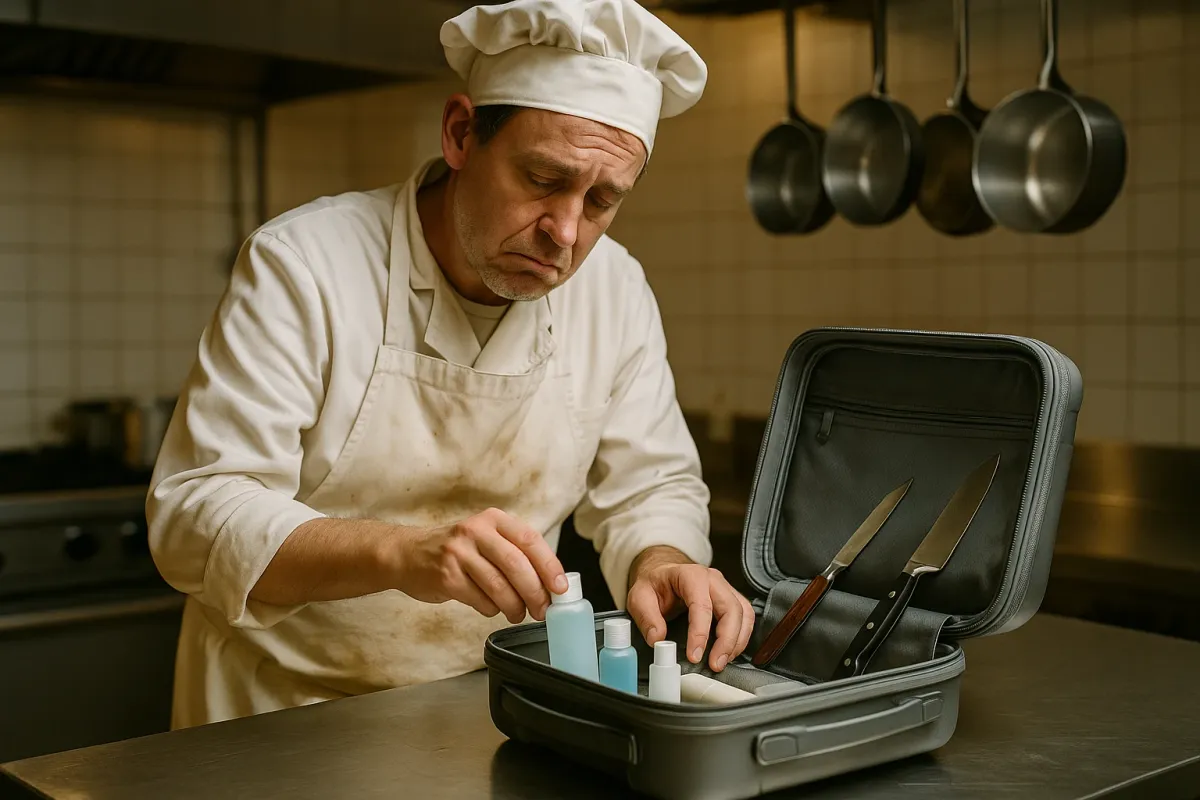
But here’s the twist: that same intense, improvisational mindset is pure gold for adventure travelers. Line cooks and head chefs survive by staying calm in chaos, adapting on the fly, and turning limited ingredients into something unforgettable. Sound familiar? That’s exactly what you need when your flight is delayed, your hostel lost your booking, or your overnight train turns into a rolling mystery.
Let’s borrow the best “kitchen survival skills” and turn them into travel superpowers you can use on your very next trip.
Pack Like a Prep Cook, Not a Tourist
In a pro kitchen, prep is everything. Chefs spend hours chopping, portioning, and labeling so that when the dinner rush hits, they can move fast and light. Your suitcase should work the same way. Instead of stuffing it to the brim, think in “stations” the way cooks do: one packing cube for sleep (PJs, earplugs, mask), one for adventure (hiking pants, packable jacket), one for “front of house” (city clothes, nicer shoes), and one mini “emergency kit” (meds, plasters, instant coffee or tea bags, universal adapter).
Treat your day bag like a chef’s mise en place. Keep your passport, power bank, pen, and offline maps where your hand naturally reaches, not buried under snacks and receipts. The fewer seconds you spend rummaging, the more time you spend actually living the journey. Aim to be “service ready” the moment you zip your bag—everything you need for the next 12 hours, already in place.
Embrace the Daily Special: Let the Destination Set the Menu
Chefs know that the best dishes aren’t always on the printed menu—they’re written on a chalkboard, based on what’s freshest in the market that morning. Travel is the same. The most memorable days aren’t always the ones you scripted in a spreadsheet; they’re the ones you improvise around what’s “fresh” on the ground: a local festival, a sudden snowfall, a street band that pulls a crowd into a side alley.
Instead of booking every hour before you land, build “chef’s choice” blocks into your itinerary—entire mornings or afternoons with only one rule: follow what the city offers you right now. Ask your guesthouse host where they’d go this evening if they had three hours off. Walk until you find a place packed with locals and no English menu. Say yes to the “we only do it this way today” experiences—market lunches, pop‑up events, night food stalls that vanish by dawn. The daily special rarely disappoints.
Move Like You’re On the Pass: Timing Is Your Secret Ingredient
During service, the “pass” in a restaurant is a choreography of timing—starters, mains, and desserts all landing perfectly so everyone at the table eats together. Good travelers move the same way: not rushing, but threading their day around the city’s natural rhythm.
Instead of fighting the crowds, time your moves like a head chef timing plates. Hit major sights at off‑peak hours: sunrise at the viewpoint everyone floods at 10 a.m., late‑afternoon museum visits when tour buses have rolled away, midnight walks through old towns that feel like movie sets after closing. Travel apps and trending threads on X and TikTok are full of real‑time crowd intel—use them like a chef uses a ticket machine. Shift your “orders” accordingly.
Trains booked out? Flip the script: take the slower regional line that leaves at odd hours and watch villages slide by. Restaurant fully booked at 7 p.m.? Slide in for a late service or a counter seat; you’ll often get a more relaxed, local conversation once the rush thins. Travel isn’t about doing more; it’s about landing the right moment on the pass.
Turn Travel Stress Into “Kitchen Heat” You Can Handle
Those chef memes trending now aren’t just funny; they’re a masterclass in performing under pressure. When the printer spits twenty orders at once and something catches fire, the pros don’t scream (well, not always); they narrow their focus: one ticket, one task, one breath at a time. Travel meltdowns respond to the same approach.
Flight canceled? Don’t try to solve everything at once. Like a chef triaging orders, stack your priorities: 1) safety and shelter for tonight, 2) access to money and documents, 3) alternative routes. While everyone else lines up at the desk, you’re calmly calling the airline, DM-ing them on social, and checking nearby airports or night buses. If there’s a city‑wide strike or weather chaos (which has been hitting headlines more often), think like a kitchen brigade: share info with fellow travelers, swap tips on WhatsApp or Discord groups, and split tasks—one person hunts accommodation, another checks transport, another watches the local news.
Build your own “heat protocol” before you go: a physical copy of key documents, a backup credit card in a separate pocket, essential words in the local language (help, pharmacy, station, hospital), and a small note to yourself: “Breathe. Break problems into tiny pieces.” When the travel kitchen gets hot, you’ll stay in the game.
Taste Like a Line Cook: Eat Where the City Actually Lives
Those viral behind‑the‑scenes kitchen posts are a reminder: the best food in any city usually isn’t where the glossy signs are—it’s where cooks actually eat. To travel like a pro, borrow that instinct. Skip the laminated tourist menus that look the same in every country. Walk two or three streets away from landmarks and hunt for the places that feel like staff meals waiting to happen: handwritten menus, steaming pots, families arguing cheerfully over the bill.
Ask workers, not just concierges, where they eat after a shift: baristas, bartenders, late‑night shop owners, rideshare drivers. Follow the “two‑sign rule”: if you see no English signs and no pictures, that’s your spot. Order the dish most people around you are eating and let the staff steer you—tell them, “I want what you’re proud of.”
Treat food like a map. Each bowl of noodles, plate of grilled fish, or shared street snack is a tiny, edible briefing on where you are. Take notes like a food critic: street name, stall color, the way the broth smelled in cold air. Later, when your photos blur together, those details will snap your journey sharply back into focus—like recalling a perfect service on a wild night in the kitchen.
Conclusion
The renewed fascination with what really happens in professional kitchens is more than internet entertainment—it’s a blueprint for how to move through the world with agility, curiosity, and courage. Chefs don’t wait for perfect conditions; they create magic with whatever lands on their cutting board in that exact moment.
Pack like a prep cook, chase the city’s daily special, time your adventures like dishes on the pass, stay cool when the heat rises, and eat where the real life of a place simmers. Do that, and your next trip won’t just be a vacation—it’ll be a living, breathing service, where every day’s rush ends with you looking back, a little stunned, and thinking:
“I can’t believe we pulled that off. And I can’t wait to do it again.”