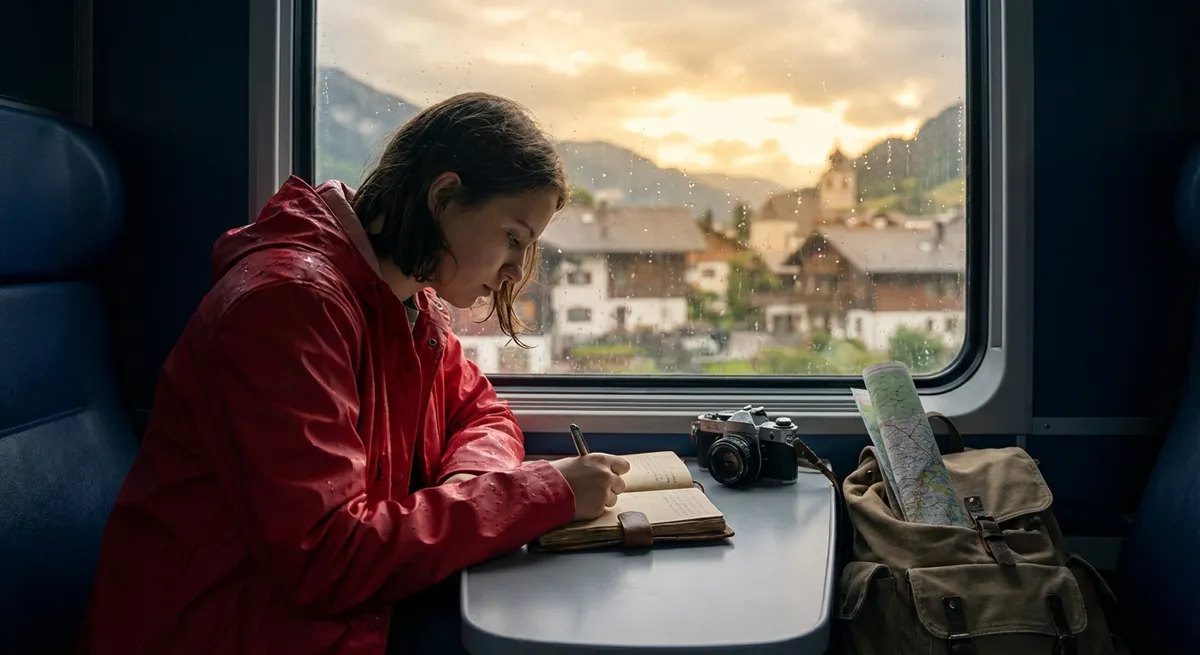
Below are five powerful shifts that can transform your travels from “nice vacation” into “I’ll be talking about this for years.”
Follow the First Sound That Intrigues You
The next time you step into a new city, don’t start with the top attractions list. Start with your ears.
Maybe it’s the echo of a street musician filtering through a side alley, the crackle of oil from a tiny food stall, or the hum of a market waking up at dawn. Let that single sound become your compass for the first hour of your day.
Wander toward it, even if it pulls you off your planned route. You might end up in a courtyard where locals practice tango, a neighborhood cafe where you’re the only visitor, or a backstreet temple alive with chants and incense.
This kind of “sound-led exploring” does two things: it keeps you present in the moment, and it gently forces you into corners of a place that guidebooks barely mention. It’s a simple practice, but it can turn a standard city stroll into a living, breathing adventure.
Pro tip: If you’re nervous about getting lost, download offline maps before you leave your hotel. That way you can roam as far as curiosity takes you, then find your way back with a quick glance.
Treat Mealtimes Like Mini Expeditions
Every meal can be a border crossing into a new world—if you approach it like an explorer instead of a customer.
Instead of asking, “What’s good here?” try, “What’s something people here grow up eating—but visitors rarely order?” You might discover smoky stews, unusual street snacks, or a dessert your home country has never heard of.
Take it a step further:
- Sit at the bar or counter instead of a private table if it’s common in that culture. You’ll see how dishes are made and have more chances to chat.
- Learn one or two food-related phrases in the local language—“What do you recommend?” or “What’s your favorite?” Simple effort opens big doors.
- Ask how a dish is traditionally eaten. With hands? Wrapped in bread? Shared from the center of the table? Participating in the ritual turns a meal into a memory.
Cuisine reflects climate, history, and identity. By treating each meal like an expedition into those stories, you swap mindless eating for meaningful connection—plus you’ll come home with tales of flavors you can’t find on any tourist menu.
Design One “Impossible” Moment Into Every Trip
Before you go, choose one experience that feels a bit beyond what you normally do—your personal “impossible moment.” It doesn’t have to be expensive or extreme; it just has to stretch you.
Maybe it’s:
- Catching the city as it wakes by walking to a viewpoint before sunrise
- Swimming in open water if you usually stay on shore
- Taking a solo train ride to a nearby village
- Joining a local running group, dance class, or hiking meetup you found online
- Saying yes to a karaoke night with strangers you just met in the hostel kitchen
The point isn’t to show off. It’s to step into a version of yourself that’s just slightly braver than the one who boarded the plane.
To make it real, write it down in your notes app before you travel: “On this trip, my impossible moment is: ______.” When the chance appears—and it will—you’ll recognize it. That tiny bit of intentional courage turns your itinerary into a storyline, with you as the main character facing a meaningful challenge.
Build a Tiny Ritual That Belongs Only to This Trip
Rituals are how we tell our minds, “This matters.” Create a small, repeatable act that becomes the heartbeat of your journey.
Some ideas:
- The Threshold Photo: Every morning, take a picture from your doorway—hotel, hut, guesthouse, tent. Watch the light, weather, and street life change in a daily series.
- The Three-Question Journal: Each night, answer:
1) What surprised me today?
2) When did I feel most alive?
3) Who taught me something, even briefly?
- The Daily Postcard: Buy a stack of postcards on day one. Every day, write one to yourself or someone you care about, then mail them all at once before you leave.
- The Local Bench Rule: Choose a public spot (a park bench, a square, a pier) and visit it at different times of day—sunrise, midday, late night—to feel the rhythm of the place.
Rituals anchor memories. Later, when life speeds up again, you won’t just remember “that week in Portugal” or “those days in Vietnam”—you’ll recall the exact view from your doorway, the faces in the square at dusk, the line you scribbled on a postcard that captured everything you felt in a single sentence.
Travel at Two Speeds: Fast for the Eyes, Slow for the Soul
Modern travel tempts us to move fast—checklist-marching from sight to sight. But the richest experiences come when you alternate between two deliberate speeds.
Fast for the eyes:
Give yourself permission to do a quick, energetic sweep when you first arrive. Walk a lot. Hop on public transport just to see where people go. Visit the big landmark if it calls to you. This phase is about orientation and first impressions—casting a wide net so your senses can grab onto whatever fascinates you.
Slow for the soul:
Then, choose one or two spots that spoke to you and return to them—on purpose, and with no agenda. Maybe it’s a bookshop with creaky floors, a quiet beach cove, a noisy morning market, or a temple courtyard drenched in incense. Go back. Sit longer. Notice more.
Ask yourself:
- What changes when I’m here at a different time of day?
- Who shows up when I stay put instead of moving on?
- What details did I miss the first time—sounds, smells, small interactions?
This rhythm—explore wide, sink deep—turns your travels into a layered experience instead of a blur. You stop skimming the surface of a place and start inhabiting it, even if only for a handful of days.
Conclusion
Every journey holds more magic than most travelers ever touch. The difference rarely lies in the destination; it lives in how you move through it—what you notice, what you dare, what you repeat, and how you let the place shape you.
Follow the sounds that call you off the main road. Turn meals into invitations. Script an “impossible” moment and then step into it. Craft a tiny ritual. Shift between wide-open roaming and deep, quiet returning.
Do that, and any trip—no matter your budget, timeline, or itinerary—can become a story you’ll want to tell again and again. The world is already waiting. All that’s left is for you to travel like this one life of yours is the biggest adventure you’ll ever get… because it is.
Sources
- U.S. Department of State – Travel Advisory & Safety Tips - Official guidance on staying safe and informed while traveling abroad
- CDC Travelers’ Health - Up-to-date health recommendations, vaccines, and region-specific advice for international travelers
- UNESCO World Heritage Centre - Information on culturally and historically significant sites around the world, useful for planning meaningful visits
- Lonely Planet – Travel Tips & Inspiration - Articles and practical tips from seasoned travelers on making the most of your journeys
- National Geographic Travel - In-depth storytelling and destination features that inspire immersive, responsible travel