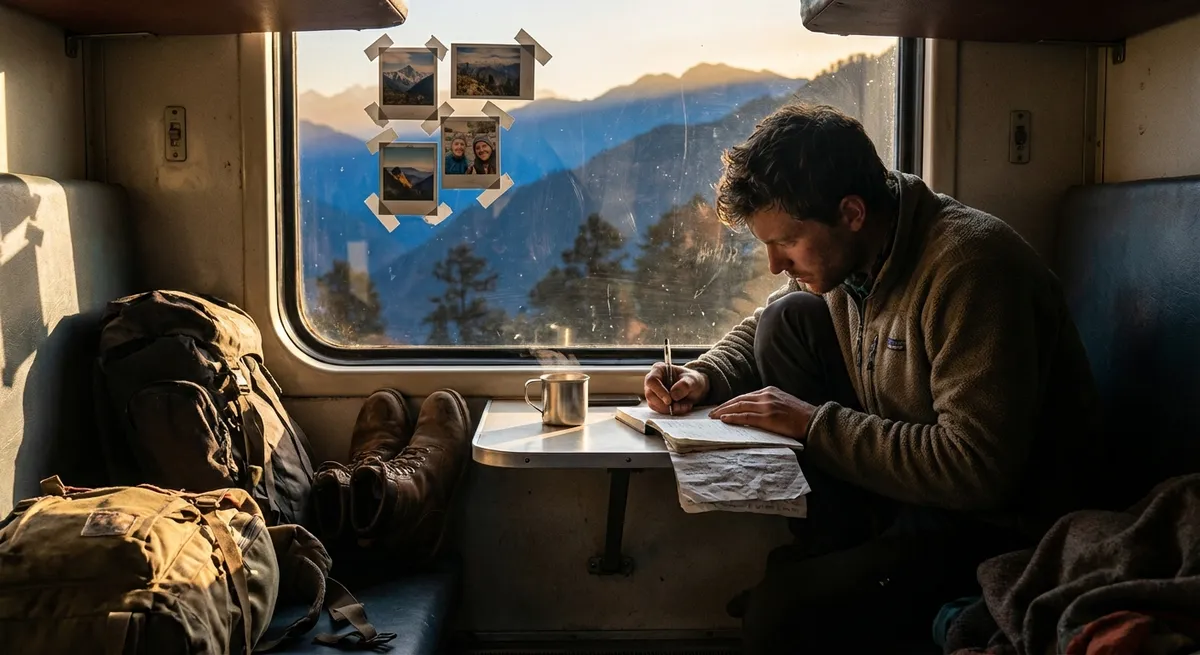
Below are five powerful, practical travel rituals that turn any destination—from a buzzing capital to a quiet coastal town—into an adventure worth telling again and again.
Arrive Before Sunrise, Stay Out After Dark
Most travelers move with the clock of convenience: check-in time, tour schedules, restaurant reservations. You can move with the rhythm of the place instead.
Make it a ritual to experience both the first light and the late-night heartbeat of every destination you visit.
At dawn, cities feel disarmed. Streets are quiet, shopkeepers are just rolling up metal shutters, and the usual rush hasn’t yet taken over. Walk without headphones. Listen to the soundscape: a distant tram, a street cleaner, birds in a park you hadn’t noticed on the map. This is when you find the bakery that locals actually use, or a café where no one is trying to “curate” your experience—just serve strong coffee to sleepy neighbors.
After dark, the same streets become something else entirely. Neon signs thread color over stone walls. Families stroll after dinner, food stalls ignite the air with garlic and spice, and newspaper kiosks morph into social hubs. Walk busy, well-lit areas, and watch how people claim public space at night: couples on benches, old friends arguing about football, kids chasing each other across plazas. You’re no longer just sightseeing; you’re time-traveling inside one day, witnessing how the city wears different versions of itself.
Safety comes first—know your routes, trust your instincts, and stick to populated areas—but if you can greet both sunrise and moonlight in each place you visit, you’ll understand that destination in a way guidebooks can’t achieve.
Let a Local Obsession Guide Your Day
Instead of asking, “What’s there to see?” ask, “What do people here care about?” Every culture has a quiet obsession that shapes daily life, and following it for a day can turn even an ordinary stroll into a treasure hunt.
Maybe you’re in a town where coffee is practically a religion. Your mission: cross the city by hopping from café to café, each one chosen for a different reason—oldest espresso machine, only place that roasts in-house, hidden café inside a bookstore. Along the way, you absorb the rhythm of coffee breaks: quick stand-up shots at the bar, long slow sips over newspapers, take-away cups in the hands of people rushing to work.
In another place, the shared obsession might be football, street art, secondhand fashion, or open-air markets. If it’s football, watch where scarves and jerseys gather. Follow the colors. Find a bar or square where people watch the game, and even if you don’t speak the language, you’ll understand every groan, cheer, and collective gasp.
This ritual gives structure to your wandering. It keeps you from drifting aimlessly and from ticking off only the major landmarks. You’re not just visiting the city—you’re following its heartbeat, one small fixation at a time.
Chase One Element of Nature in Every Destination
Even the most concrete-heavy city has a wild side. Build a ritual of seeking out one natural element—water, height, green space, or horizon—in every place you go. It changes how your body and brain digest the journey.
Look for water: a river slicing through downtown, a canal you can bike along, a windswept pier, or a city beach where locals escape in the late afternoon. Watch who gathers there: runners, couples sharing a quiet moment, kids kicking a ball. Suddenly, this isn’t just “a river walk”—it’s the city’s pressure valve.
If there’s height, take it. Climb church towers, hills, rooftops (where permitted), or public viewpoints. You’re not there only for the selfie; you’re there to see how neighborhoods connect, where green pockets hide, how the rail lines curve, how the city meets the mountains or the sea. From above, you understand the layout instead of just memorizing station names.
Find green where you can. Botanical gardens, tiny pocket parks, even tree-lined cemeteries have stories: old statues, unmarked paths, impromptu picnics. Sitting under a tree while you journal or sketch can anchor your memories more deeply than any museum label.
This ritual grounds you. Instead of racing from attraction to attraction, you pause, breathe, and let the local landscape—natural or urban—etch itself into your senses.
Build Micro-Connections: Five Conversations, No Souvenirs Required
The most powerful travel stories almost never start with, “I bought this thing.” They start with, “I met this person.”
Set a simple goal for each destination: five light, respectful micro-conversations with people who live there. They don’t need to be long, personal, or profound. They just need to be real.
Ask a barista, “If you had one afternoon off, where would you go in this city?” Ask someone at a bus stop, “Is there a local snack I should try that tourists miss?” Compliment a stall-owner’s display and ask, “Did you grow up in this neighborhood?” Use the handful of local phrases you know—even if your accent is terrible—and be honest about learning.
Not every attempt will turn into a story. That’s fine. Some people are busy, shy, or simply not interested. But the ones who respond will leave small marks on your map: a hidden park you’d never see on Instagram, a bakery that sells out by 10 a.m., a viewpoint locals use for first dates.
Micro-connections also remind you that you’re not moving through a human museum; you’re walking inside other people’s everyday lives. When you go home, you’ll remember faces and voices—not just architecture and airports.
Design One “Unplanned Window” Every Day
Most trips are either overplanned or underplanned. The sweet spot: anchor your days with one or two intentions, and deliberately carve out an “unplanned window” for discovery.
Choose a two- to four-hour block—say, 2 p.m. to 5 p.m.—that has only one rule: no major landmarks and no strict agenda. You can wander, follow a smell or a melody, step into a gallery with a sign you can’t fully read, or take whichever side street feels intriguing. If you see a long line of locals at a hole-in-the-wall restaurant, join it. If you hear music pouring out of a courtyard, peek in (respecting privacy and local norms, of course).
To keep it grounded, set a soft boundary: a neighborhood you want to explore, a tram line you’ll ride to the last stop, or a market you’ll circle and then let your curiosity pull you outward. You’re giving yourself permission to get “productively lost”—aware of your route back, but open to the unexpected.
These unplanned windows often become the highlight reel: the old man who insisted you try his family’s recipe, the tiny bookstore with a cat sleeping on the travel shelf, the local festival you’d never seen mentioned anywhere online. When you let go of control for a while, adventure has room to find you.
Conclusion
You don’t have to quit your job, sell everything, or chase endless summers to live a wilder, more vivid travel life. You just have to change the way you move through the world.
Arrive with the dawn and linger after dark. Follow local obsessions instead of top-10 lists. Seek out water, height, and green space to recalibrate your senses. Trade some souvenir-shopping for small, meaningful conversations. And carve out unplanned windows where curiosity—not an itinerary—leads the way.
Do this, and any journey—short or long, near or far—can become more than a break from routine. It becomes training for a different way of living: awake, curious, and ready for the next horizon that calls your name.
Sources
- U.S. Department of State – Traveler’s Checklist - Practical safety and preparation guidance for international travel
- World Health Organization – International Travel and Health - Health considerations and recommendations for travelers worldwide
- BBC Travel – How to Travel More Sustainably - Insights on mindful, responsible ways to experience destinations
- National Park Service – Benefits of Spending Time in Nature - Research-backed benefits of seeking green and natural spaces while traveling
- Harvard Business Review – The Power of Small Wins - Explores how small daily actions (like travel rituals) can significantly improve motivation and experience