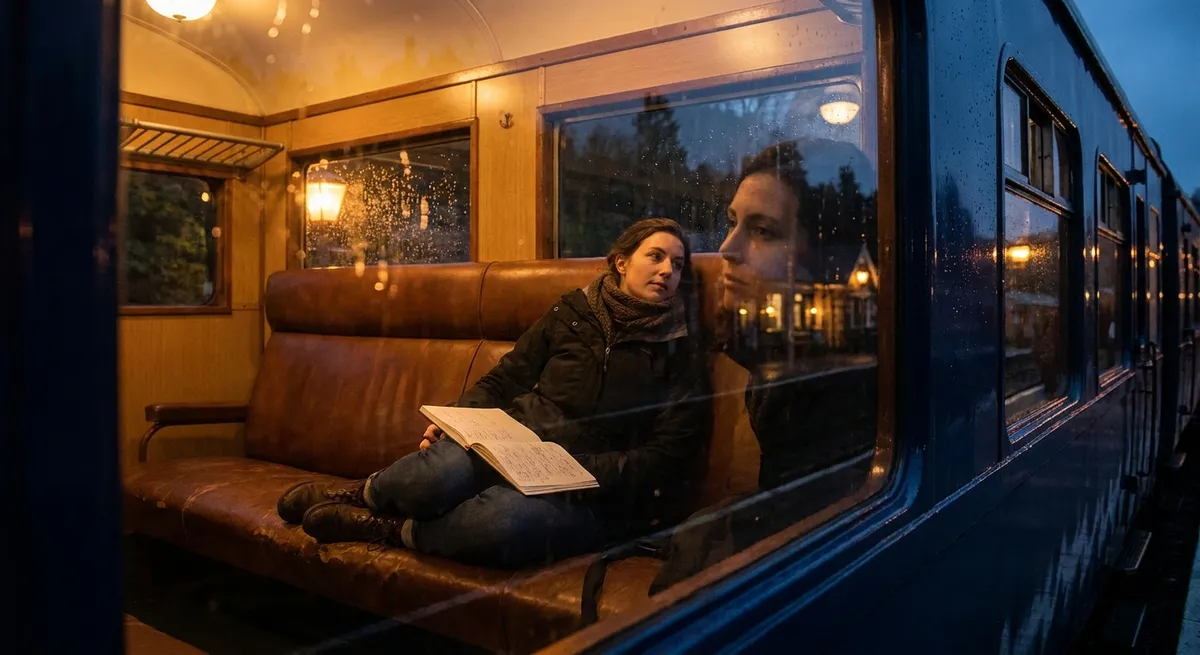
These five travel shifts aren’t about ticking off sights. They’re about turning the whole experience into a story you’re excited to tell, and even more excited to keep living.
1. Swap Plans for Pathways: Design a Flexible “Shape” to Your Trip
Detailed itineraries look reassuring on paper, but the best travel moments rarely fit into neat time slots. Instead of scripting each hour, build a shape to your trip: clear anchors with generous open space between them.
Choose two or three “non‑negotiables” for each destination—maybe a hike, a museum, a local food market—then leave gaps for what you can’t predict yet: the café that calls you in, the park you discover by accident, the sunset that keeps you in one spot longer than you expected.
Practical moves:
- Book your first and last night in advance; keep the middle flexible.
- Use saved pins on offline maps as possibilities, not obligations.
- Plan “drift days” where your only rule is to walk, notice, and follow curiosity.
You’ll still have enough structure to feel grounded, but enough freedom for serendipity to sit in the front seat.
2. Travel on Foot First: Let Your Feet Decode a New City
Any city looks different at walking pace. Streets breathe. Smells shift. You notice tiny things—laundry lines, handwritten menus, kids’ chalk drawings on sidewalks—that never register from a taxi window.
Make this a ritual: your first few hours in a new place, you stay mostly on foot. Start from your accommodation and spiral outward. Let your senses do the navigating: follow the sound of street music, the smell of baked bread, the sight of a crowded stall that seems to pull locals in.
Practical moves:
- Download offline maps before you land; mark your stay as “home.”
- Walk one direction for 20–30 minutes, then take a different route back.
- Duck into at least one small, non‑touristy spot—a corner bakery, neighborhood bar, or hardware store. Everyday places tell fierce, honest stories.
By the time you ride a bus or call a rideshare, you’ll already have a mental compass—and the city will feel a little bit like yours.
3. Eat Like You’re Being Let In on a Secret
Food is travel’s most immediate, generous invitation. When you treat eating as an adventure rather than a checkbox, you tap into culture, history, and human connection in one bite.
Skip the “top 10 restaurants” for at least one meal and chase where the rhythm is: long lines of locals at odd hours, plastic chairs under humming fluorescent lights, sizzling grills you smell long before you see. Look for short menus, handwritten specials, or one thing they clearly make better than anyone else.
Practical moves:
- Ask one question: “If I could only eat one dish here, what should it be?”
- Learn a few food phrases in the local language—how to say “spicy,” “vegetarian,” or “allergy” can unlock entire menus.
- Try street food where you can see it cooked fresh in front of you and the queue moves fast—that’s usually a good sign of safety and popularity.
Your memories of a place will be tied to these tastes: the first bowl of steaming noodles at midnight, unfamiliar fruits on a sunrise beach, the bread you tore and passed around a table of near‑strangers who felt like friends by the end.
4. Collect Encounters, Not Just Photos
Photos freeze a view. Conversations change you.
Instead of just aiming your lens at landmarks, aim your attention at people. The barista who remembers your order, the bus driver who tells you which stop has the best view, the fellow traveler who’s one decision away from changing their life—these are the real plot twists of any trip.
Practical moves:
- Learn and use simple local phrases: “hello,” “thank you,” “this is delicious,” “this is beautiful.” Imperfect language delivered with respect goes a long way.
- Sit at communal tables when possible; they’re invitations to stories.
- Ask open questions: “What’s your favorite place in this city?” or “What do people here do on a free day?” You’ll get better tips than any guidebook.
You might forget which old town square looked like which, but you won’t forget the fisherman who showed you the best sunrise spot or the grandmother on the train who shared her snacks—and a slice of her life.
5. Build a Travel Ritual That Grounds Every Journey
Adventure is exciting; constant motion can also be disorienting. A small, repeatable ritual you carry from place to place becomes a thread that ties all your trips together.
Maybe you write three lines every night about what surprised you. Maybe you watch one sunrise in every new city. Maybe you sketch one object a day—a ticket stub, a doorway, a coffee cup—no artistic talent required, only attention.
Practical moves:
- Keep a tiny “field notebook” or notes app folder solely for travel.
- Use the same opening prompt each day: “Today I noticed…” or “Today I felt most alive when…”
- At the end of the trip, review your notes on the flight home. Look for patterns: what lit you up, what drained you, what risks paid off.
This habit turns travel from a blur into a series of vivid, anchored moments—and helps you bring those lessons home so the journey keeps shaping you long after you unpack.
Conclusion
The world doesn’t just get bigger when you travel; you do. You stretch in small, brave ways: by saying yes to an unfamiliar street, an unexpected dish, an unplanned conversation. You stop chasing a checklist and start chasing aliveness.
With a flexible trip “shape,” a commitment to walking first, a willingness to eat boldly, a focus on people over pictures, and a simple grounding ritual, every journey becomes more than a getaway. It becomes proof that you’re capable of rewriting your patterns, trusting your instincts, and stepping into chapters you haven’t read yet.
Your next ticket isn’t just a route on a map. It’s an invitation to see the world—and yourself—with wider eyes. Take it.
Sources
- U.S. Department of State – Travel Advisory & Safety Tips – Official guidance on staying safe abroad, including destination-specific advisories and preparation tips
- Centers for Disease Control and Prevention – Traveler’s Health – Up-to-date health recommendations, vaccines, and region-specific advice for international travelers
- World Tourism Organization (UNWTO) – Data and insights on global tourism trends that inform how and where people travel
- Lonely Planet – Travel Planning Resources – Practical travel advice on packing, planning, and on-the-ground strategies from an established travel publisher
- National Geographic Travel – Inspiring travel stories and photography that highlight cultural immersion and ethical ways to explore the world