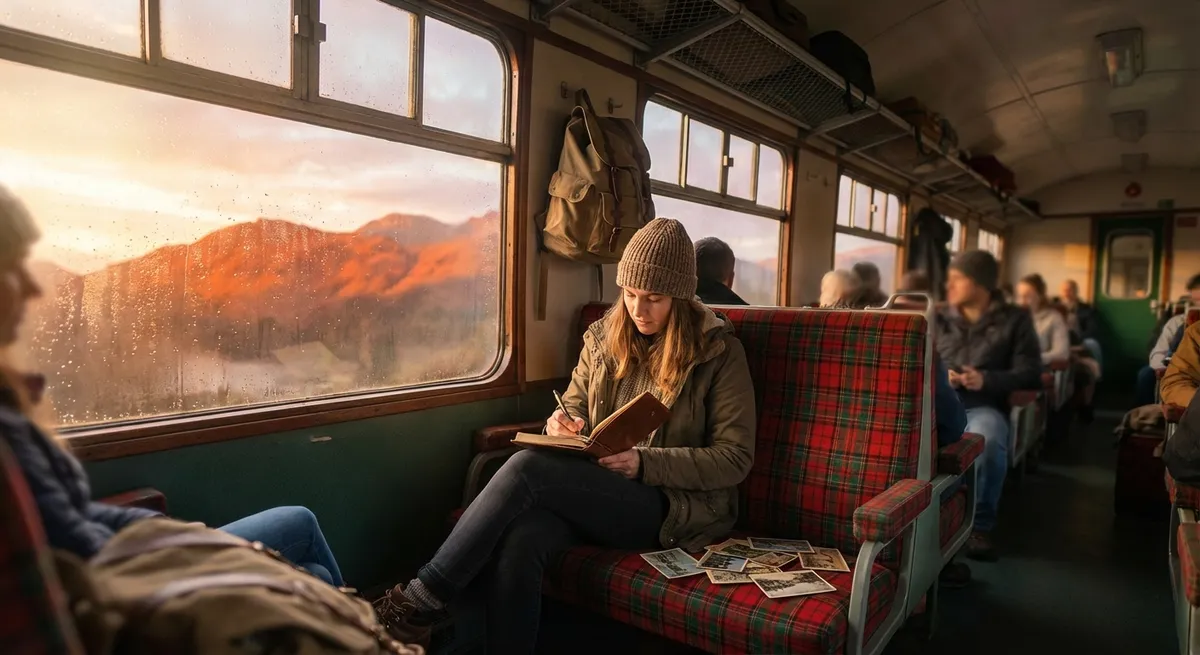
Below are five powerful shifts you can make to transform any trip—whether it’s a weekend away or a leap across continents—into a story that feels bigger than the map.
Let Curiosity Plan One Hour of Every Day
Most itineraries are built around what you already know: famous landmarks, hyped restaurants, “must-see” lists. That’s fine—but the memories that hit the hardest are often the ones you never saw coming. Give curiosity a vote in your schedule by dedicating one unplanned hour each day to pure wandering. Step off the main street, follow an intriguing alley, or take the tram or bus to the last stop just to see what’s there.
To keep this safe and fun, use offline maps and note your accommodations before heading out. Trust your feet and your instincts, but also trust your tech: drop pins as you go so you can always find your way back. Notice small details you’d normally rush past—the way laundry hangs between balconies, the spice drifting from a market stall, the rhythm of local traffic. These unscripted detours often become the moments you talk about for years, proof that the world is still full of corners algorithms haven’t discovered yet.
Travel Like a Temporary Local, Not a Passing Spectator
Instead of asking, “What should I see here?” start asking, “How do people live here?” That one question flips the whole trip. Swap a generic city tour for something locals actually do: an early-morning market run, a neighborhood bakery, a community sports game, or a local café where people linger with newspapers instead of phones. Watch what’s on the chalkboard, what’s playing on TV, what snacks everyone’s ordering.
Consider staying in local-owned guesthouses or small hotels where hosts share personal tips instead of scripted recommendations. Learn basic phrases in the local language—hello, thank you, please, excuse me. Not only does this show respect, it often opens doors to real conversations, invitations, and insights that guidebooks can’t provide. When you move through a destination like you’re borrowing a life rather than consuming an attraction, you travel lighter on the place—and heavier with meaning.
Pack a “Momentum Kit” for Bold Moments
Bravery on the road doesn’t always look like cliff-jumping or solo trekking. Sometimes it’s asking a stranger for a recommendation, signing up for a class in a language you don’t speak, or sitting down at a busy restaurant table with no reservation and just trusting the night. Build a small “momentum kit” that reminds you to say yes when the safe option is to retreat.
This kit can be physical or digital: a short list in your phone of things you promise to attempt (like “Talk to one local each day” or “Try the street food line with the longest queue”), a tiny notebook where you jot scary-but-exciting ideas, or even a memento that symbolizes courage—a bracelet, a coin, a photo. Any time you hesitate, touch that object or read that list. The goal isn’t recklessness; it’s intentional courage. Travel gives you a rare stage to practice being a braver version of yourself. The more often you nudge yourself past comfort, the more your trip turns into a string of scenes you’re proud you didn’t skip.
Design One “Anchor Experience” for Every Trip
Trips blur together when everything feels the same: hotel, museum, restaurant, repeat. Cut through the blur by designing at least one “anchor experience”—the thing you’ll build the rest of the journey around. This might be learning something (like a cooking class, surf lesson, or traditional craft), testing yourself physically (a sunrise hike, bike tour, or long-distance walk), or diving into culture (a festival, local celebration, or volunteer activity).
Research these anchors before you go, and choose something that stretches you just beyond your usual habits. Early in your trip, schedule this experience so it sets the emotional tone for the days that follow. You’ll find that everything else starts to orbit around that one intense memory—conversations you have afterward, flavors you recognize in meals, scenes that echo what you learned or tried. That anchor becomes your strongest story when you’re home—and often the seed that pulls you back to that place or pushes you toward the next one.
Capture the Trip for Future You, Not Social Media
Phones can either flatten your experience into endless scrolling—or help you relive it in rich detail years from now. Decide ahead of time that your photos and notes are first for future you, and only then for your followers. Instead of snapping every landmark, focus on moments that carry feeling: the empty train station at dawn, the first dish you tried but couldn’t pronounce, the rain-slicked street that forced you to duck into a tiny bar you’d never have noticed.
Keep a quick daily log—just five minutes at night. Jot where you went, one thing that surprised you, one thing that challenged you, and one moment that made you grateful. These tiny records become gold later when memories start to blur. When you finally share on social media, you’re not scrambling for captions—you already have the real story. You’re not proving you were there; you’re inviting people into what it felt like to be there.
Conclusion
Every journey offers two stories: the one captured in checklists and photos, and the one written quietly inside you. By giving curiosity room to lead, moving like a temporary local, carrying small tools for brave decisions, building trips around anchor experiences, and capturing the journey for your future self, you turn travel into something deeper than escape.
You don’t need more time off, more money, or a longer flight to travel this way. You only need a different intention: to step into each trip ready to be changed by it—and to come home carrying more than souvenirs.
Sources
- U.S. Department of State – Traveler’s Checklist - Official guidance on safety, documents, and preparation before traveling abroad
- UN World Tourism Organization - Insights on sustainable and responsible travel practices that support local communities
- Centers for Disease Control and Prevention – Travelers’ Health - Up-to-date health, vaccination, and safety information for international destinations
- Harvard Business Review – How Travel Affects Your Personality - Research-based discussion of how travel experiences can shape personal growth and behavior
- Lonely Planet – Responsible Travel Tips - Practical suggestions for connecting with local culture and traveling more thoughtfully