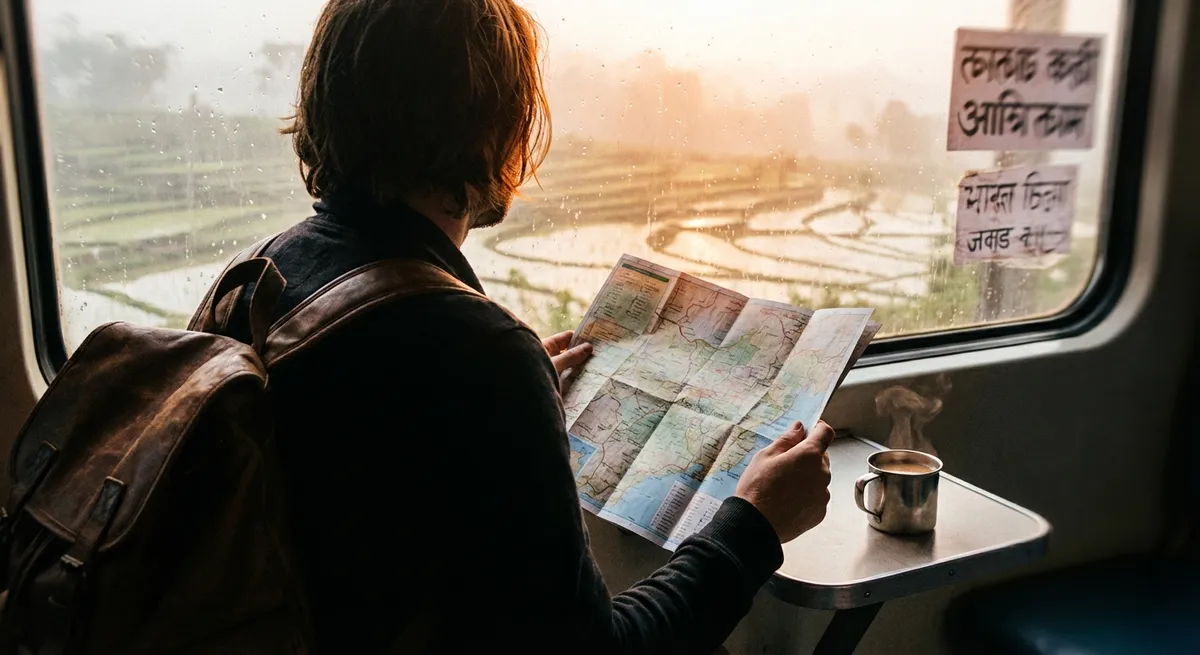
Turn Arrival Day Into Your Secret Superpower
Most travelers write off arrival day as a blur of airports, check‑ins, and jet lag. That’s your advantage. While everyone else collapses on the hotel bed, you can quietly claim the city as your own.
Drop your bags, splash water on your face, and give yourself a simple mission for the first 90 minutes: walk one main street, find one viewpoint, and taste one local snack. No pressure, no checklist—just a slow orientation lap. Notice how people greet each other, what’s written on menus in the local language, which side of the street feels more alive. This is your first handshake with the place.
If you’re battling jet lag, lean into sunlight and movement instead of naps. Exposure to daylight and mild exercise can help reset your internal clock, so swap scrolling in your room for a gentle wander outside. Choose an easy, low‑stakes route: a riverside promenade, a main square, or a neighborhood market that stays open late. By the time you finally crawl into bed, you’ll already feel grounded—like you’re not just visiting, but beginning to belong.
Arrival day doesn’t have to be a write‑off. Treat it as your soft launch: light, curious, and completely open to surprise.
Follow the Food Trail to the Heart of a Place
If you want to understand a destination fast, eat where its stories are simmering. Food is not just fuel; it’s a shortcut to history, climate, migration, and local pride—all on a plate.
Skip the glossy restaurant you saw in an airport magazine and head for where lines are forming: market stalls, busy bakeries, tiny counters with handwritten menus. Look for places where families are eating, not just tourists. When in doubt, follow the steam, the smell of fresh bread, or the sound of clinking glasses and loud conversation.
Use food as a conversation starter:
Ask your server, “What dish would you miss most if you moved away?” or “What do you eat here when you’re celebrating?” You’re not just ordering dinner; you’re inviting a story. Many iconic dishes have roots in trade routes, colonization, or survival—learning that context turns a simple meal into a history lesson you can taste.
If you’re nervous about street food, watch how it’s prepared. High turnover, hot grills, and lots of locals are good signs. Seek out morning markets for the freshest produce and local breakfasts—this is often where you’ll find the most authentic bites at the lowest prices. Bring a small notebook or use your phone to jot down what you tried and where; future you will be grateful.
Every great journey has a flavor. Chase it—and let it lead you into neighborhoods and experiences you’d never find from a guidebook alone.
Let the Neighborhood Choose You, Not the Attractions
Most travelers pick a city, then attack a list of “must‑sees” like a to‑do list. Flip that. Start with a neighborhood and let the day grow organically from there.
Choose one area that feels intriguing rather than “important.” Maybe it’s a former industrial district that’s turned into an arts hub, a seaside quarter where fishermen still mend their nets, or a quiet residential zone with tree‑lined streets and mom‑and‑pop cafés. Aim to spend at least half a day there with no major agenda.
Walk the long way around. Peek into courtyards, sit on park benches, browse local grocery stores just to see what’s on the shelves. These tiny details—how kids play after school, what’s displayed in shop windows—tell you what daily life actually looks like far better than any landmark.
Pop into one unexpected door: a community center, a small gallery, a local library, or a neighborhood bakery. Check bulletin boards for free events—language exchanges, live music, outdoor movie nights. Even if you can’t attend, you’ll learn how the community spends its time.
By anchoring yourself in one neighborhood instead of hopscotching across a city, you trade frantic box‑ticking for something deeper: the feeling that, for a few hours, you lived there instead of just looked at it.
Pack for Momentum, Not Perfection
Your bag should make you feel light and ready, not overloaded and fragile. The less you carry, the more you can say yes—to unexpected invitations, last‑minute train detours, and cheap local transport. Mobility is its own kind of freedom.
Start by choosing a single backpack or suitcase you can comfortably carry up a few flights of stairs. If it feels heavy in your living room, it will feel brutal on a cobblestone street at midnight. Build your packing list around layers and versatility: clothes that mix and match, dry quickly, and work across multiple settings. That one perfect‑but‑impractical outfit? Leave it.
Think in terms of “go” items: a lightweight scarf that doubles as a blanket, a compact power strip that keeps all your devices charged in a hostel dorm, a reusable water bottle you’re actually willing to carry all day. These small tools don’t just save money; they keep your day flowing instead of constantly hunting for plugs, drinks, or forgotten essentials.
Consider digital packing too: download offline maps, translation tools, and public‑transit apps before you leave Wi‑Fi. Back up important documents (passport, insurance, reservations) to a secure cloud folder. This isn’t about paranoia—it’s about removing the mental clutter of “What if I lose this?” so you can stay present.
When your pack is dialed in, you stop worrying about your stuff and start chasing the moments you came for.
Choose One Bold Yes Per Trip
Adventure doesn’t have to mean cliff edges and adrenaline spikes. It’s anything that nudges you beyond who you normally are at home. Rather than stuffing your itinerary with a dozen “epic” activities, choose one intentional, slightly terrifying yes for each trip.
Maybe it’s signing up for a sunrise hike with strangers you just met in the hostel common room. Maybe it’s trying a cooking class in a language you barely speak, taking the overnight train instead of the quick flight, or accepting an invitation to a local family’s holiday celebration. It should feel like a stretch—but not a betrayal of your boundaries. Brave, not reckless.
Before you travel, finish this sentence: “If I do this one thing, I’ll be proud of myself when I go home.” Write it down. It might be as simple as eating solo at a busy restaurant without hiding behind your phone, or as big as your first scuba dive. Then, when the opportunity appears, you’ll recognize it.
That single bold yes has ripple effects. You gain a new skill, a new friend, or a new story that shifts how you see yourself. You return not just with photos, but with proof: you are more capable, more adaptable, and more daring than you thought.
Conclusion
Travel isn’t about escaping your life; it’s about waking it up. When you turn arrival day into your soft launch, follow food instead of filters, let neighborhoods reveal themselves, pack for movement, and commit to one brave yes, every trip becomes more than a vacation. It becomes a turning point.
The world doesn’t need you to be fearless—it just needs you to be willing. Book the ticket, shoulder the bag, step into the street. The next version of you is already out there, waiting at some unknown corner, wondering how long you’ll take to arrive.
Sources
- Centers for Disease Control and Prevention – Jet Lag and Sleep – Explains how travel, time zones, and sleep disruption affect your body and why daylight and movement help
- Harvard Medical School – Food and Culture – Discusses how food reflects culture and identity, reinforcing the idea of connecting to destinations through local cuisine
- U.S. Department of State – Traveler’s Checklist – Practical guidance on documents, safety, and preparations that support smart packing and planning
- National Institutes of Health – Benefits of Physical Activity – Highlights how walking and movement improve energy and adjustment, useful for arrival‑day strategies
- Lonely Planet – Neighborhood Guides – Offers examples of exploring cities by neighborhood rather than just headline attractions