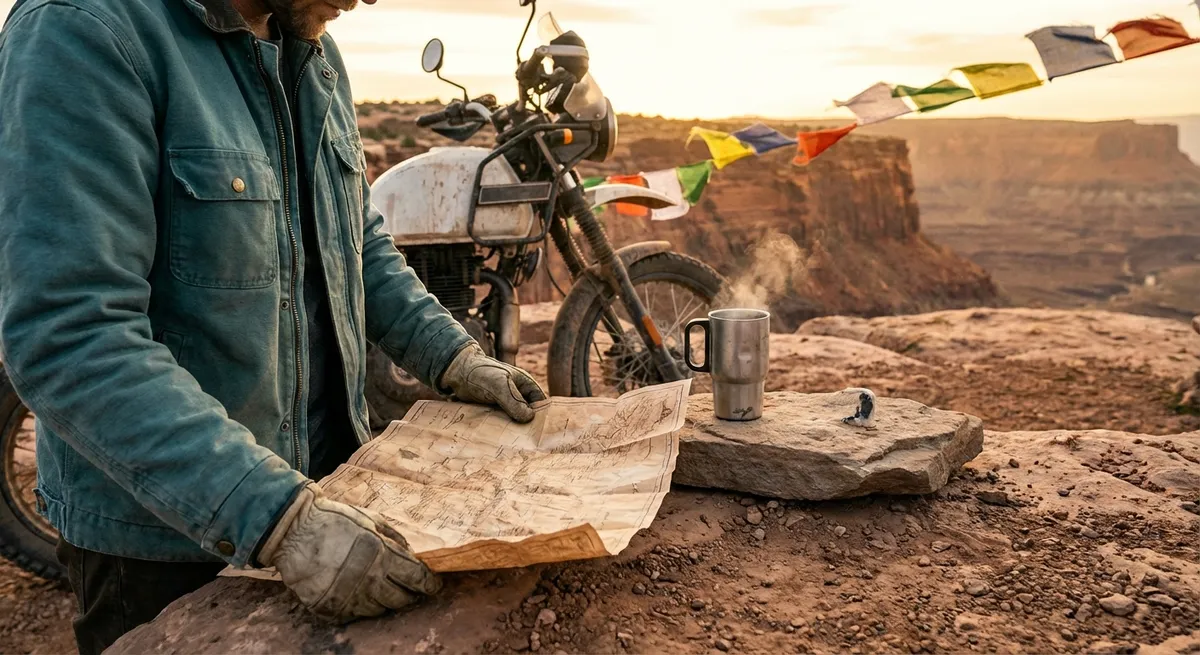
These five trail-tested moves aren’t about squeezing more sights into your schedule. They’re about stepping into the world like you belong in it, ready to collect stories you’ll still be telling years from now.
1. Land on Purpose: Design Your First 24 Hours Like a Prologue
Your first 24 hours in a new place set the tone for the entire trip. Instead of stumbling through jet lag and random wandering, treat day one like the prologue of a book you can’t put down.
Before you leave, choose a “welcome ritual” you’ll repeat in each new destination—maybe it’s a sunrise walk, a visit to the local market, or a quiet hour in a neighborhood café. Mark out a simple, walkable loop near your accommodation with three anchors: one place to eat, one landmark or viewpoint, and one “local life” spot like a park or square. This gives you a soft landing strip instead of an overwhelming checklist.
Aim for small wins: successfully ride local transit once, order in the local language, or find the best street snack on your block. These early victories calm your nerves and sharpen your instincts. By the end of day one, you want two things: to know your immediate area like it’s your temporary hometown, and to feel that buzz of, “I can do this. I belong here.”
2. Pack a “Courage Kit” Instead of Just a Carry-On
You already know the basics—versatile clothes, comfortable shoes, and a power adapter. What turns a standard packing job into a launchpad for adventure is what you bring for your mind and momentum.
Curate a tiny “courage kit” to live in your day bag:
- A small notebook for capturing directions, new words, and flashes of inspiration
- A physical map or offline map downloaded in advance for when Wi-Fi disappears
- A short list of phrases in the local language: greetings, thank you, sorry, how much, and “I’m learning—can you speak slowly?”
- One “comfort anchor” (a favorite snack, scarf, or playlist) to ground you when everything feels unfamiliar
Make your gear serve spontaneity. Quick-dry clothing means you can rinse and repeat if your plans change. A lightweight scarf or bandana becomes sun protection, temple cover, picnic blanket, or makeshift bag. A small portable battery extends your ability to get lost—on purpose—and still find your way home.
When you pack for resilience instead of perfection, you stop worrying about having the “right” outfit and start chasing the right moments.
3. Follow the Fringes: Wander One Layer Beyond the Obvious
Every destination has its headliners—the famous square, the must-see view, the iconic museum. Go see them. Feel the awe with everyone else. Then, step one layer beyond where most people stop.
Use the “fringe rule”: after visiting a major sight, walk 10–15 minutes in any direction away from it. Slip down the side streets where laundry hangs from balconies and locals argue kindly over produce. Duck into the unfancy bakery with the handwritten sign. Look for everyday rituals: dawn joggers on a river path, kids practicing soccer in a dusty lot, elders staking out their favorite bench.
Replace fear of “missing out” with a hunger for “diving deeper.” Ask one local for a recommendation that doesn’t involve the word “famous”: “Where would you go to clear your head?” “Where do you meet friends when you want to talk for hours?”
You’ll find the corners where a city stops performing for visitors and starts revealing its real rhythms. Those are the places that sink under your skin.
4. Turn Meals into Story Engines, Not Just Refueling Stops
Food is more than fuel; it’s the fastest bridge between you and the culture you’re walking through. Instead of treating meals as quick pit stops between attractions, elevate them into daily adventures.
Say yes to at least one dish you can’t pronounce at first glance. Visit markets early, when vendors are setting up and locals are doing their real shopping. Choose one word to chase each day—“spice,” “sweet,” “grilled,” or “street”—and let it guide you. Street food, when chosen wisely, is often safer than it looks: busy stalls, high turnover, and food cooked piping hot in front of you are your friends.
Whenever you’re seated with others—at a hostel breakfast table, a long shared bench at a night market, or a tiny bar with three stools—ask one question: “If I only had one more day here, what should I eat?” People rarely answer with something bland. Their faces light up, stories spill out, and suddenly you’re not just tasting flavors—you’re tasting memories.
Meals become mile markers on your trip’s emotional map: the bowl of noodles that cured your homesickness, the pastry you shared with a stranger-turned-friend, the rooftop dinner where the city glittered and you realized you’d crossed some invisible threshold in yourself.
5. Travel With a “Living Map” Instead of a Fixed Script
It’s tempting to script your journey down to the hour, but travel is most alive in the space between what you planned and what unfolds. Build your itinerary like a living map: a strong backbone with flexible branches.
Choose a few “non-negotiables”—experiences you’d be gutted to miss—then guard wide stretches of unscheduled time around them. Think of each free block as an invitation: to join a last-minute walking tour, follow a local’s suggestion to a hidden cove, linger in a bookstore you didn’t plan to find, or detour to a village you’d never heard of yesterday.
Use technology as a compass, not a cage. Save offline articles and maps, download a public transit app, star locations that intrigue you. Then practice switching your phone to airplane mode for an hour and navigating by curiosity: follow music you hear in the distance, the smell of bread from a side street, the sound of a crowd cheering.
When your plans inevitably shift—a missed connection, sudden rainstorm, or unexpected holiday closure—ask, “What can happen because this didn’t go to plan?” Over time, you’ll start to recognize that some of your strongest travel memories were born from detours you never would’ve scheduled.
Conclusion
The world doesn’t just reward the bravest travelers; it changes them. When you land on purpose, pack like a problem-solver, wander the fringes, turn meals into story engines, and treat your itinerary as a living map, you stop being a spectator. You become a participant in the ongoing story of every place you visit.
You won’t remember every museum label or every perfectly framed photo. You will remember the morning you found your way without a map, the conversation that spilled out over a shared table, the quiet certainty that you could show up in a strange place and slowly make it familiar.
That’s the real souvenir: knowing that wherever you go next, you carry proof that you can step into the unknown and feel, deep down, that you’re exactly where you’re meant to be.
Sources
- U.S. Department of State – Traveler’s Checklist - Official guidance on travel preparation, safety, and documentation
- Centers for Disease Control and Prevention – Travelers’ Health - Up-to-date health advice, destination-specific recommendations, and vaccination guidance
- UN World Tourism Organization (UNWTO) - Data and insights on global tourism trends and responsible travel practices
- BBC Travel – Food and Travel Features - Stories highlighting how food connects travelers with local culture
- MIT Senseable City Lab – Urban Mobility Projects - Research exploring how people move through cities, useful for understanding urban exploration and transit usage