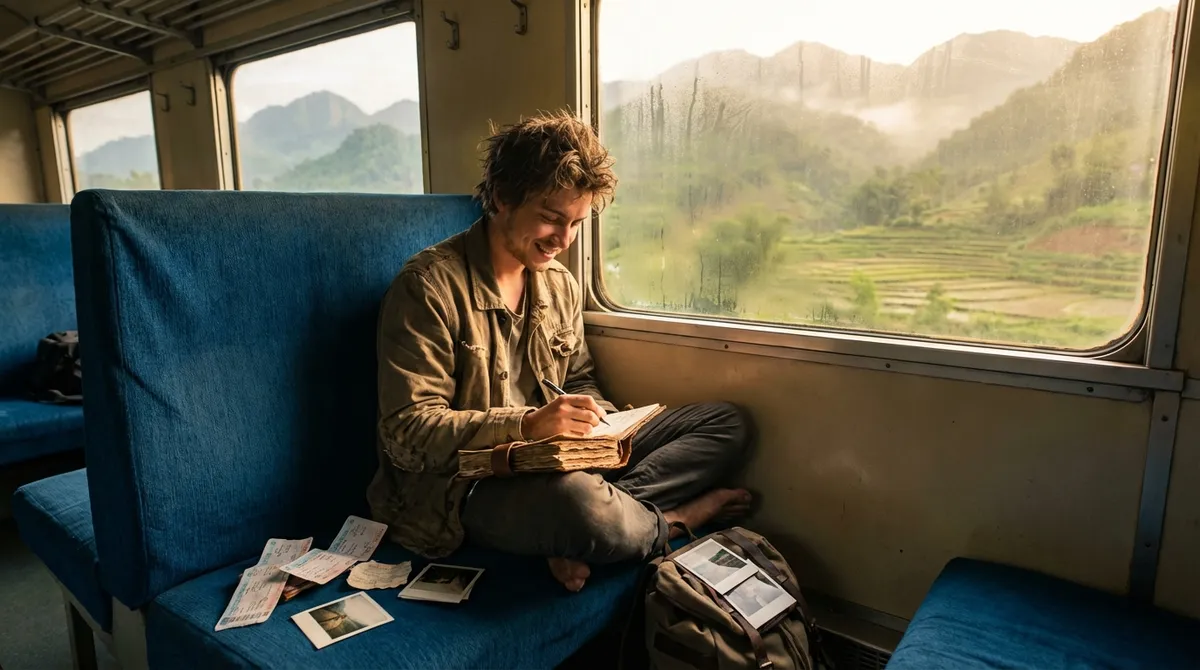
Below are five powerful travel moves that don’t require a huge budget or endless time off—just a willingness to show up differently.
1. Design a “Theme” for Your Trip, Not Just an Itinerary
Most travelers build their plans around a checklist of sights. Storyteller travelers choose a theme.
Instead of “Four days in Lisbon,” imagine “Four days chasing light and viewpoints” or “Four days tasting the city, one neighborhood at a time.” A theme gives your trip a narrative thread: you’re no longer just wandering; you’re on a quest.
Pick something that excites you or scares you in a good way: street art, sunset spots, local markets, urban hiking, coffee culture, hidden staircases, live music, independent bookstores. Then let that theme guide your daily decisions—what you search for, who you talk to, where you linger.
Practical move: create a simple note on your phone named after your theme and add places, conversations, and surprises that fit it as you go. By the time you fly home, you’ll have a cohesive story instead of scattered memories.
2. Use “Micro-Adventures” to Turn Ordinary Days Electric
Some of the best travel moments happen in the spaces you normally treat as filler: the jet-lagged morning, the random Tuesday, the hour before check-in. Micro-adventures turn that “dead time” into the highlight reel.
A micro-adventure is small in scope but big in feeling. It might be:
- Riding the earliest tram or metro of the day just to watch the city wake up
- Walking a full hour in one direction from your hotel with no turns, then navigating back a different way
- Taking the slowest ferry instead of the fastest train, just to feel distance
- Picking a local snack you don’t recognize and making it your “travel mascot” until you leave
Give yourself one micro-adventure per day. Name it out loud: “Tonight’s micro-adventure: get lost between two metro stops and find my way back without maps.” When you frame it that way, you start to see the unfamiliar not as a problem to solve, but as a playground to explore.
3. Build a Local “Anchor Ritual” Wherever You Land
Rituals are the secret glue that helps a place stick to your memory. While everything else changes—weather, crowds, missed trains—your ritual holds steady and gives your days a rhythm.
An anchor ritual can be beautifully simple:
- The same café every morning for a quiet coffee and a few lines in your journal
- A sunset bench where you sit each evening, even if it’s just five minutes
- A daily walk along the same street, noticing new details each time
- A short body reset: stretches on your balcony, a few squats in a park, a breathwork app by a window with a view
These repeated moments create emotional fingerprints—specific smells, sounds, and light that your brain will file under “that time in Tokyo” or “those evenings in Oaxaca.” They also help fight travel fatigue, giving you a sense of home base even when nothing else feels familiar.
4. Pack Like a Problem-Solver, Not a “What If” Worrier
Packing is where a lot of adventures get weighed down—literally. Story-driven travel depends on mobility: your ability to say “yes” to an unexpected bus, a last-minute hike, or a steep set of stairs without dreading your own luggage.
Shift from “what if I need this?” to “what problems do I actually solve on the road?” Then pack items that solve several problems at once:
- A lightweight scarf that can be a blanket on a plane, a temple cover-up, or an improvised picnic mat
- A compact power strip so you can charge everything from one outlet and share with new friends
- A small dry bag or packing cube that doubles as a day bag or beach pouch
- Neutral layers you can re-wear in different combinations, instead of single-use outfits
Set a hard limit: for example, everything must fit into one carry-on and one personal item that you can comfortably carry up three flights of stairs. This isn’t just minimalism—it’s freedom. The lighter your bag, the easier it is to pivot when opportunity knocks.
5. Turn Strangers Into Chapters in Your Travel Story
The landscapes, meals, and museums will blur together over time. The people you meet will not.
Instead of waiting for “interesting locals” to magically appear, make human connection part of your travel practice. It doesn’t have to be big or performative; it can be small, specific, and genuine.
Try these moves:
- Ask someone, “If you had only one afternoon free in this city, where would you go?” and actually follow their suggestion
- Take a locally taught class—cooking, dance, crafts—and speak to at least two people before you leave
- Learn and use three phrases beyond hello/thank you: “What do you recommend?”, “Is this your favorite?”, and “How do you say this?”
- On public transport, put your phone away for a full ride and pay attention: clothing, conversations, gestures, the rhythm of the commute
Write down names and one detail about each person you connect with: “Ana, café owner who taught me to say ‘see you tomorrow’ in Portuguese.” These notes become the spine of your travel story, proof that you didn’t just pass through—you participated.
Conclusion
Travel becomes unforgettable when you stop chasing a perfect trip and start crafting a vivid story. Choose a theme instead of a checklist. Light up ordinary moments with micro-adventures. Ground yourself with small rituals. Pack for agility, not anxiety. And let people—not just places—shape your memories.
The world doesn’t just need more travelers; it needs more awake, curious, story-minded explorers. Your next journey doesn’t have to be longer, farther, or more expensive. It just has to be more intentional.
Your ticket is already a first line. The rest of the story is waiting for you to step through the gate.
Sources
- U.S. Department of State – Traveler’s Checklist – Official guidance on documents, safety, and preparation before traveling abroad
- Centers for Disease Control and Prevention – Travelers’ Health – Up-to-date health advisories, vaccines, and destination-specific recommendations
- BBC Travel – The science behind why we love to travel – Explores psychological and emotional benefits of travel and new experiences
- Harvard Business Review – How to Use Vacation Time to Recharge – Research-backed tips on making trips more restorative and meaningful
- Lonely Planet – Responsible Travel Tips – Practical advice on engaging respectfully and sustainably with local people and places