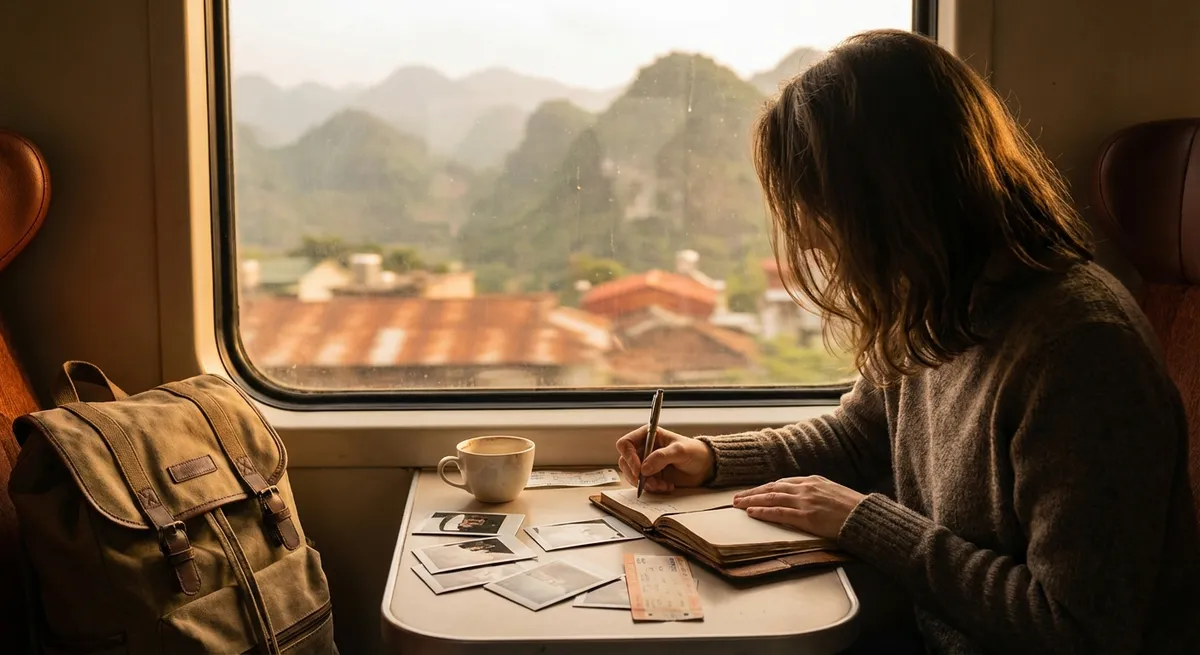
Travel Tip #1: Land With a “First Hour Ritual”
How you spend your first hour in a new place shapes your entire experience. Instead of collapsing in your hotel or racing to the biggest attraction, create a personal “arrival ritual” that drops you straight into the heartbeat of the destination. Walk a few blocks without headphones, paying attention to what people are wearing, how fast they move, the smells drifting from cafes or food stalls. Find a small grocery store or market and see what’s on the shelves that you’ve never seen before—strange fruits, unfamiliar snacks, local drinks.
This ritual grounds you fast and kills arrival anxiety. It also builds confidence: once you’ve navigated a corner store, crossed a busy street, and ordered something simple, the city stops feeling intimidating and starts feeling like a playground. If you arrive late at night, your ritual might be as simple as a slow stroll around your block and ten minutes on your balcony or by a window, watching the city breathe. Do this on every trip, in every country, and your brain quickly learns: new doesn’t mean scary—it means alive.
Travel Tip #2: Let One Obsession Guide Your Route
Instead of trying to “see everything,” choose one obsession and let it shape your journey. It can be anything: rooftop views, street art, bookstores, old trains, local desserts, live music, street markets, or even city parks. Treat that obsession like a compass. In each new destination, look for where your passion hides—ask locals, search maps, follow recommendations. Suddenly your trip stops being random and starts feeling like a personal quest.
This approach cuts through overwhelm and transforms aimless wandering into meaningful exploration. If you’re into food, trace the story of one ingredient: where coffee is roasted, how bread is baked, where spices are sold. If you’re a history lover, follow a specific era or figure through museums, monuments, and neighborhoods that carry their echo. The thrill isn’t just in what you see—it’s in the pattern that emerges as your obsession threads cities, countries, and cultures into one long, connected story.
Travel Tip #3: Design One “Off-Script” Day
Even the boldest travelers can over-script their journeys—packed itineraries, back-to-back must-sees, zero room to breathe. Counter that by planning one deliberate “off-script” day where your only rule is: no major plans, no big ticket attractions, no rushing. Start with a loose anchor—a neighborhood you’ve heard whispers about, a market, a park by the water—then let curiosity decide the rest. Turn down the street that looks most interesting, not the one with the most reviews.
Talk to the barista who looks like they know the music scene. Follow the sound of laughter, the smell of grilling food, the chalkboard menu written only in the local language. These are the days where serendipity shows up: a festival you didn’t know existed, a hole-in-the-wall cafe with the best meal of your trip, a local who draws you a map on a napkin. When you return home, it’s rarely the meticulously planned museum visit you remember—it’s that one unscripted afternoon where you let the city surprise you.
Travel Tip #4: Build a “Sensory Memory Bank” Instead of a Souvenir Pile
The most powerful souvenirs are the ones you can’t pack: the sound of a language rolling through a crowded tram, the way the sea wind smelled at sunset, the rhythm of a city’s crosswalk signals. Start traveling with the specific goal of collecting sensory memories. Pick one sense each day—sight, sound, smell, taste, or touch—and consciously chase it. Maybe you spend a morning just listening: the clink of cups in a café, the rising tide of conversation at a street stall, church bells or call to prayer echoing off stone.
Record tiny notes on your phone: “Smell: fresh bread and car exhaust on the corner of X and Y,” or “Sound: vendor shouting about oranges in the market.” Take short 10-second videos focused only on one scene that captures a feeling instead of just snapping endless selfies. Later, when you scroll back, these details pull you straight back into the moment in a way that no mass-produced trinket ever could. You’ll travel lighter—but remember more deeply.
Travel Tip #5: Travel With a “Future You” in Mind
Every journey is a conversation between who you are now and who you’re becoming. Before you leave, ask: “Who do I want to be when I come back?” Maybe it’s someone more courageous, more patient, more open with strangers, more confident navigating the unknown. Use your trip as a training ground for that version of you. Afraid of speaking up? Make it a mission to ask one local for a recommendation each day. Nervous about trying new foods? Decide that in this country, you will order at least one dish you can’t pronounce.
Travel presses you out of your comfort zone by default—but when you’re intentional about it, every small challenge becomes a character-building quest, not just a hassle. Getting lost becomes a test of your resourcefulness. Flight delays become practice in staying calm under pressure. Language barriers become an exercise in creativity and kindness. When you land back home, you won’t just have photos—you’ll have proof that you can handle more than you thought, and that confidence follows you into the rest of your life.
Conclusion
The world isn’t just waiting to be seen; it’s waiting to be lived through—with curiosity, courage, and a sense of story. When you arrive with a ritual, follow your obsessions, leave space for the unexpected, collect sensory memories, and travel with your future self in mind, every trip becomes more than a break from routine. It becomes a turning point.
Pack your bags like a storyteller, not a spectator. The next chapter of your life might be waiting in a crowded market, on a quiet side street, or in a conversation with a stranger who changes how you see the world—and yourself.
Sources
- U.S. Department of State – Travel Preparation Tips - Official guidance on preparing for international travel, including documents and safety considerations
- Centers for Disease Control and Prevention – Traveler’s Health - Health recommendations, vaccines, and region-specific advisories for travelers
- BBC Travel – The Psychology of Travel - Explores how travel shapes mindset, identity, and personal growth
- National Geographic – The Art of Mindful Travel - Practical advice on being present and attentive to sensory experiences while traveling
- Harvard Business Review – Why You Need a Vacation - Research-based insights on how breaks and travel contribute to well-being and transformation