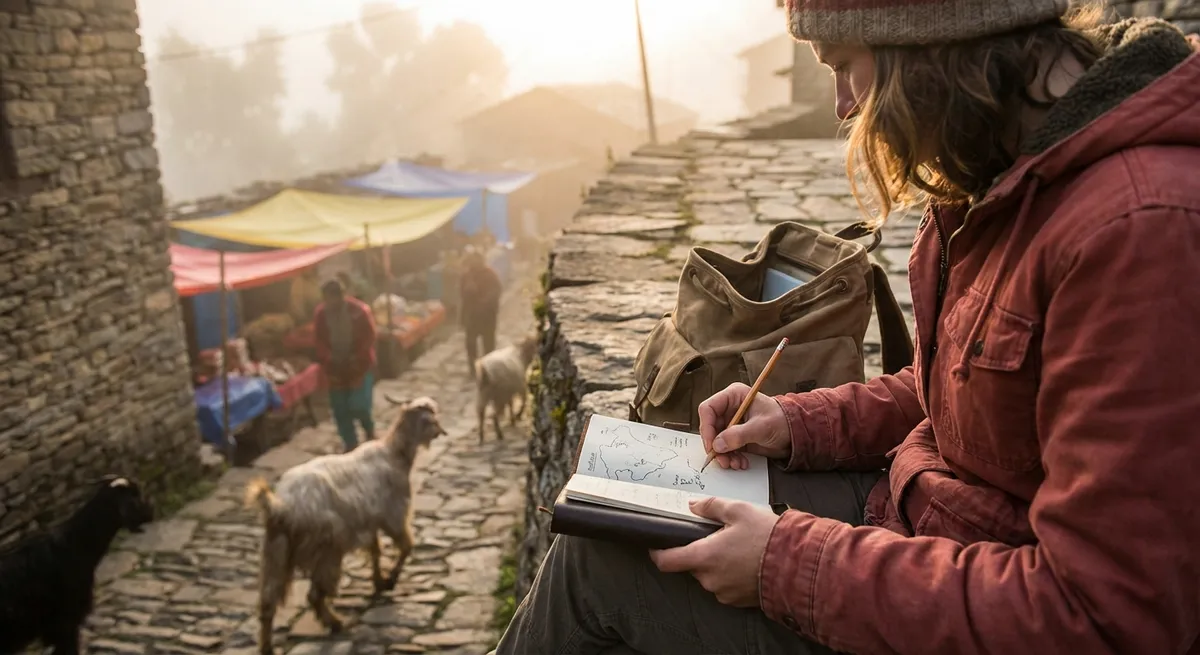
This guide is your invitation to travel like a storyteller—awake to detail, hungry for meaning, and ready to chase the kind of moments that reshape how you see the world.
Turn Arrivals into Rituals, Not Routines
Most travelers land, drop their bags, and rush to the “must-see” list. Storytellers do something different: they create arrival rituals that set the tone for the entire trip.
When you reach a new city, resist the urge to scroll or sprint. Walk—slowly—around the block near your stay. Notice what people are eating, what music spills out of open doors, how the air smells after the last rain. Find a small café, order something local (even if you have no idea how to pronounce it), and write down first impressions: sounds, colors, faces, tiny surprises.
This simple ritual does three powerful things: it grounds you in the present, helps you shake off travel fatigue, and gives you a “first chapter” you’ll actually remember. To make the habit stick, create a personal arrival checklist: a 10-minute walk, a local drink, a quick note in your phone or journal. Before long, every arrival will feel less like chaos and more like the opening scene of a new adventure.
Treat Local Transit Like a Backstage Pass
Taxis and rideshares are comfortable—but they blur the edges of a place. Buses, trams, rickshaws, ferries, and shared vans are where the real texture of daily life shows up.
Instead of defaulting to the fastest option, choose at least one day where local transport is part of the experience. Take a city bus during rush hour, a regional train between small towns, or a public ferry instead of a tourist boat. Watch how people interact: who chats with the driver, who offers seats, what everyone does with their phones or bags.
Practically, this means researching basic transit etiquette and safety ahead of time: how to buy tickets, where to validate them, what scams to avoid, and which routes are best for visitors. Government transit sites or official tourism boards are your friends here. The payoff: you’ll spend less money, see more of the unpolished city, and stack up tiny, vivid scenes that almost never happen behind a taxi window.
Chase Golden Hours Instead of Checklists
Some of the most unforgettable travel memories happen when the light changes—just after sunrise and just before sunset. These “golden hours” make even ordinary places feel cinematic, and they’re when cities breathe differently.
Instead of squeezing every famous stop into one overstuffed day, build your plans around these two windows. Wake a little earlier than feels comfortable and walk to a viewpoint, a riverside, or the old town streets before the crowds appear. In the evening, find a rooftop, a hill, a pier, or a quiet square where locals gather as the heat fades and lights flicker on.
If you love photography, this timing is ideal—but even if you never touch a camera, you’ll notice details that don’t show up at midday: market stalls setting up, kids walking to school, the smell of bakery ovens, conversations on balconies. Plan heavy activities and indoor visits when the sun is harsh, and leave dawn and dusk open for wandering. Your days will feel less rushed, your body will thank you, and your memories will be cut in the kind of light you never forget.
Pack a Curiosity Toolkit, Not Just a Suitcase
What you bring in your mind matters as much as what you bring in your bag. Before you go, build a “curiosity toolkit” that helps you connect more deeply with every place you visit.
Learn five to ten essential phrases in the local language—hello, please, thank you, excuse me, yes, no, and “Do you speak English?” Practice them out loud before you arrive. Save offline maps and simple cultural notes: tipping customs, greetings, basic dress norms, and common gestures to avoid. Keep one or two flexible “anchor experiences” in your back pocket—things like a local food tour, a beginner-level hike, or a short class (cooking, pottery, dance, or photography).
Pair that with smart, light packing: breathable layers, comfortable walking shoes, a compact daypack, a refillable water bottle, a small first-aid kit, and any meds you may need. Pack less than you think you’ll use, leaving room for treasures and last-minute gear. The more prepared and comfortably mobile you are, the easier it is to say yes to spontaneous invitations—and that’s where stories tend to start.
Capture Moments, Then Step Out from Behind the Lens
It’s tempting to see a new place mostly through a screen. But a trip becomes legendary when you’re truly there—not just documenting it. The goal isn’t to stop taking photos; it’s to take better ones and live the moments in between.
Try this: when you reach a place that stuns you—a lookout, a temple, a neon street, a seaside cliff—give yourself 60 to 90 seconds with no camera. Just look. Take in the sounds, the temperature, how the ground feels under your feet. Only after that pause do you pull out your phone or camera to capture a few intentional shots: a wide scene, a detail (hands, murals, reflections), and one photo with you in it, fully present.
Later, jot a one-sentence caption that is for you, not for social media: what you were actually thinking, what you smelled, the emotion that surprised you. When you do choose to share, your posts will carry more truth and texture, and your personal memory will be sharper than any filter. You’re not just collecting images—you’re archiving a life lived fully awake in unfamiliar places.
Conclusion
Every journey offers two paths: rush, consume, and forget—or notice, engage, and remember. When you travel like a storyteller, tiny choices transform your trip: an arrival ritual instead of a scramble, a bus ride instead of a bubble, a sunrise wander instead of another hour of sleep.
You don’t need a huge budget or a perfect plan to live a legendary travel story. You just need curiosity, a bit of courage, and the willingness to let a place change you. Step out the door as if the next corner might hold the best scene in your life so far—because one day, it will.
Sources
- U.S. Department of State – Travel Advisories - Official guidance on safety, local conditions, and preparation tips for destinations worldwide
- Centers for Disease Control and Prevention – Traveler’s Health - Up-to-date health advice, vaccines, and packing recommendations for international trips
- Lonely Planet – Travel Tips & Articles - Practical advice and destination insights from experienced travel writers
- National Geographic Travel - Inspiring stories and photography that highlight culture, nature, and responsible travel
- Rick Steves – Travel Tips - Detailed, experience-based tips on packing light, using transit, and navigating cities like a seasoned traveler