This guide isn’t about squeezing toiletries into a quart-size bag. It’s about five bold shifts that turn any trip—from a weekend away to a months-long odyssey—into a legend you’ll be replaying for years.
Swap “Must-See” for “Must-Feel”
The internet has turned the world into a checklist: Top 10 attractions, Must-See Spots, Ultimate Bucket Lists. But the most electric travel moments usually aren’t on any list. They’re the unplanned conversations, the random detours, the quiet views nobody posted on Instagram.
Instead of asking “What should I see?”, ask “What do I want to feel?”
Do you want awe? Chase sunrise at a viewpoint the guidebooks barely mention. Craving connection? Sit in a local café for an hour with no agenda but to observe and maybe strike up a conversation. Looking for adrenaline? Try the activity that makes your palms sweat a little—kayaking in choppy water, paragliding over a coastline, or simply navigating a busy bazaar on your own.
Use “famous sights” as anchors, not the entire map. Visit them early or late in the day, then spend the rest of your time chasing experiences instead of angles for photos. Let yourself wander a few streets away from the main squares. Follow the sound of live music. Step into that tiny bookstore, food stall, or temple courtyard that wasn’t in any blog post.
The more you prioritize how a place makes you feel over how it’s supposed to look, the more your trip becomes your story—not a rerun of someone else’s.
Turn Transportation into the Adventure, Not the Interruption
Most people treat buses, trains, and ferries as dead time—the price you pay to “get there.” But the road, the rail, and the sea can be the beating heart of your story if you lean into them.
Instead of rushing to sleep through every journey, stay awake for at least part of it. Watch the city lights give way to dark fields and small towns at night. Notice the faces around you: the family sharing snacks, the student studying in the aisle, the elderly couple holding hands in silence. This is the bloodstream of a country, and you’re inside it.
Whenever it’s safe and permitted, move around. Stretch your legs, visit the dining car, stand on the ferry deck and let the wind burn your cheeks. Strike up a simple conversation—ask a seatmate for a food recommendation in their hometown, or what locals actually do on weekends. These tiny exchanges can hand you memories and leads no guidebook could.
Be prepared, but not armored. Pack a warm layer, a scarf or buff that can become a pillow, offline maps, and a small “journey kit” (snacks, water, a downloaded playlist or audiobook, a notebook). This transforms even delays into something survivable—and sometimes surprisingly magical.
When you stop treating transit as wasted time and start treating it as a moving window into real life, the journey stops being a line between two dots and becomes the story itself.
Use Food as Your Shortcut to the Soul of a Place
If you want to open the door to a culture fast, walk through its kitchens and markets. Food is the most approachable, joyful way to go deeper than surface-level sightseeing.
Skip at least one “safe” restaurant that feels like you could be anywhere. Instead, follow the crowds of locals at lunch hour. Look for handwritten menus, plastic chairs, or places with one specialty dish they clearly take pride in. If it’s packed with people who seem to know the staff, you’ve probably found a good spot.
Don’t be afraid to order what you don’t fully understand—as long as you’re clear on your dietary needs or allergies. Point politely, ask the server, “What do you recommend?” and be open to surprise. Some of your greatest travel stories will start with, “I had no idea what I just ordered, but it changed everything…”
Visit a local market early in the day. Walk slowly. Watch how people choose fruit, bargain for spices, pick fresh fish. Buy something simple: a piece of bread, local cheese, a piece of fruit you’ve never seen before. It’s cheap, it’s immersive, and it’s a five-sense introduction to daily life.
If you can, take a short cooking class or food tour led by locals. You’ll walk away not only with recipes, but with context—how dishes came to be, what they mean, and why they matter. That turns dinner into a doorway, not just a pit stop.
Let Small Risks Lead You to Big Rewards
The stories you brag about later usually start with “I was nervous, but I did it anyway…”
You don’t have to cliff-dive, sky-dive, or do anything that feels unsafe or wildly out of character. Instead, commit to small, calculated risks that nudge the edges of your comfort zone and open new doors.
Say yes to an invitation that feels genuine but slightly intimidating: a group hike with people you just met at your hostel, a local festival you don’t fully understand, a language exchange night in a bar where you barely know the basics. Go, stay aware, and set clear boundaries—but go.
Try navigating without your native language for an entire afternoon, relying on gestures, translation apps, and kindness. You’ll realize how much communication is human, not just verbal. You’ll also train your brain to stay alert and adaptable, two of the most valuable travel skills you can build.
If you’re shy about meeting people, set yourself one low-pressure goal per day: ask one person for a recommendation, compliment someone on something they’re wearing, or join one group activity. These tiny risks compound into a whole new level of confidence on the road.
The more you practice safe, thoughtful risk-taking, the more the world starts opening up secret chapters just for you.
Design a “Memory Net” So Your Trip Never Fades
The human brain is ruthless with memories—if you don’t catch them while they’re fresh, they fade into a blur of “That trip was nice.” Part of traveling like a storyteller is building a “memory net” that catches the details before they slip away.
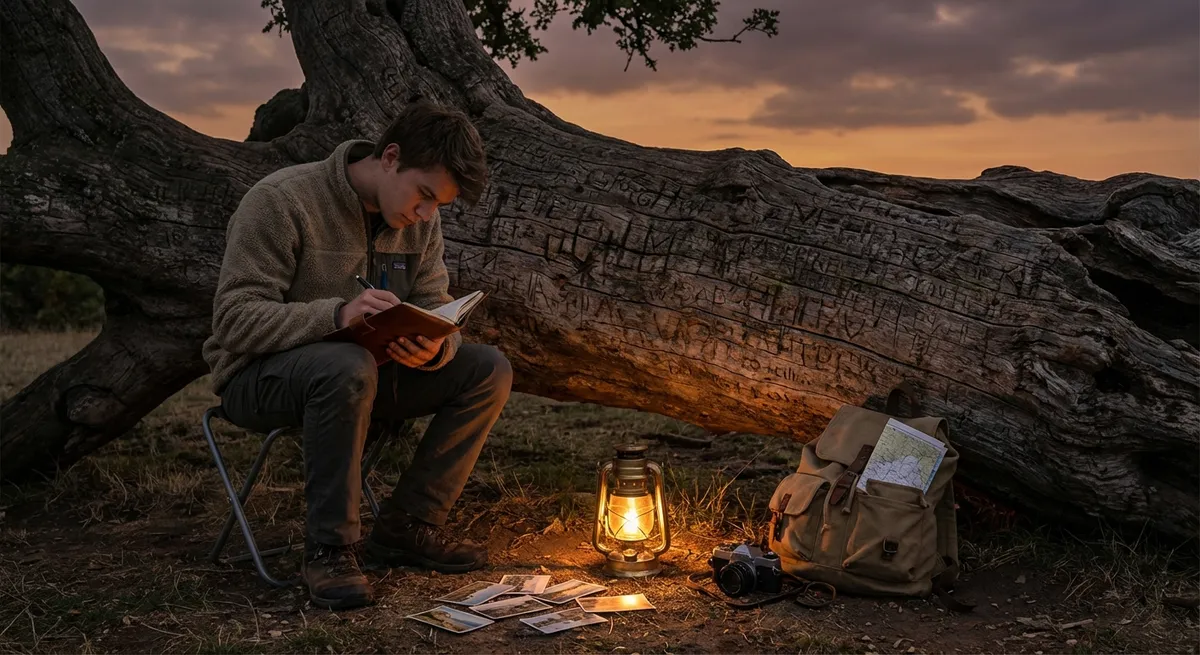
At the end of each day, take 10 minutes to trap the highlights. Not a perfect journal, not an essay—just fragments. Three things you saw. Two things you felt. One thing you learned. Keep it in a notebook, a note app, or voice memos. Years from now, those snippets will drop you right back into the moment.
Collect tiny, meaningful tokens instead of bulky souvenirs: a ticket stub, a pressed flower from a hike, a local receipt with unfamiliar script, a business card from a café you loved. Tape or tuck them into your notebook. Each one is a portal back to a specific moment.
If you enjoy creating content, make something small and shareable: a one-minute highlight reel, a photo carousel with brief captions, a “five things I didn’t expect about…” post. Think of it less as performance and more as a time capsule—for you, and for anyone else dreaming of their next adventure.
Above all, remember that your memory net doesn’t have to be pretty. It just has to be honest. The missed trains, the wrong turns, the awkward conversations—these are the chapters that make your story real and worth retelling.
Conclusion
Travel doesn’t need to be perfect to be powerful. It doesn’t need an unlimited budget, a flawless itinerary, or a cinematic backdrop. What it needs—what you bring—is curiosity, courage, and the willingness to live the story instead of just photographing the scenery.
When you chase feelings instead of checklists, treat the journey itself as the adventure, taste the world bravely, say yes to small risks, and capture your days before they fade, you transform every trip into something bigger than a holiday. You turn it into a legend you’ll carry for the rest of your life.
The next boarding call, bus ticket, or road out of town is an invitation. The question is simple: what kind of story are you ready to tell?
Sources
- U.S. Department of State – Traveler’s Checklist – Official guidance on preparation, safety, and documentation for international trips
- Centers for Disease Control and Prevention – Travel Health – Up-to-date information on vaccines, health alerts, and destination-specific health advice
- UNESCO World Heritage Centre – Background on culturally and naturally significant sites around the world, useful for deeper context beyond “top attractions”
- BBC Travel – Features – In-depth travel storytelling that emphasizes culture, food, and local perspectives
- Lonely Planet – Travel Tips & Articles – Practical advice and on-the-ground insights for travelers seeking meaningful experiences