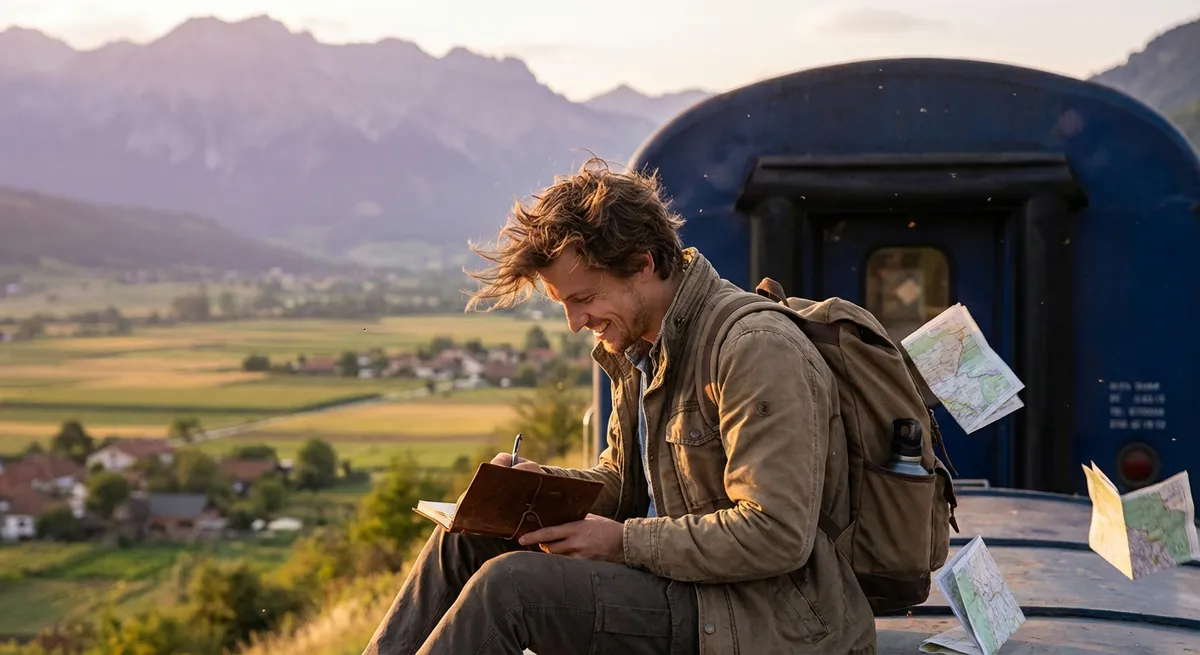
Below are five powerful ways to shift how you travel—so every journey feels richer, deeper, and wildly alive.
Turn Your First 24 Hours Into a Personal Quest
The first day in a new place can blur into logistics: airport lines, hotel check-in, finding food, fighting jet lag. But if you treat your first 24 hours like a quest instead of a chore, the entire trip takes on a different energy.
Before you arrive, choose a simple mission: find the highest viewpoint in the city, eat a dish locals swear by, or reach one place that requires you to use public transport. Instead of collapsing in your room, drop your bags, splash water on your face, and step back out. Wander without headphones and let the city’s sounds become your soundtrack—tram bells, street vendors, distant music leaking from open windows.
Pick a direction and walk with intention, even if you don’t know exactly where you’re going. Stop at a busy café where you hear mostly the local language, order what you see others drinking, and watch. This is your orientation—not by map, but by feeling. Notice how people cross the street, how late shops stay open, whether the sidewalks are for strolling or sprinting. By nightfall, you won’t just “be in” a new place—you’ll already be in a story.
Make One Bold Connection Everywhere You Go
Landmarks are easy to remember—but it’s people who make a place unforgettable. Instead of just collecting photos of landscapes, aim to collect at least one genuine human connection in every destination.
That connection might come from:
- Joining a local walking tour and asking your guide what they’d do with a free Sunday
- Sitting at the bar instead of a corner table, then asking the bartender what they’re most proud to pour
- Taking a short class—cooking, dance, pottery—and staying after to chat with the teacher
Approach conversations with honest curiosity, not an agenda. Ask open questions: “What do you wish visitors understood about this city?” or “What do people from here dream about doing?” You’ll often get answers that don’t show up in guidebooks.
Respect cultural norms, personal space, and privacy, but don’t be afraid to reach out first. Even brief encounters—a grandmother showing you how to eat street food properly, a train conductor recommending a coastal stop, a shop owner sharing photos of the city from decades ago—can add texture to your trip. Those names and faces will anchor your memories so that when you look back, the journey feels alive, not abstract.
Design One Unscripted Day and Let Serendipity Lead
Most travelers either over-plan or under-plan. There’s a radical middle ground: architect your trip, but dedicate at least one full day to intentional spontaneity—a day when your only agenda is to follow whatever pulls at your curiosity.
Start with a loose starting point: a neighborhood, a market, a lakeside promenade. From there, use tiny signals to decide your next move: turn down whichever street smells like fresh bread; choose the café with the longest line of locals; follow the sound of live music. Take side streets instead of main roads. Duck into courtyards, tiny bookstores, and local parks.
Leave room for detours: an unexpected festival, a street performer, a small museum you’ve never heard of. Put your phone on airplane mode for stretches of time and navigate by landmarks instead of GPS. If you get a little lost, you’re doing it right—as long as you stay aware, safe, and respectful.
This unscripted day often becomes the heart of your trip. When everything isn’t perfectly choreographed, the world has space to surprise you. Those surprises—the accidental sunset viewpoint, the tiny family-run diner, the alley that opens onto a breathtaking square—are the moments you’ll tell stories about for years.
Upgrade Your Senses: Travel in “High Resolution”
Many trips dissolve into a fog of “beautiful views” and “great food” because we never really zoom in. To make your journeys unforgettable, train yourself to travel in high resolution—engaging all five senses like you’re a field researcher of wonder.
Sight: Instead of just snapping a photo, take ten seconds before every shot to really observe. Count the colors in the scene. Notice the way light hits stone, water, faces. Look up—balconies, hanging laundry, ornate ceilings, neon signs burned by time.
Sound: Each place has its own soundtrack. Sit for a full minute with your eyes closed and ask: what do I hear? Church bells, call to prayer, car horns, waves, children, wind in trees, clinking of cups. These sounds are the soul of a place.
Smell: Fresh bread, exhaust fumes, incense, sea salt, street food, rain on hot pavement—the fastest way your memory will travel back later is through scent. Pay attention. Step inside bakeries and markets even if you’re not hungry, just to breathe them in.
Taste: Dare yourself to try at least one thing you’ve never eaten before in every destination, even if it’s small—a local candy, a regional cheese, a seasonal fruit. Ask how locals eat it: dipped in salt, sprinkled with chili, wrapped in bread.
Touch: Run your fingers along old stone walls (where appropriate), feel the texture of market fabrics, notice the air on your skin—dry desert heat, coastal humidity, mountain crispness. The physical feel of a place is part of what makes it real.
This kind of sensory noticing doesn’t cost anything, but it transforms your trip from a slideshow into an experience you can almost step back into later.
Pack a Ritual That Anchors Every Journey
Rituals turn repeat behavior into meaning. If you create one small travel ritual and repeat it on every trip, you’ll build a string of journeys that feel connected, no matter how different the destinations are.
Your ritual could be:
- A “departure question” you write in your notebook on your first night: “What do I want this place to change in me?”
- A simple sunrise or sunset moment in every destination, even if it’s just from a balcony or hostel roof
- A tradition of buying one small, practical object you’ll actually use at home—a spoon, a mug, a scarf—so daily life later carries echoes of your travels
- Sketching or writing a one-page “scene” from each day: not everything you did, just one moment that felt alive
Keep the ritual light and enjoyable, not another to-do. The point isn’t productivity; it’s presence. Over the years, these repeated actions become a personal spine for your travels—familiar gestures in unfamiliar places.
When you flip back through your journal, your photos, or that mismatched collection of mugs and scarves, you’ll see more than scattered vacations; you’ll see a life stitched together by intentional adventures.
Conclusion
Every trip offers two journeys: the outer route you follow on maps, and the inner one you trace through memory and meaning. When you treat your first day as a quest, seek one real connection, surrender a day to serendipity, travel in sensory high definition, and carry a small ritual from place to place, you’re no longer just passing through the world—you’re in conversation with it.
You don’t need more time off or more money to travel this way. You just need a decision: that your next trip—no matter how near or far—will be lived awake. The world is already out there, humming with stories. All that’s left is for you to step into them.
Sources
- U.S. Department of State – Traveler’s Checklist - Practical guidance for preparing safely and responsibly for international trips
- World Tourism Organization (UNWTO) - Global tourism data and insights that highlight how people travel and engage with destinations
- BBC Travel – The Art of Slow Travel - Explores more mindful, immersive approaches to exploring places
- National Geographic – How to Be a Better Tourist - Tips on traveling more thoughtfully and connecting with local culture
- Harvard Business Review – How to Make Your Travel More Meaningful - Research-based perspective on designing trips that are personally transformative