Chase the Hours Everyone Else Sleeps
There’s a secret version of every city that only appears when most people are asleep. Dawn and late night are your all-access passes to that hidden world.
Wake up before sunrise and walk through the stillness. You’ll see market stalls being assembled, bakers dusted in flour, street sweepers humming their way down empty boulevards. The air feels thinner, like the city hasn’t fully put on its mask yet. This is where you feel the pulse of a place without the performance.
At night, explore with purpose and awareness. City centers glow differently under neon, fairy lights, or the moon reflecting off river water. Cafés turn into whispered-conversation bars, plazas become social playgrounds, and the hum of nightlife reveals who the city really is after dark. Just stay smart: keep to well-lit areas, let someone know your rough plans, and trust your instincts.
Travel isn’t only about where you go, but when you choose to be there. Change your hours, and you change your experience—no extra money required, only courage and an alarm clock.
Let Your Taste Buds Draw the Map
Instead of building your itinerary around attractions, build one around flavors. Use food as your compass and see where it leads.
Start by finding where locals eat on an ordinary Tuesday, not where tourists line up on a Saturday night. Follow the smell of grilling skewers down a side street, step into the crowded lunch spot with a menu you can barely read, or wander through a public market with your curiosity as your guide. Aim to try something each day that you don’t recognize or can’t pronounce perfectly.
Ask vendors what they recommend if you’re “feeling adventurous.” A bowl of noodles in a tiny alley, a handwritten dessert menu, or a street-side snack shared on a plastic stool can deliver more cultural depth than any museum audio guide. Learn how dishes are tied to seasons, festivals, or history; every plate becomes a story you can taste.
Travel guided by flavor turns eating from a necessity into an expedition. You’re not just filling your stomach—you’re decoding a destination, bite by fearless bite.
Turn Transit into the Heart of the Adventure
Most travelers treat transportation as dead time to be endured, not experienced. Flip that mindset, and the journey itself becomes one of the richest parts of your trip.
Skip at least one quick flight in favor of a slower route: a long-distance train, an overnight bus, a ferry sliding between islands, or a shared minivan rattling along a mountain road. You’ll see landscapes unspool in real time—fields changing to forests, cities fading into villages, coastlines curving away into open water.
Transit is where strangers become temporary companions. The person next to you might recommend their favorite hidden café, share a snack from their hometown, or help you navigate a chaotic bus station. Keep a small notebook or notes app ready for these micro-stories: the train conductor who sings, the driver who stops for roadside fruit, the family sharing a homemade meal in the seat across from you.
Yes, the ride might be bumpy, noisy, or delayed—but that’s the point. When you stop demanding perfect efficiency, you make room for serendipity. You’re not just going somewhere; you’re learning how the world moves.
Pack for Who You Want to Be, Not Just What You Need
Every item in your bag is a decision about the kind of traveler you’re going to be. Pack with intention, not just habit.
Instead of overstuffing your suitcase “just in case,” ask: Will this help me say yes to something new? A pair of lightweight hiking shoes might nudge you to follow that spur-of-the-moment trail. A compact swimsuit in your daypack means you can jump into the river you stumble upon, not just take a photo of it. A small notebook invites you to capture thoughts, sketches, and memories before they fade into the blur.
Build a “curiosity kit”: a phrasebook or translation app downloaded offline, a reusable tote for impromptu market stops, a foldable hat for sun-chasing wanderings, and a deck of cards that can bridge language barriers anywhere in the world. Pack a scarf or sarong that doubles as temple attire, picnic blanket, beach cover, and impromptu pillow.
When your bag is light but intentional, airports feel less stressful, cobbled streets less punishing, and spontaneous detours less intimidating. Your packing choices become a quiet promise: I’m ready for whatever this place has to offer.
Give Each Destination a Personal Quest
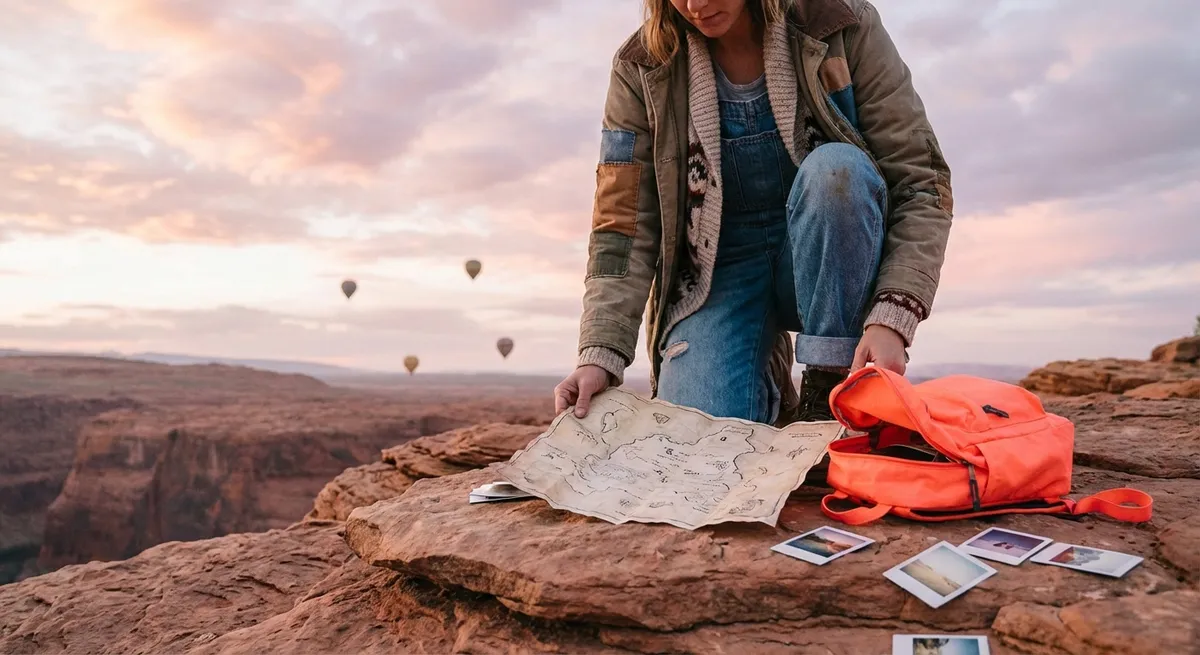
Instead of treating your trip as a random assortment of sights, give it a quest—one that’s unique to you and your curiosity.
Pick a simple theme before you arrive. Maybe you decide to find the best rooftop view in every city, trace street art murals through back alleys, visit independent bookshops in each neighborhood, or seek out local legends and ghost stories. Your quest doesn’t have to be grand; it just has to be yours.
This transforms aimless wandering into purposeful exploration. Suddenly, you’re ducking into that side street because you spotted a splash of color on a wall; you’re stepping into a tucked-away bookstore where the owner recommends a local author; you’re climbing winding stairs in search of a rooftop terrace only the locals know.
Your quest becomes the thread that ties the journey together, turning scattered memories into a cohesive story. When someone asks, “What was your trip like?” you don’t just say, “It was great.” You start with, “I went hunting for rooftops and street stories, and here’s what I found…”
Conclusion
Travel doesn’t have to look like a glossy brochure to be extraordinary. When you chase the quiet hours, follow your appetite, treat transit as a chapter—not a pause—pack with intention, and give your journey a personal quest, you step into a different style of travel: one that’s alive, unscripted, and deeply your own.
You don’t need more time off or more money to travel this way. You need curiosity, a little nerve, and the willingness to let the world surprise you. The next time you zip up your bag and step toward the unknown, remember: the most unforgettable trips aren’t just found on maps—they’re forged by the way you choose to move through them.
Sources
- U.S. Department of State – Traveler’s Checklist - Official guidance on travel preparation, safety, and documentation
- Centers for Disease Control and Prevention – Travelers’ Health - Up-to-date health advice, vaccines, and destination-specific recommendations
- World Tourism Organization (UNWTO) - Data and insights on global tourism trends and traveler behavior
- National Geographic Travel - Inspiring stories and practical perspectives on immersive, culturally rich travel
- BBC Travel - Features on local experiences, lesser-known destinations, and thoughtful travel practices