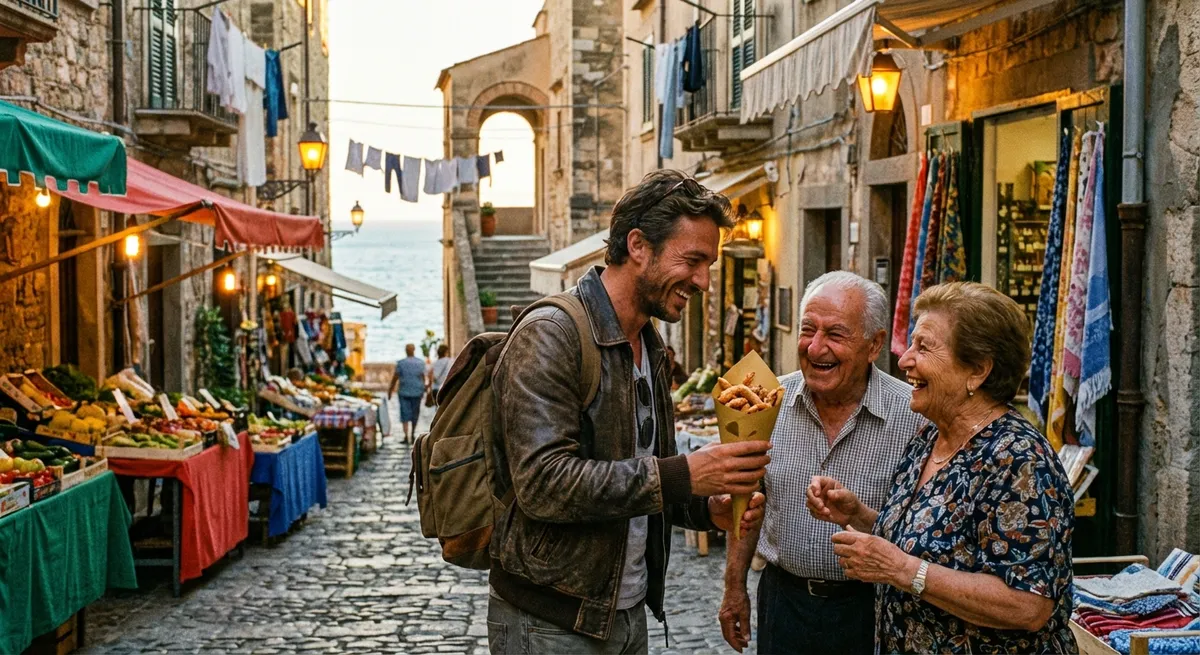
These five travel shifts don’t just make your trips smoother—they flip the whole experience. Think of them as upgrades for your curiosity: simple moves that turn each destination into a playground of unexpected, vivid moments.
Tune Your Senses: Turn Every Street Into an Adventure
Before you race to the big-ticket sights, walk a random side street and let your senses do the navigating. Listen for the clatter of plates from a hidden lunch spot, follow the scent of fresh bread, watch where people in work clothes are actually heading on their breaks.
Pause at a corner café, even if you don’t speak the language perfectly. Order what you see the locals ordering. Notice the details: the chipped tile floor, the music humming in the background, the way people greet the staff. These are clues to how the city breathes.
Travel becomes electric when you treat each block as a story unfolding in real time. Instead of “doing” a city, you’re decoding it—through taste, sound, and rhythm. You’re not just checking off attractions; you’re letting a place introduce itself to you on its own terms.
That sensory awareness pays off later. You’ll know which neighborhoods feel alive at night, where the best cheap eats hide, and which routes give you the best sunrise light. Slowly, the city stops feeling like an obstacle course and starts feeling like a friend.
Pack Like an Explorer, Not a Visitor
Your bag is your mobile basecamp. Pack for movement, not for perfection. Choose gear that lets you say “yes” when the day suddenly changes—when someone invites you to hike a ridge at sunset or hop on a scooter to chase down the best noodle stall.
Bring one set of clothes you’re not afraid to ruin: the ones you’ll wear on muddy trails, in surprise rainstorms, or on impromptu bike rides. Add a compact, ultralight layer that works from chilly nights to over-air-conditioned buses. Think versatility, not volume.
Invest in small, high-impact items: a reusable water bottle with a filter, a packable tote or daypack, a tiny headlamp, a microfiber towel, and a power bank that actually lasts. These are the things that turn “I can’t” into “Why not?”
Leave room—literally—for the unexpected. Don’t stuff your bag to the limit; space means flexibility. It means you can pick up local snacks, a paperback from a neighborhood bookstore, or a handmade souvenir without playing luggage Tetris every night.
When your pack matches your mindset—light, agile, ready—you move through the world with a different kind of confidence. You’re no longer protecting your stuff from the journey; your stuff is backing you up as you dive deeper into it.
Hack the Local Flow: Ride How People Really Move
Skip the default taxis and tourist shuttles whenever you safely can. Instead, learn how everyone else moves. Every city has its own choreography of motion, and stepping into that flow is one of the fastest ways to feel the pulse of a new place.
On your first day, figure out three things: the main transit card or app, the most common local route (like the commuter train into the center), and how late things run at night. A single ride on the morning metro or bus tells you more about daily life than hours spent on a sightseeing bus.
Watch how people pay, where they stand, how they queue—or don’t. Notice the etiquette: Is it quiet or loud? Are seats given up for elders? Do people chat or cocoon with headphones? Matching that energy shows respect and makes you feel less like an outsider.
Try at least one “unpolished” mode of transport: the river ferry used by office workers, the shared minivan that locals take between towns, the old tram line creaking through residential neighborhoods. These are where chance encounters and unscripted conversations happen.
Soon, you’re not just moving across a map—you’re gliding through a living system of routines, glances, greetings, and unspoken rules. That’s where the real destination hides: inside the everyday routes you’d otherwise ignore.
Turn Strangers Into Storylines
Some of your strongest travel memories will have nothing to do with landscapes or monuments—and everything to do with people. The barista who recommends a hidden rooftop, the hostel worker who shares a shortcut trail, the old man on the bench who tells you how the city used to be.
Start small and honest. Learn how to say “hello,” “please,” “thank you,” and “this is beautiful” in the local language. Even clumsy attempts often open doors. People remember the traveler who tried, not the one who floated through silently.
Ask specific, open questions: “Where would you go for a quiet sunset?” “What food reminds you of home?” “If you had one free day in this city, how would you spend it?” These questions don’t just give you tips—they reveal what locals actually cherish.
Say yes (wisely) to invitations that tug at your curiosity: a neighborhood festival, an aunt’s cooking, an early-morning market run. The safest way in is often through organized experiences run by locals—cooking classes, walking tours, language exchanges, or community hikes.
Every new connection turns the map into a web of personal landmarks. That square is no longer “the main plaza”; it’s where you shared late-night street food with strangers who didn’t feel like strangers by the end of it.
Build a Rhythm, Not a Checklist
Instead of cramming your days with back-to-back attractions, design a rhythm for your trip that leaves room for the day to surprise you. One “anchor” plan per day—like a hike, museum, or neighborhood you’re set on—plus wide-open margins is often the sweet spot.
Start early, before the city fully wakes. Wander through quiet streets, watch shopkeepers open for the day, catch the first light on old stone or glass towers. These are moments you can’t schedule, only stumble into.
Claim “unplanned hours” each afternoon. Use them to chase something that caught your eye earlier: a side street you didn’t have time to explore, a bakery with a line around the corner, a park you glimpsed from the bus window.
Let weather reroute you. Rain can push you into bookstores, galleries, covered markets, and tiny cafés. Heat can send you to riversides, shady squares, or late-night scenes when the city cools off. The conditions don’t ruin the trip; they give it shape.
By the end, your journey stops looking like a checklist of sights and starts reading like a story arc—slow beginning, bold middle, reflective end. You return home with fewer photos of famous facades and more memories of the in‑between moments that felt improbably, vividly alive.
Conclusion
The most powerful travel “tips” aren’t tricks for squeezing more into your days. They’re shifts in how you move, see, and connect. Travel like a local, and the world reveals its unpolished edges, its unexpected friendships, its small, perfectly timed miracles.
Pack for agility, move with the city, talk to people, and leave space for detours. Do that, and every journey stops being a quick escape from your life and starts becoming a training ground for the kind of person you want to be: curious, brave, and wide awake to the world.
Sources
- U.S. Department of State – Travel Advisory & Safety Tips - Guidance on staying informed and safe while navigating new destinations
- Centers for Disease Control and Prevention – Traveler’s Health - Up-to-date health recommendations, vaccines, and region-specific advice for travelers
- Lonely Planet – Responsible Travel Tips - Practical ways to connect respectfully with local communities and cultures
- National Geographic – How to Travel Like a Local - Insights on moving beyond tourist areas to experience everyday life in destinations
- Rick Steves – Packing Light and Smart - Detailed strategies for minimalist, flexible packing that supports spontaneous adventures