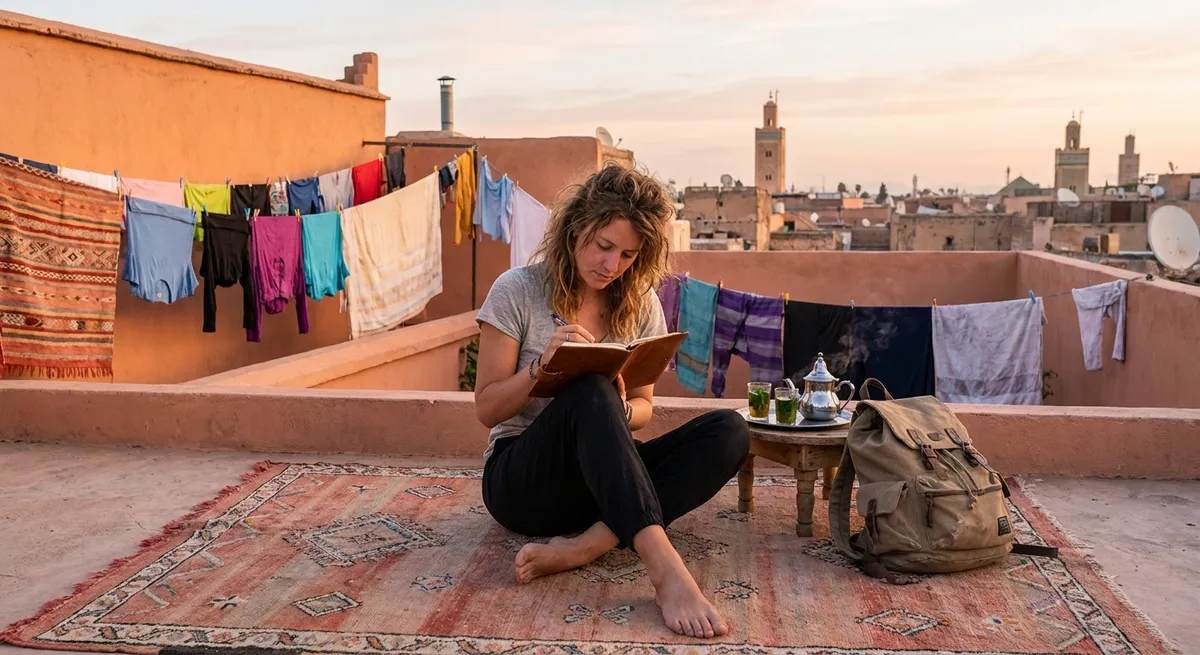
Below are five powerful ways to turn any trip into a deeper, more electrifying adventure—without losing your grip on reality, your budget, or your sanity.
1. Swap Sightseeing for Story-Hunting
Instead of asking, “What should I see here?” start asking, “What stories live here?”
Walk a few streets beyond the postcard-perfect plazas. Listen to the way people argue and laugh in coffee shops. Notice the old signs on buildings, the shrines tucked into alleyways, the graffiti that says more about a city’s soul than any official tour.
To story-hunt:
- Talk to people whose job isn’t tourism: barbers, street vendors, bus drivers, bookstore clerks. Ask what they love or worry about in their city.
- Sit in one spot—bench, café, waterfront—for 30 quiet minutes and just observe. What feels fast? What feels slow? What are people carrying, wearing, rushing toward?
- Carry a small notebook or use your phone’s notes app to capture fragments: a phrase you don’t understand, the smell of the harbor at dawn, the sound of train brakes echoing off old stone.
These notes turn into the kind of memories you can still taste and hear years later. You won’t just remember “Paris” or “Tokyo”—you’ll remember the baker who showed you how to tell a good baguette or the stranger on the night bus who shared their favorite childhood snack.
2. Let Your Taste Buds Draw the Map
Food is the fastest shortcut to the heart of a place—and one of the best ways to travel like a local without needing a guidebook.
Start your days at markets instead of museums whenever you can. Fresh produce, weird snacks, simmering pots, and conversations over counters will tell you more about a culture’s rhythms than a dozen overview articles.
A few adventurous (but practical) moves:
- Eat where the line is long and the menu is short. High turnover means fresh food and local trust.
- Order what you can’t pronounce (at least once). Ask the server or stall owner what they recommend “for someone who wants to try what locals eat.”
- Take a food class or walking food tour on day one. It’s not just about tasting; you’ll pick up essential phrases, tipping customs, street‑food etiquette, and what’s considered rude or respectful around the table.
Use your taste buds as a compass: let a food stall pull you down a side street, or a bakery lead you to a neighborhood you never planned to visit. Your map will take on flavors—sweet, smoky, sour, salty—and your memories will be tied to shared tables rather than just lookout points.
3. Build Flex Days Into Your Itinerary (And Actually Honor Them)
The most electric travel memories rarely come from the hyper-planned day. They slip in when the schedule cracks a little—when a train gets delayed, a local invites you somewhere, or a street festival appears out of nowhere.
Don’t pack your days so tightly that serendipity has nowhere to land.
How to design for adventure:
- Plan “skeleton days.” Choose only one fixed anchor per day (a museum ticket, a hike, a reservation). Let the hours around it stay open for spontaneity.
- Schedule at least one “wander day” per trip. No timed entries, no strict agenda. Pick a rough direction or neighborhood and follow your curiosity: a sound, a smell, a color that catches your eye.
- Leave buffer blocks. Add at least an hour more than you think you need between big activities. Use it if a local suggests a detour or invites you for a coffee.
When you protect your flex time as seriously as you protect your check‑in time, you give your trip room to breathe. That’s when the unexpected invitations, hidden courtyards, and “we just stumbled on this” sunsets tend to show up.
4. Use Transit as a Window Into Real Life
Buses, trams, ferries, metro lines—these aren’t just ways to get from A to B. They’re the veins of a city, moving its lifeblood. Ride them, and you’ll feel the real tempo of a place.
Instead of defaulting to taxis or ride-shares, try this:
- Take the city’s busiest transit line during rush hour once. Yes, it might be crowded, but it’s a masterclass in local daily life: school uniforms, office wear, after‑work exhaustion, street musicians, snack sellers.
- Ride a full loop. Hop on a tram or bus and stay on until it returns to where you started. You’ll get an entire moving portrait of neighborhoods you never would have seen—rich, poor, quiet, buzzing—all without a tour script.
- Try at least one “local’s route” to a big attraction. Instead of the tourist shuttle to the viewpoint or beach, ask how residents usually get there.
Mastering public transport also unlocks new confidence. Once you can decode another city’s ticket machines, line maps, and unspoken rules, you’re not just visiting—you’re participating. That mental shift reshapes how you see every destination afterward.
5. Design Souvenirs That Actually Change You
The most powerful travel souvenirs don’t sit on a shelf; they keep traveling with you.
Rather than filling your bag with trinkets, aim for takeaways that reshape your daily life back home:
- Adopt one local habit. Maybe it’s an evening paseo walk, an afternoon tea ritual, a slower weekend breakfast, or taking public transit more often. Build at least one new rhythm into your post‑trip routine.
- Learn one skill you can keep practicing. Join a short local workshop—cooking, dancing, calligraphy, weaving, surfing—and commit to continuing it in some form when you return.
- Collect “threshold moments.” Those tiny instances where you hesitated—speaking in a new language, trying a risky-looking dish, venturing into a new neighborhood—and stepped through anyway. Write them down. Revisit them when you’re facing a big decision later; they’re proof you can handle unfamiliar territory.
When your souvenirs change how you move through the world, the trip doesn’t end at the airport. It keeps echoing through your choices, your friendships, your work, and your next adventure.
Conclusion
Every journey offers two versions: the one on your itinerary and the one that unfolds when you stay curious, flexible, and willing to step off the obvious path. When you hunt for stories, let food guide your feet, protect room for surprise, ride with the locals, and bring home habits instead of just objects, travel stops being an escape and becomes a training ground for a bolder, more awake life.
You don’t have to go farther or spend more to travel like this. You only have to show up differently—eyes open, map loose in your hand, ready for the world to answer a question you haven’t even learned to ask yet.
Sources
- [U.S. Department of State – Travel Advice & Tips](https://travel.state.gov/content/travel/en/international-travel/before-you-go/travelers-checklist.html) - Practical guidance on planning, safety, and preparation for international travel
- [Centers for Disease Control and Prevention – Traveler’s Health](https://wwwnc.cdc.gov/travel) - Up-to-date health recommendations, vaccines, and safety information for destinations worldwide
- [UN World Tourism Organization (UNWTO)](https://www.unwto.org/tourism-data) - Data and insights on global tourism trends, useful for understanding how and where people travel
- [BBC Travel – Experiential Travel Features](https://www.bbc.com/travel) - In-depth stories that illustrate local-focused, cultural, and off-the-beaten-path travel experiences
- [National Geographic Travel](https://www.nationalgeographic.com/travel/) - Rich narratives and photography that highlight immersive, culturally aware ways of exploring destinations