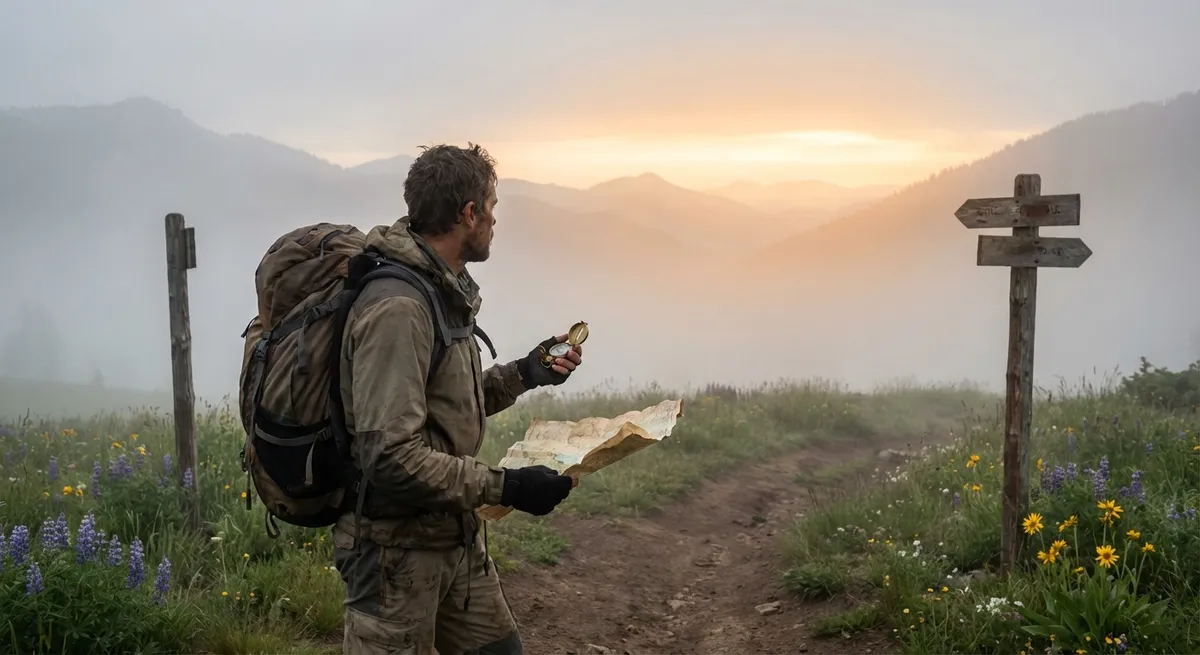
These five instinct-led travel tips will help you trade autopilot for aliveness, turning every journey into a living, breathing adventure—without losing your wallet, your safety, or your sense of direction.
Let Your First Hour Set the Tone (Not the Algorithm)
The first hour after you arrive in a new place is pure magic: your senses are on high alert, every sound feels new, and even the air smells like possibility. Instead of diving straight into your phone or your pre-made itinerary, treat this hour as a personal ritual.
Drop your bags, grab a bottle of water, and take a slow, aimless walk within a safe radius of where you’re staying. Notice the rhythm of traffic, the faces in doorways, the smells from food stalls or cafés. Pick one place that feels right—not the most “Instagrammable,” but the one that pulls you in—and sit there for ten minutes. Order something simple, like a coffee or local snack, and just watch the world move.
This micro-ritual does two things: it tunes your instincts to the local frequency and gives you a soft landing in an unfamiliar environment. You’ll return to your accommodation already oriented, with mental bookmarks: a street you want to explore tomorrow, a park that feels like a sanctuary, a corner store that could become your daily stop. By the time you check your phone, your own impressions will matter more than the endless scroll of recommendations.
Use “Loose Anchors” Instead of Rigid Itineraries
Traditional itineraries can feel like a race against the clock: breakfast at 8, museum at 10, must-see viewpoint at 3. You arrive home with photos but little memory of how the moments actually felt. Instead, design your days around “loose anchors”—a small number of fixed points that leave wide open space in between.
Pick one or two anchors per day: a guided walking tour, a reservation at a tiny restaurant you’re excited about, or a timed ticket to a landmark that really matters to you. Around those anchors, let your day breathe. If you’re drawn down a side street because you hear live music, follow it. If you stumble on a local market, give yourself permission to linger instead of rushing off to the next scheduled stop.
This approach gives you the psychological comfort of structure without suffocating spontaneity. You’re less likely to burn out, more likely to say yes to unexpected opportunities, and far more able to adapt when weather, closures, or delays disrupt your plans. The best stories often spring from the unplanned space between your anchors.
Turn Everyday Moments into Micro-Adventures
Not every adventure needs a mountain, a jungle, or an ocean. Some of the most memorable experiences lurk in ordinary moments that you choose to treat as quests rather than chores. With a tiny shift in mindset, travel becomes less about “big ticket” experiences and more about collecting micro-adventures that stitch together into something unforgettable.
Challenge yourself with small, place-based missions: find a bakery that locals clearly love and try whatever the person in front of you orders. Ride public transport to the final stop and explore the neighborhood you find there, staying alert and making smart decisions about where you wander. Hunt for a rooftop—public terrace, bar, or viewpoint—where you can watch the city exhale at sunset.
These micro-adventures pull you off the main conveyor belt of tourism and into the living, breathing rhythm of a place. You’ll start noticing the color of doors, the way people greet each other, the subtle differences between neighborhoods. Instead of chasing bucket-list bragging rights, you’re chasing presence—and presence is far more addictive.
Ask Smarter Questions and Unlock Local Secrets
The fastest way to turn a trip from generic to legendary is to unlock local knowledge—but how you ask for it matters. Instead of, “What’s the best restaurant?” or “What should I see?” ask specific, imaginative questions that invite people to share real pieces of their life.
Try questions like:
- “If you had a free afternoon with no responsibilities, where would you go?”
- “Where do you take someone when you really want to impress them with this city?”
- “Is there a place in this town that you think visitors almost never see, but should?”
Ask hotel staff, baristas, rideshare drivers, bookstore owners, or people you meet on walking tours. When you follow their suggestions, circle back if you can and tell them what you thought—this second interaction deepens the connection and often leads to even better insider tips.
Always cross-check advice with basic safety awareness: look up areas on a map, glance at recent reviews, and trust your gut if something feels off. But when your gut says, “This sounds interesting,” lean in. Local suggestions have a way of leading you to tucked-away viewpoints, family-run eateries, and neighborhoods that no guidebook could fully capture.
Pack for Possibility, Not Perfection
Most packing lists are designed to eliminate uncertainty. But adventure thrives on a little uncertainty. Instead of packing for every hypothetical scenario, pack to maximize your mobility and your ability to say yes when opportunities appear.
Choose versatile clothing that can layer, mix, and match across different climates and social settings, rather than hyper-specific outfits. Prioritize a small “adventure kit” over extra shoes or outfits: a packable day bag, a lightweight scarf or sarong (useful in temples, beaches, and chilly buses), a compact power bank, and offline maps downloaded to your phone. Add a tiny notebook or note app dedicated to your trip; jot down overheard phrases, place names, and ideas for tomorrow.
By keeping your bag light, you make it easier to switch hostels, hop on a last-minute train, or follow a new friend to a nearby town for a day trip. You’re not tied to your luggage or your original plan. You’ve packed not just clothes, but capability: the ability to pivot, adapt, and improvise—skills at the heart of every memorable journey.
Conclusion
The most powerful travel tip isn’t about finding the cheapest flight or the most photogenic café. It’s about reclaiming the way you move through the world—following curiosity over convenience, presence over perfection, instinct over itinerary.
When you let your first hour tune you in, use loose anchors instead of rigid schedules, chase micro-adventures, ask sharper questions, and pack for possibility, your trips stop looking like anyone else’s. They become maps of your own courage, curiosity, and creativity.
The world is not just a place to visit; it’s a living conversation waiting for your reply. The next time you step off a plane, a train, or a bus, remember: the most important thing you brought with you is your instinct. Trust it—and see where it takes you.
Sources
- U.S. Department of State – Traveler’s Checklist - Official guidance on safety, documents, and preparation for international travel
- Centers for Disease Control and Prevention – Travel Health - Up-to-date health recommendations, vaccines, and destination-specific advisories
- Lonely Planet – Travel Tips and Articles - Practical, experience-based tips for planning and enjoying trips worldwide
- National Geographic – Travel - In-depth stories and perspectives that inspire more immersive, responsible travel
- Harvard Business Review – Why You Need a Vacation - Research-backed insight into how stepping away and exploring benefits mindset and creativity