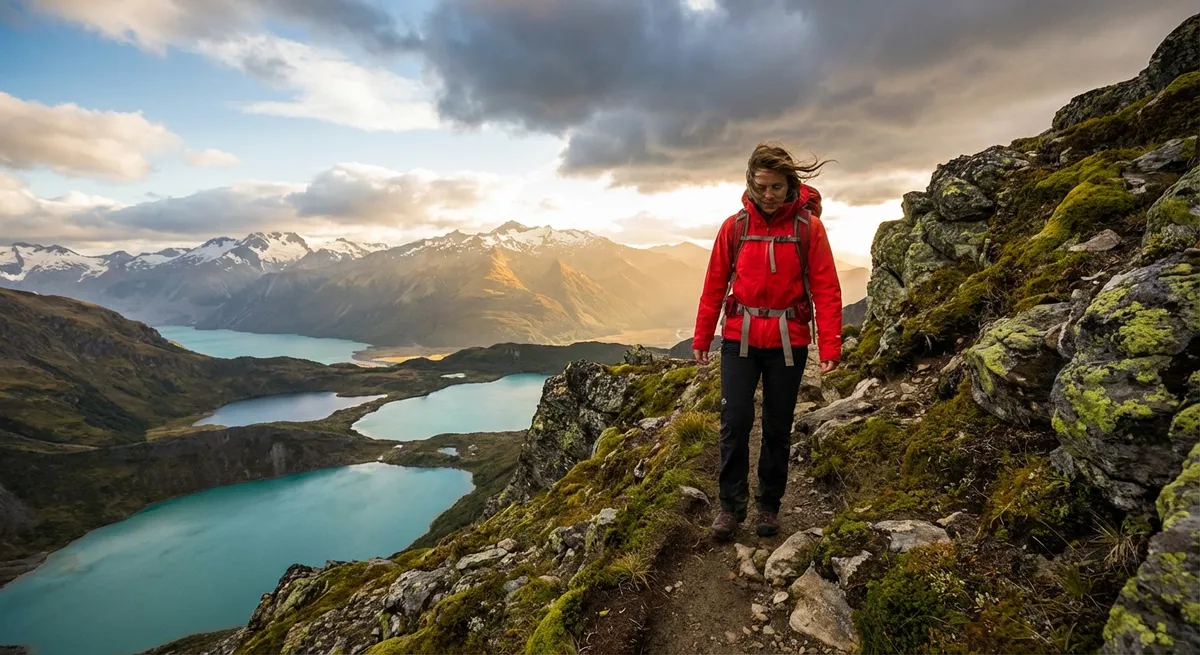
1. Edge‑of‑the-World Coastlines
There’s a certain kind of coastline that feels less like a beach and more like the edge of the planet—where waves slam into cliffs, winds carve the air, and the horizon looks infinite.
Think of the basalt stacks and black-sand stretches of Iceland’s South Coast, the storm‑battered headlands of Ireland’s Wild Atlantic Way, or the raw drama of Chile’s Pacific edge in Patagonia. These places are made for travelers who want weather in their face and wind in their decisions.
Practical moves: travel in shoulder seasons (spring or fall) when crowds thin and storms add theatre to the sky. Bring layers that can handle rain, spray, and sun in a single afternoon. Hike a coastal trail instead of just pulling into viewpoints—on foot, you’ll hear the crunch of rock under your boots, taste salt in the air, and feel the contours of the land shift under every step.
Why it’s exciting: the combination of vast sea and rugged earth resets your sense of scale. Standing at a cliff edge, watching waves that have traveled across an ocean break beneath you, you feel both incredibly small and strangely powerful, as if you’ve stepped into the planet’s engine room.
2. Night‑Sky Sanctuaries Where Stars Take Over
In a world lit by screens and streetlamps, true darkness is becoming a luxury. Night‑sky sanctuaries—deserts, high plateaus, remote valleys—offer a different kind of destination: places where the Milky Way isn’t a concept, but a blazing band overhead.
Picture lying on warm rock in Utah’s canyon country, watching shooting stars etch quicksilver lines through the sky. Imagine the inky stillness of a Sahara camp, where constellations feel so close they’re almost architectural. Or the alpine chill of a New Zealand night in a dark-sky reserve, where the Southern Cross hangs like a signal only visible when you step far enough away from your everyday life.
Practical moves: look for certified Dark Sky Parks or Reserves and plan new‑moon dates for the blackest skies. Pack a red‑light headlamp to protect your night vision, and bring a simple star‑chart app to help you decode what you’re seeing. Embrace late nights—you’re chasing a different kind of sunrise, one that happens above you.
Why it’s exciting: under a real night sky, time stretches. Your worries shrink. You start to feel the sweep of centuries, the journeys navigated by starlight, and the truth that you’re part of something much larger and more mysterious than your to‑do list.
3. Slow‑Rhythm Towns Where Time Walks, Not Runs
Some of the most powerful destinations aren’t dramatic at all. They’re the small towns where mornings start with the smell of bread, evenings end in dim cafés, and the biggest event is the daily market.
These places—mountain villages in the Italian Dolomites, whitewashed towns in the Greek islands away from the cruise port, riverside communities in Vietnam or Colombia—run on a slower clock. Here, the attraction isn’t a monument; it’s how people live.
Practical moves: rent a room or small apartment near the town center and stay at least three nights. Visit the same bakery, café, or food stall every day; by day two, you’re no longer just a stranger with a suitcase. Watch the square at different times—dawn deliveries, lunchtime chatter, late‑night card games. Say yes to small invitations: a chair pulled up to a table, a taste of homemade wine, a family recipe.
Why it’s exciting: when you sync to a place’s rhythm, your own pace changes. You start noticing small details—how the light hits the church tower at 4 p.m., which dog unofficially “owns” the plaza, the way conversations stretch without hurry. You’re no longer viewing life through a glass; you’re inside it.
4. Wild‑Water Corridors: Rivers, Fjords, and Hidden Lakes
Water carves paths through the world that roads can’t follow. Traveling along rivers, fjords, and high‑altitude lakes pulls you into landscapes that feel secretive and alive.
Picture paddling through Norway’s fjords while waterfalls streak down green walls on both sides. Imagine drifting on a slow boat up the Mekong, where villages rise from the banks and each bend reveals another slice of daily life. Or hiking Kazakhstan’s alpine lakes or Canada’s backcountry tarns, where the water is so clear it feels like walking beside a piece of sky.
Practical moves: choose one waterway and give it time. Instead of racing from city to city, follow a single river over several days—by boat, train, bike, or foot, depending on where you are. Pack a light rain shell and quick‑dry clothes; water trips come with weather. Ask locals how the river shapes their year: floods, festivals, fishing seasons, migrations.
Why it’s exciting: when you travel by water, you surrender to its tempo. There’s no fast‑forward; you watch villages, forests, and cliffs glide by at a human speed. The journey itself becomes the story, and you start to understand how profoundly rivers and lakes have always written the script for human life.
5. Threshold Cities Where Cultures Intertwine
Some cities are crossroads by design—borderlands, maritime hubs, or ancient trading centers where languages overlap and history hasn’t chosen just one direction. These are destinations that feel like standing on a threshold between worlds.
Imagine Istanbul’s call to prayer echoing over the Bosporus while ferries shuttle between Europe and Asia. Think of Tangier, where the Atlantic meets the Mediterranean, and cafés whisper stories in Arabic, French, Spanish, and English. Or Singapore, where temples, mosques, and skyscrapers share the same humid streets, and the food stalls tell a migration story with every plate.
Practical moves: walk neighborhoods that reflect different strands of the city’s identity—old ports, immigrant quarters, sacred sites. Eat widely: markets, street food, home‑style restaurants. Take public ferries or trams instead of taxis; you’ll see the human routes that knit the city together. Seek out small museums or walking tours that focus on migration, trade, or minority communities to understand who built the place beneath the glossy surface.
Why it’s exciting: threshold cities challenge simple stories. You hear multiple versions of history, taste overlapping culinary traditions, and see how cultures don’t just collide—they braid together. You return home less certain that there’s only one way to live, and more curious about the invisible crossroads in your own life.
Conclusion
The destinations that stay with you tend to have one thing in common: they ask something of you. They ask you to stand on windswept cliffs and lean into the gusts. To stay up past midnight and learn the sky. To sit in a quiet square and let hurry drain out of your bones. To follow a river instead of a rigid plan. To walk streets where history never settled on a single answer.
You don’t need a perfect itinerary to find these places. You only need to aim for edges—of land, of light, of culture, of your own comfort zone—and be willing to follow your curiosity when the mapped route ends. That’s where the next version of you is waiting, somewhere between the crashing tide and the first star, ready to step forward and say: this is what it feels like to be fully, thrillingly alive out here in the world.
Sources
- International Dark-Sky Association – Find Dark Sky Places - Directory of certified Dark Sky Parks and Reserves worldwide, useful for planning night‑sky focused trips
- Iceland Tourist Board – South Coast Highlights - Overview of Iceland’s dramatic South Coast landscapes and key stops
- Norwegian Scenic Routes – Fjords and Coastal Drives - Official information on Norway’s designated scenic fjord and coastal routes
- UNESCO World Heritage Centre - Database of culturally and naturally significant sites, including many crossroads cities and unique landscapes
- OECD – The Governance of Land Use - Background on how geography (coasts, rivers, crossroads) shapes settlement patterns and human activity