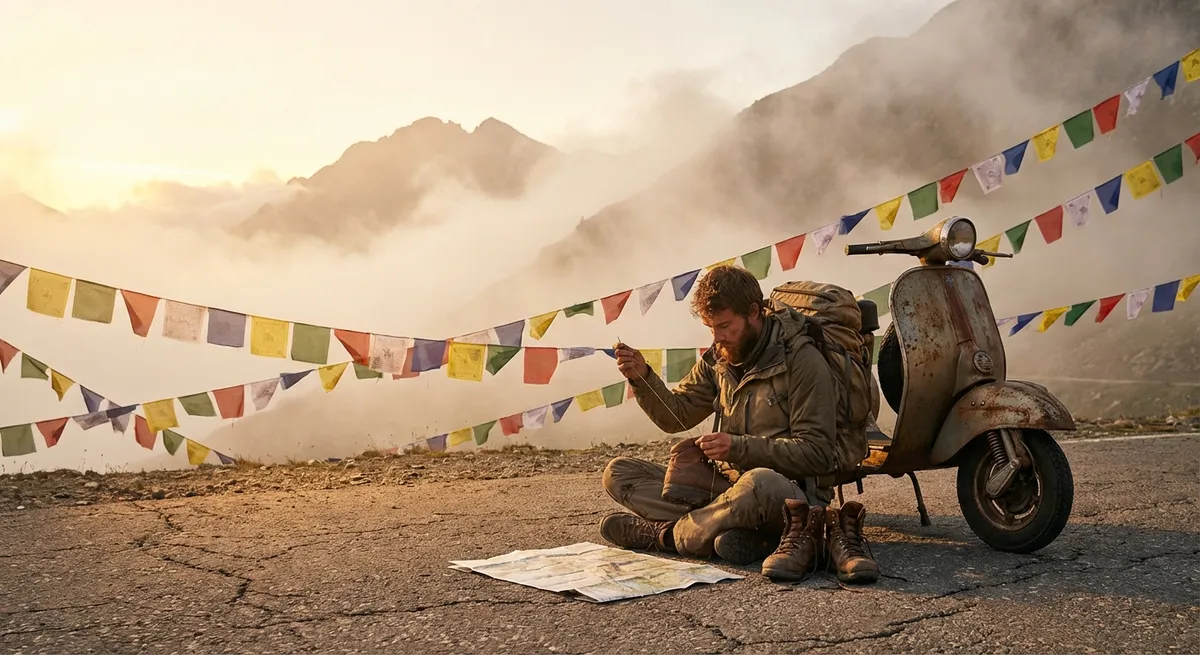
1. Let the Journey Breathe: Slow Travel That Saves Money
Racing through five countries in ten days might look impressive on a social feed, but your wallet and your memory will both pay the price. Slow travel flips the script: fewer destinations, longer stays, deeper experiences—often for far less.
Staying in one place for a week or more unlocks discounted weekly rates on guesthouses and apartments, cuts down on transport costs, and lets you discover local spots where prices are meant for residents, not tourists. Instead of pricey day tours, you’ll have time to figure out the city’s rhythm on foot, by bike, or on public transport—each ride a small adventure of its own.
As you get to know local markets, bakeries, and street stalls, you’ll realize that your daily food budget can shrink while your culinary world explodes with flavor. Slow travel doesn’t just stretch your money; it stretches time, turning rushed vacations into rich chapters of your life story.
2. Sleep Like a Local: Creative Stays That Cut Costs
Accommodation is usually the budget’s biggest beast—but it’s also where creativity wins big. Hotels are just one option in a massive landscape of affordable ways to sleep safely and comfortably while you roam.
Hostels today can feel more like creative hubs than bare-bones bunkhouses, with coworking spaces, communal kitchens, and events that make it impossible not to meet people. Guesthouses and homestays reveal everyday life up close—kids walking to school, neighbors sharing stories over tea, laundry flapping in back alleys.
For extended journeys, consider house-sitting or pet-sitting, where you watch over someone’s home in exchange for a free stay. Volunteering through reputable work-exchange platforms can earn you a bed (and sometimes meals) in return for a few hours of help each day. These options don’t just cut costs—they weave your story directly into the fabric of the places you visit.
3. Eat the Street: Turning Local Food into Your Superpower
Your taste buds don’t need a white tablecloth; they need curiosity. Street food and local eateries are often where culture simmers: carts hissing with skewers, open grills smoking in the evening air, markets overflowing with spices that shoot straight into your memory.
Eating where locals eat is usually cheaper and more authentic than tourist-facing restaurants. Look for long lines of residents, fast turnover, and posted prices. Markets offer another secret weapon: you can buy fresh bread, fruit, cheese, or local snacks and build your own picnic in a park with a million-dollar view that cost you a handful of coins.
Learn a few basic phrases—“What do you recommend?” and “Is this spicy?” can lead to friendly smiles, surprise samples, and sometimes, spontaneous invitations. Food becomes more than fuel; it’s your most affordable (and delicious) entry ticket into local life.
4. Ride the World’s Arteries: Budget Transport as an Adventure
Getting from A to B can devour savings—or become one of the most memorable parts of your trip if you approach it with intention. Budget travelers thrive by seeing transport not as a chore, but as a moving window into the soul of a place.
Night buses, trains, and ferries can double as both transit and accommodation, saving you a night’s lodging while you glide toward your next sunrise. In many countries, long-distance buses are modern, safe, and surprisingly comfortable, offering a cheaper alternative to flights and a front-row seat to mountains, coastlines, and countryside.
In cities, embrace metros, trams, and city buses over taxis. Many destinations offer day or week passes that drastically cut costs. When distances shrink, walking becomes the ultimate budget hack—zero cost, infinite discoveries, alleys that don’t show up in guidebooks, and spontaneous detours that turn into stories. And whenever it’s safe and feasible, shared rides and carpooling apps can stretch your radius without tearing your budget.
5. Build a Trip Around Experiences, Not Expenses
The most powerful budget move isn’t a discount; it’s a mindset shift. When you design your journey around experiences instead of expensive “must-see” checklists, you gain freedom: to wander, to say yes, and to see more for less.
Many of the world’s most powerful travel moments are free or nearly free: hiking local trails, joining public festivals, watching street performances, wandering old quarters at dusk, or swimming off a public beach while the sky burns orange. Museums and cultural sites often have discounted or free entry days—plan a flexible itinerary that can bend to those dates.
Before you depart, sketch out a loose “experience wish list”: learn one local skill, attend one community event, explore one natural space, and share one meal with locals. These targets cost little but yield a journey that feels rich, connected, and unforgettable. When you focus on what moves you instead of what impresses others, your budget becomes less of a limitation and more of a compass.
Conclusion
Budget travel isn’t about scraping by—it’s about traveling on purpose. When every dollar has a job, every choice becomes sharper: the hostel bunk that leads to lifelong friends, the bus ride that frames an entire country out your window, the street stall where a single bite redefines flavor.
With slow journeys, creative stays, fearless eating, adventurous transport, and experience-first planning, you can turn “I can’t afford to travel” into “I can’t believe how far I’ve gone.” The world is already out there, waiting. The adventure begins the moment you decide that your budget is a challenge to rise to, not a barrier to bow to.
Sources
- U.S. Department of State – Traveler’s Checklist - Practical guidance on documents, safety, and preparation that every budget traveler should review
- Lonely Planet – Budget Travel Tips - Expert advice on saving money on accommodation, food, and transport around the world
- Rick Steves Europe – Money-Saving Travel Tips - Detailed strategies for stretching your travel budget, focusing on Europe but with widely applicable principles
- World Food Programme – Global Food Facts - Context on food and cost-of-living realities worldwide, useful for understanding local price differences
- European Commission – Passenger Rights for Bus and Coach Transport - Official information on bus passenger rights in the EU, relevant for travelers relying on budget ground transport