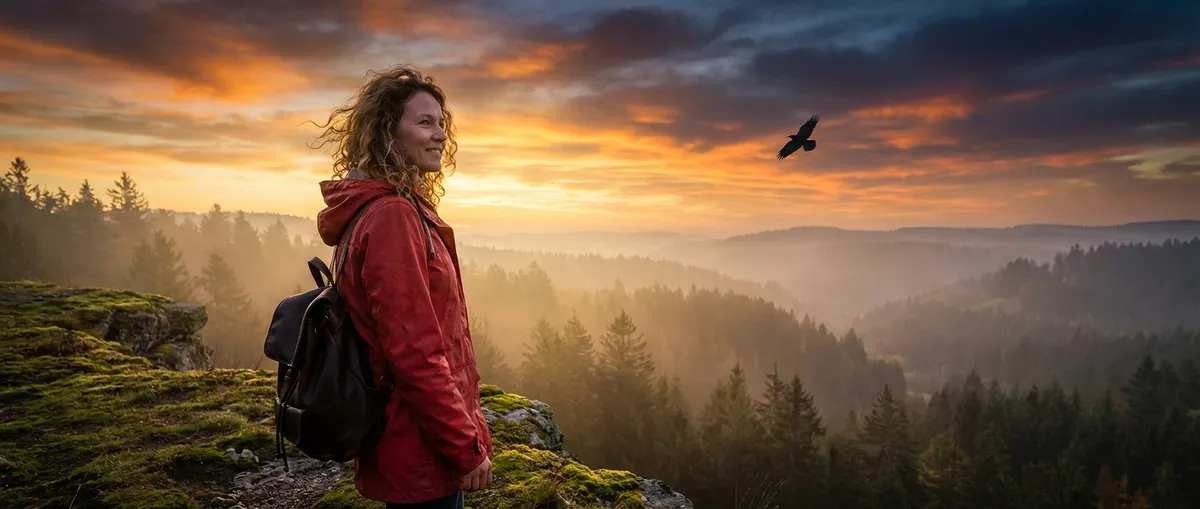
Adventure isn’t only about plane tickets and mountain summits; it’s about deliberately stepping into the unknown long enough for the world to surprise you. When you choose to answer that call, you don’t just collect stories—you come back rearranged in the best possible way.
Below are five adventure paths that don’t just move you across a map; they shift something inside you. Use them as sparks, templates, or dares. Let them pull you a little further than feels comfortable—and a lot closer to who you really are.
1. Follow a Single Element Across the World
Pick one element—water, wind, earth, or fire—and design an adventure that chases its wildest expressions.
Imagine building a journey around water. You start in a city shaped by a river, maybe Budapest or Portland, tracing its banks on dawn runs and ferry rides. Then you move to the open coast, learning to read tides as you surf beginner breaks in Portugal or Costa Rica. Finally, you end at a glacier in Iceland or Patagonia, listening to ancient ice crack and rumble like a living creature. The same element, three completely different worlds.
Following one element gives your travels a through-line. You’ll begin to notice patterns—how river cities hum at night, how fishing villages rise with the sun, how desert towns hoard and worship water like a rare god. Practically, it helps you structure your route: choose three to five locations where that element dominates the landscape, then map an arc that connects them by train, bus, or short flights.
To make it more immersive, build a simple ritual around your element. Keep a sketchbook of waves you’ve seen. Record the sound of rivers and rainstorms as audio souvenirs. Talk to locals whose livelihoods depend on that element—a sailor, a farmer, a climber, a geothermal engineer. By the time you return home, you won’t just have “been to” places; you’ll understand how one force shapes radically different lives.
2. Let a Line on a Map Decide Your Next Move
Instead of asking, “Where do I want to go?”, try asking, “What if I simply followed this line and trusted what appears?”
Find a long-distance trail, rail line, or coastline and let it become the spine of your adventure. This might be walking a section of the Camino de Santiago in Spain, cycling a portion of EuroVelo routes across Europe, or hugging the Pacific coast from Seattle to San Diego by train and bus. The destination matters less than the commitment to follow one continuous path and see what unfolds alongside it.
A line-based journey has a special kind of magic. You wake up each day with a clear intention: keep moving forward. You might pass from urban chaos to quiet farmland within a single afternoon. You’ll start to notice the “in-between” places—small stations, roadside diners, villages you’d never have pinned on a map, but which suddenly become the setting of your day.
From a planning perspective, pick a segment that fits your time and comfort level. You don’t have to walk the whole Camino; three to seven days is enough to sink into the rhythm. Choose a realistic daily distance, book your first night’s stay, and leave the rest open. Carry basics: a light backpack, good shoes, layers, a refillable bottle, and a notebook. The real treasure of this kind of adventure is how the world fills in once you commit to the line; conversations, detours, and surprises will do the rest.
3. Build a Quest Around a Skill You Don’t Have Yet
Instead of traveling as who you are, travel toward who you want to become.
Choose one skill that feels just out of reach—surfing green waves, speaking street-level Italian, capturing night sky photos, cooking regional dishes from scratch—and anchor your trip around learning it where it naturally lives. Don’t just book a random class; weave the learning into the daily fabric of your trip.
Picture this: you’re in Oaxaca, Mexico, spending mornings in a small cooking school learning to grind corn and fold tamales, and afternoons wandering markets recognizing ingredients by sight and smell. Or you’re in Kyoto, practicing the basics of Japanese calligraphy with a local teacher, then seeing the art again and again in shrines, train stations, and handwritten café menus.
The key is depth over perfection. Plan for repeat practice instead of one-off experiences: a week of surf lessons instead of a single hour; daily language exchanges in local cafes instead of an app-only approach; several evenings chasing the Milky Way with a tripod instead of one rushed attempt. Choose destinations known for strong local expertise and look for community-based schools or guides rather than purely tourist operations.
By the time you leave, you won’t just have visited a place—you’ll have rewired a piece of yourself. And that new capability doesn’t stay behind at the airport; it comes home with you, a souvenir that keeps changing your life long after your suitcase is unpacked.
4. Trade Spectating for Participating in Local Life
Most travelers skim across the surface of a culture, snapping photos and collecting check-ins. A wilder, richer option is to ask: How can I plug directly into daily life here, even for a short time?
Seek experiences that put you on the inside of local routines. That might mean volunteering on a small farm through a work-exchange program, joining a community run or cycling club for a week, attending a neighborhood festival, or taking up a short-term membership at a local climbing gym or co-working space. Your “must-see” list transforms from landmarks to people, routines, and shared rituals.
This kind of participation requires courage and humility. You’ll have to initiate conversations, accept that you’re the beginner in the room, and respect local customs and schedules. Learn a few key phrases in the local language—even simple greetings and “thank you” can open doors. Ask open questions: “What does a normal day look like for you?”; “Is there anything happening this week that I shouldn’t miss?”
On a practical level, research community boards, local social media groups, and city event calendars before you go. Many cities have public running clubs, maker spaces, or language exchange meetups welcoming newcomers. Build at least a few unstructured days into your itinerary so that when someone says, “You should come to this thing tonight,” you can say yes without scrambling.
The payoff is enormous: you move from observer to participant. Suddenly you’re not just passing through a culture; for a few days or weeks, you’re living inside it.
5. Step Into a Landscape That Challenges Your Default Pace
Every place has a tempo, and your body knows it before your mind catches up. Dense cities push you into high gear; hushed deserts slow your thoughts to a crawl; mountain air seems to rewire your lungs and priorities. A powerful adventure is to deliberately choose a landscape whose pace disrupts your normal rhythm—and surrender to it.
If your life runs fast and loud, consider the Arctic summer light of northern Norway or Iceland, where days stretch almost endlessly and the rhythm is dictated by weather and tide, not office hours. Or head into a quiet mountain hut system—like those in the Alps or Colorado Rockies—where each day is a simple equation: hike, eat, rest, repeat. If you’re used to stillness and predictability, you might seek the exact opposite: a dense city like Tokyo, Lagos, or São Paulo, where stimuli come from every direction and you learn to flow instead of plan.
Let the landscape set your schedule. In mountains, organize your days around sunrise and safety windows; in deserts, move at dawn and dusk, resting in midday shade; in cities, follow the night markets, street music, and morning rush. Pay attention to how your thoughts change when you’re forced to match your environment instead of dragging your old pace with you.
A simple exercise: at the end of each day, jot down three things you did only because of where you are. Maybe you waited out a storm in a cliff-side café, joined locals dancing in a plaza, or shifted your sleep to catch the Northern Lights at 2 a.m. These are the moments when the landscape stops being scenery and starts being your co-pilot.
Conclusion
Adventure doesn’t always knock loudly. Sometimes it’s a quiet suggestion: follow this river a little longer, take that train you can’t pronounce, say yes to the stranger’s invitation, try to surf that wave, speak that halting sentence in a language you barely know.
Whether you chase an element across continents, follow a line on a map, build a quest around a new skill, plug into local life, or surrender to a landscape that changes your pace, the pattern is the same: step outside your familiar script and let the world write a few pages with you.
You don’t have to wait for the “perfect time.” Start smaller, start nearer, start messier—but start. The next chapter of your life might not be waiting back home; it might be waiting at the edge of the map you haven’t drawn yet.
Sources
- UN World Tourism Organization (UNWTO) - Provides data and insights on global tourism trends and responsible travel practices
- Camino de Santiago Official Website - Information on routes, preparation, and cultural context for long-distance pilgrimage walking
- EuroVelo – The European Cycle Route Network - Detailed maps and guidance for planning cycling journeys across Europe
- WWOOF – World Wide Opportunities on Organic Farms - Platform connecting travelers with volunteer farm stays and cultural exchange opportunities
- U.S. National Park Service – Trip Planning - Practical safety and preparation advice relevant to hiking, camping, and landscape-based adventures