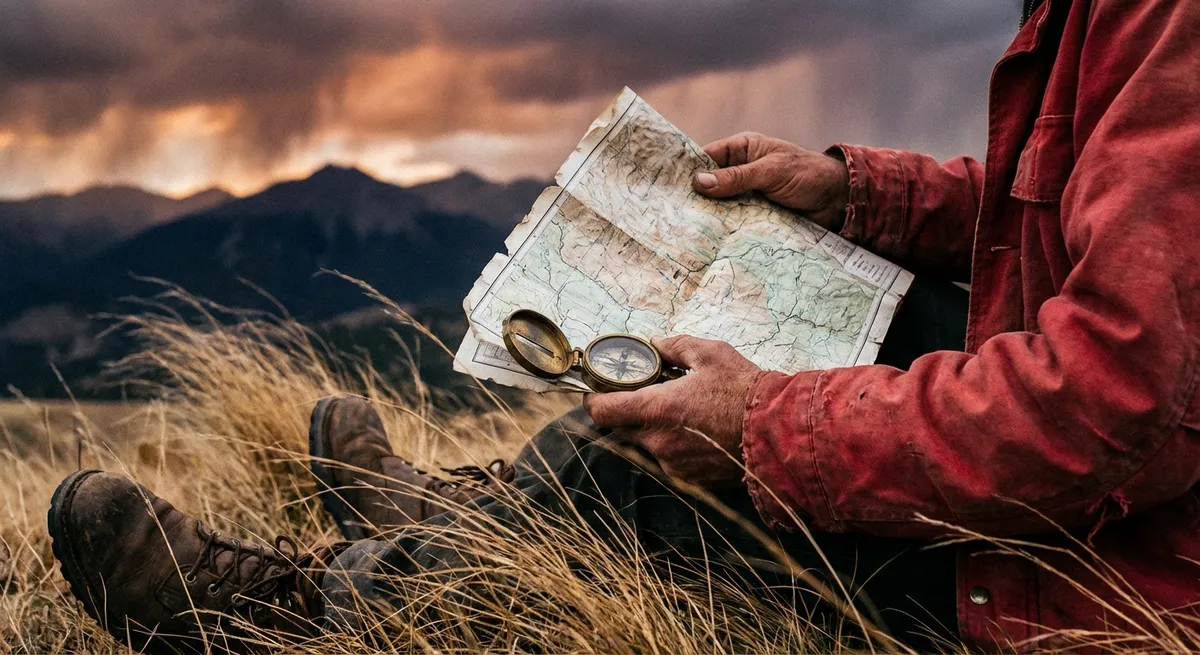
Below are five kinds of adventures that don’t just fill your camera roll; they recharge your courage, sharpen your senses, and quietly rearrange what you believe you’re capable of.
Dawn Starts: Chasing First Light in Wild Places
There’s a different kind of courage in choosing an alarm clock over a late-night bar, especially on the road. But sunrise is when landscapes feel like they belong to the few who showed up early enough to earn them.
Imagine hiking a coastal trail in Portugal’s Algarve in the pre-dawn hush, the sky still ink-black as you follow a headlamp’s glow. As the horizon blushes orange, cliffs become silhouettes, the sea turns silver, and suddenly you’re front row to a private, silent show. Or picture watching the sun lift over Cappadocia’s rock valleys while hot air balloons drift into the sky like lanterns—adventures you only get by beating the day to its first breath.
Practical advice: when you chase first light, prepare like a pro. Pack a lightweight headlamp, a warm layer (even tropical places can be chilly before sunrise), and a backup offline map in case trails aren’t well-marked. Check local sunrise times, then plan to be in position 30–45 minutes earlier to catch twilight colors. Dawn is also a safer, cooler window for desert treks and high-altitude hikes, when heat and crowds haven’t arrived yet.
These early hours teach you something simple and powerful: when you start your day outside your comfort zone, the rest of it feels wide open.
Slow Miles: Journeys Where Getting There Is the Adventure
Some of the most unforgettable trips are less about a place and more about how you move through it. Slow travel—on foot, by train, by bicycle, by boat—stretches time in a way flights never can.
Think of riding a night train through Eastern Europe: the rhythmic clatter on the tracks, strangers sharing food in a cramped compartment, the glow of tiny towns sliding past your window. Or cycling across rural Japan, pausing at unmanned vegetable stands and roadside shrines you’d never see from the expressway. On a long-distance hike like Spain’s Camino de Santiago, the trail itself becomes a moving village, each day stitched by blisters, shared stories, and small kindnesses.
Practical advice: choose one leg of your trip to slow down deliberately. Swap a regional flight for a scenic railway, an intercity bus, or a multi-day trek between towns. Look up established routes—like European night train lines or national long-distance footpaths—and build in buffer days for delays or detours. Carry essentials in a single daypack: water, snacks, rain shell, power bank, and a small first-aid kit. The trade-off in speed buys you something more valuable: texture, chance encounters, and a sense of distance earned, not skipped.
When you let the journey be the headline, the line between “travel day” and “adventure” disappears.
Element Encounters: Letting Nature Set the Rules
Adventures go from pleasant to powerful the moment you step into an element that doesn’t bend for you: water, wind, rock, ice. You don’t need to be an elite athlete; you just need to be willing to let nature lead.
Picture learning to surf on a quiet Costa Rican beach, repeatedly tumbling off the board until one wave finally carries you to shore and you erupt in a laugh you haven’t heard from yourself in years. Or strapping on crampons in Iceland to walk across a living glacier, listening to meltwater gurgle under your feet. Maybe it’s your first open-water swim in a cold, clear alpine lake, the shock pulling you instantly into the present.
Practical advice: pick one element-based activity on your next trip and book with guides who prioritize safety and sustainability—certified dive centers, licensed mountain guides, reputable surf schools. Check for small-group sizes, clear safety briefings, and environmental ethics (like reef-safe sunscreen or Leave No Trace principles). Start at your actual level, not the one your ego whispers. A “beginner” rafting trip through gentle whitewater can be more transformative than a terrifying Class V you’re not ready for.
Letting an element humble you a little is part of the adventure: it realigns your sense of scale and reminds you how thrilling it is not to be in control.
Lost on Purpose: Micro-Explorations in Familiar Cities
You don’t have to be deep in a jungle or halfway up a mountain for your day to feel epic. One of the most overlooked adventures is learning how to purposefully get “lost” in a city—especially one you think you already know.
Instead of hopping between the same top-rated attractions, choose a single neighborhood and wander without a strict agenda. Turn down side streets that catch your eye. Follow the sound of music or the smell of food drifting from a doorway. Let yourself sit on a park bench or café stool long enough for the neighborhood’s rhythm to reveal itself. In places like Mexico City, Lisbon, or Seoul, these unscripted hours often lead to tiny galleries, family-run eateries, street performances, and casual conversations that no guidebook could have scheduled for you.
Practical advice: set loose boundaries for safety and time, then release everything else. Download offline maps and mark your accommodation, a metro station, and a couple of cafés as anchors in case you want to reset. Keep valuables minimal, stay aware of your surroundings, and trust your instincts—if a street feels wrong, pivot. Micro-exploring works just as well at home: pick a district you never visit, leave your usual route, and treat it like a foreign city you’ve just arrived in.
When you let curiosity—not algorithms—lead, the ordinary becomes a maze of invitations.
Soul Goals: Turning Adventures into Personal Missions
The most unforgettable adventures are the ones that carry a quiet mission underneath the fun—something that matters to you more than passport stamps. This is where travel shifts from escape to evolution.
Maybe you decide to hike your first summit above 3,000 meters as a way to rebuild self-trust after a difficult year. Perhaps you volunteer with a reef conservation project in Indonesia because you’ve always loved the ocean from a distance and want to understand it up close. Or you use a solo trip as a laboratory for confidence: committing to one meal, one activity, and one conversation each day that nudges you past shyness.
Practical advice: before you go, write a simple, tangible “soul goal” for your journey. It might be skill-based (learn to navigate using only a paper map), relational (start a conversation with someone from every country in your hostel), or purpose-driven (support one local, community-run initiative). Keep a lightweight travel journal or note app to track these small missions. At the end of the trip, reflect: not just on what you saw, but on who you were while you moved through the world.
When your adventures line up with your inner compass, every bus ride, wrong turn, and shared meal feels like part of a bigger story you’re actively writing.
Conclusion
Real adventure isn’t about chasing the most dramatic postcard; it’s about choosing the next bolder step—earlier mornings, slower journeys, wilder elements, freer wandering, deeper intentions. When you trade your comfort zone for a compass, you stop traveling to escape your life and start traveling to expand it.
The map is huge. Your courage doesn’t have to be. It just has to be slightly bigger than your excuses, one decision at a time: wake up for sunrise, book the slower route, sign up for the beginner’s class, turn down the unplanned street, write down the mission that scares you in the best way.
Hop Next is what happens after that decision. The world is waiting. Step out and let it find you back.
Sources
- UN World Tourism Organization (UNWTO) - Overview of how travel can align with sustainable and meaningful development goals
- Leave No Trace Center for Outdoor Ethics - Core principles for minimizing impact during outdoor adventures
- Centers for Disease Control and Prevention – Travelers’ Health - Guidance on staying healthy and safe while exploring new environments
- International Mountain Guides: What Is a Mountain Guide? - Insight into the role and importance of certified guides for adventure activities
- Camino de Santiago – Official Tourism Site of Spain - Background on one of the world’s most iconic long-distance walking journeys