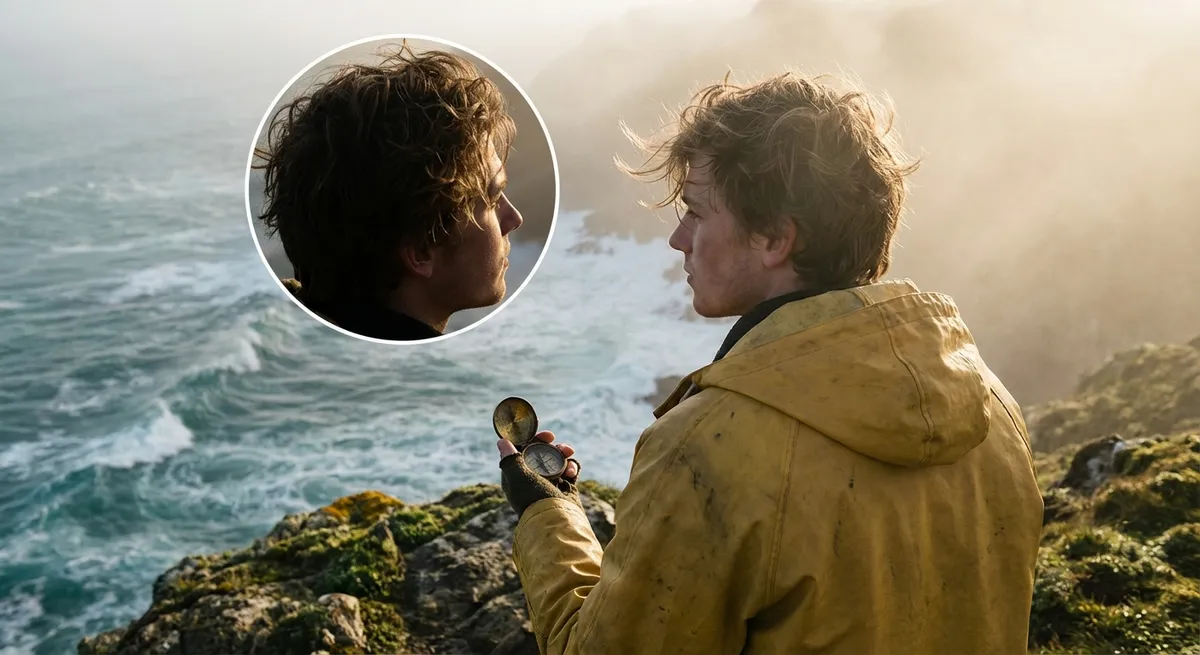
1. Follow a Natural Phenomenon Instead of a Map
Instead of picking a city, pick a spectacle. Let nature’s rare events be your itinerary—chasing the northern lights across Arctic skies, timing your trip with a volcanic glow, or standing under a desert sky flooded by a meteor shower.
Imagine layering up in Iceland, stepping out into air so cold it stings, and watching the sky fold into green veils that ripple and vanish like breath on glass. Or standing on a dark beach in Costa Rica, where bioluminescent plankton explode into electric blue with every step you take. When you design your trip around a phenomenon, everything else becomes supporting cast: the tiny guesthouse owner who shows you the best viewpoint, the midnight bus shared with strangers bundled in the same hopeful anticipation, the patient waiting that makes the moment itself hit ten times harder.
Practical moves: research best seasons and viewing regions, give yourself several nights (nature doesn’t do guaranteed showtimes), and keep plans flexible so you can chase clearer skies or calmer seas. The adventure isn’t just what you see—it’s the way you rearrange your whole trip around catching one unforgettable moment.
2. Let a Human Skill Be Your Passport
Pick a skill you’ve always wanted to master and build your adventure around learning it where it lives. Think: freediving in Dahab’s Blue Hole, learning traditional canoe carving in the Pacific Northwest, or studying desert navigation from Berber guides in Morocco.
Picture the first time you drop beneath the Red Sea on a single breath, hearing nothing but your own heartbeat as a school of fish parts around you like liquid silver. Or sunrise in the Sahara, tracing camel tracks in the sand as your guide teaches you to read wind, stars, and dunes instead of screens and signs. When you travel to learn, each day has a clear, demanding purpose—and that focus has a way of burning everything else unnecessary out of your brain.
Practical moves: choose a reputable local school or community-based guide, give yourself enough days to move past “tourist dabbling” and into true progress, and keep a small journal of what you’re learning—skills, words, and the stories behind them. The plane ride home feels different when you’re bringing back more than souvenirs; you’re carrying a new way of moving through the world.
3. Ride the Spine of a Landscape, Not Just the Highlights
Most trips hopscotch from “top things to see” to “must‑do experiences.” Instead, choose one continuous line and follow it as far as you realistically can. It might be walking a section of Spain’s Camino de Santiago, cycling from village to village in Vietnam, or taking a train across the spine of the Rockies.
By traveling along a single thread, you start to feel how a place breathes. Village accents shift. Food changes subtly from town to town. Landscapes trade places with each other—mountains thinning into plains, plains rolling into coast. You become less of a spectator popping in and out, more of a moving dot with a story that stretches behind and ahead.
Practical moves: decide your “spine” based on your style—on foot, two wheels, rails, or river—and be realistic about distance and fitness. Pack light enough that you can carry your bags without resentment. Plan just enough (key stops, safety, basic logistics), then leave deliberate blank spaces on the map. Some of the most memorable encounters happen when you stay in the town you’d planned to pass through, simply because it rained or you were too tired to move on.
4. Say Yes to One Thing That Scares You (On Purpose)
Not all fear is red‑flag fear. Some of it is the quiet, healthy kind that whispers: “This really matters to you.” Build your adventure around one deliberate act of bravery—not reckless, not performative, just meaningfully outside your personal comfort zone.
Maybe it’s your first multi‑pitch rock climb with a certified guide in Yosemite, where your hands shake as you clip into the anchor and look down at the valley spread out like a painted backdrop. Maybe it’s booking a solo trek with a porter and guide in Nepal when you’ve never traveled alone. Or signing up for your first night dive in Indonesia, beams of light slicing through black water as strange, glowing creatures drift out of the dark.
Practical moves: vet operators for safety and credentials, then be honest with them about your experience. Start with proper training or a beginner course, not a show‑off stunt. Fear doesn’t magically vanish—it just learns to coexist with trust. That moment when you do the thing anyway becomes an internal landmark you revisit long after you’ve gone home.
5. Turn Strangers Into the Best Part of the Story
The real adventure rarely happens alone. It happens around shared tables, cramped buses, and chaotic directions acted out in hand gestures and laughter. Design your trip so chance meetings aren’t just possible—they’re likely.
Stay in locally run guesthouses where owners linger to talk. Join a community cooking class and fumble your way through unfamiliar ingredients with people you just met an hour ago. Book a shared trek or sailing trip instead of a private one. Say yes when you’re invited to a family lunch, a pickup game, or a small hometown festival you’ve never heard of.
Practical moves: learn 10–20 words in the local language—hello, thank you, delicious, beautiful, sorry, please. Be the kind of traveler who listens more than they talk and asks curious, respectful questions. Always prioritize safety and boundaries, but leave room for serendipity. Years from now, you might not remember every museum you visited—but you’ll remember the grandmother who insisted you take the last piece of bread, or the stranger who walked you 20 minutes out of their way just to make sure you found your bus.
Conclusion
Adventure isn’t a personality type; it’s a decision you keep making. You don’t have to be fearless, rich, or wildly experienced—you just have to be willing to trade a bit of certainty for a story that’s still being written. Choose a phenomenon instead of a destination. A skill instead of a checklist. A line across the landscape instead of a cluster of pins. One honest fear to face. A handful of strangers worth missing when you leave.
The world is bigger and wilder than the screen you’re reading this on. Pack the curiosity, leave room for the unknown, and let your next trip be the one that doesn’t just show you a new place—but introduces you to a new version of yourself.
Sources
- US National Park Service – Plan Your Visit - Practical guidance on safely planning outdoor and wilderness adventures in U.S. national parks
- Icelandic Meteorological Office – Aurora Forecast - Up‑to‑date information and forecasts for viewing the northern lights in Iceland
- Camino de Santiago – Official Pilgrim Information - Official details on routes, preparation, and cultural context for walking the Camino
- PADI – Learn to Dive and Travel Resources - Information on dive training, safety standards, and global dive destinations
- U.S. Department of State – Traveler’s Checklist - Essential safety, documentation, and preparation advice for international travelers