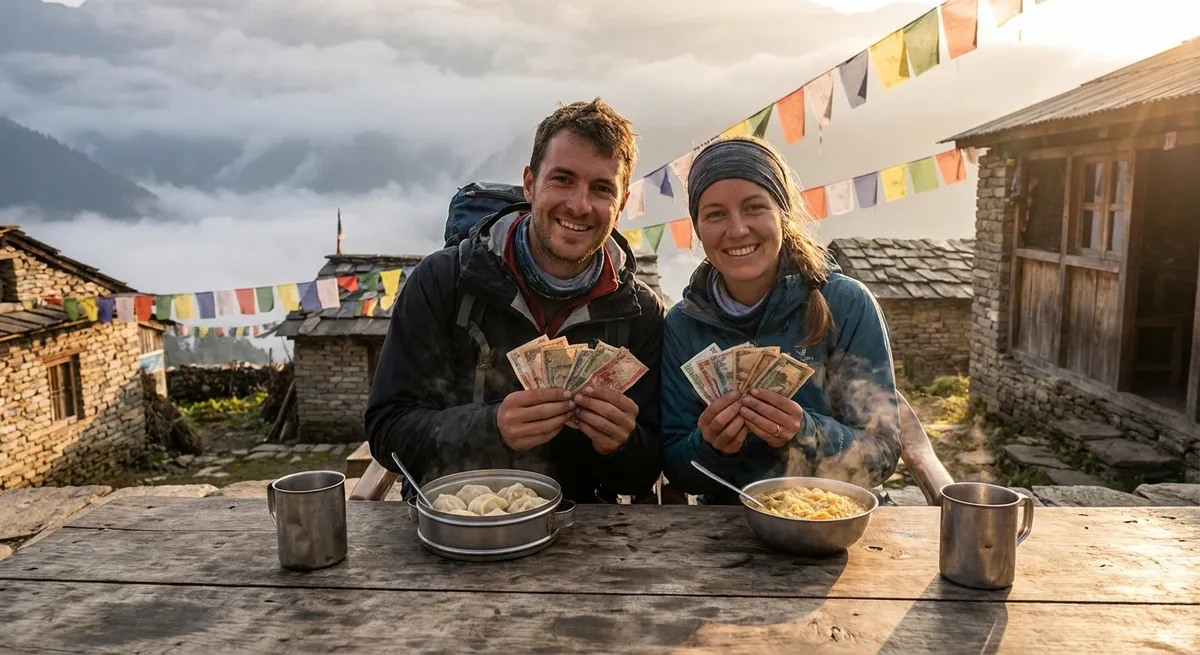
Below are five powerful ways to stretch your money while expanding your world—each one an invitation to travel deeper, wilder, and more alive.
1. Follow the Off-Beat Clock: Travel Where and When Others Don’t
If peak travel season is a crowded highway, shoulder season is the scenic back road where magic still feels personal.
Traveling just before or after the high season—think late spring or early autumn—often unlocks cheaper flights, lower accommodation prices, and quieter streets. Coastal towns are still sun-warmed, mountain paths are still open, and locals have time to chat rather than rush. Instead of jostling for selfies at noon, you’re wandering through half-empty plazas, drinking coffee in quiet cafés where the barista remembers your name.
Go a step further and consider destinations that aren’t on this year’s “Top 10” lists. Lesser-known cities and regions often offer lower prices and richer connections. You’ll find family-run guesthouses, night markets without tourist markups, and unhurried conversations about local life. In these places, your budget becomes a key—not a limitation—unlocking experiences that mass tourism often misses.
2. Sleep Where Stories Live: Stays That Trade Luxury for Connection
When you think of where to sleep, don’t just look for a bed—look for a story.
Hostels with communal kitchens, homestays where you share meals with your hosts, and small guesthouses run by local families often cost far less than big-name hotels. But their real value is in the shared moments: swapping route tips with travelers from five continents over a pot of pasta, learning how to brew local coffee in a tiny kitchen, or being invited to a neighborhood celebration because your host wants you to see “the real city.”
Look for accommodations that include extras in the price: free breakfast, bike rentals, walking tours, or airport shuttles. These small inclusions add up, stretching your budget while deepening your experience. And if you’re open to it, volunteer stays or work exchanges—teaching English, helping with a farm, assisting at a hostel—can reduce your accommodation costs dramatically while anchoring you in a community long enough to feel like you belong there.
On a tight budget, comfort isn’t canceled—it’s just redefined. Instead of crisp hotel sheets, you get the soft chaos of friendships formed at midnight over maps and shared dreams.
3. Move Like a Local: Transportation That Becomes an Adventure
Every city has two transportation systems: one for people in a hurry, and one for people who are paying attention.
Budget travelers know that public transit—buses, metro lines, shared minibuses, even ferries—offers more than savings. It offers a front-row seat to everyday life. You’ll watch kids in school uniforms practicing new slang, vendors hopping on with snacks, and commuters gazing out at streets you’re still learning to pronounce. That’s where a place reveals its rhythms.
Overland journeys—night buses, regional trains, slow ferries—often cost less than flights and double as both transport and accommodation. A night train might replace a hotel, letting you wake up to new scenery with your budget intact. Longer routes also give you time to slow your thoughts, journal, or trade stories with the stranger in the next seat who suddenly becomes a guide to their hometown.
Planning ahead can shrink costs even further: rail passes, transit cards, discount days, and advance-purchase tickets can turn seemingly expensive regions into budget-friendly playgrounds. When you move through the world this way, getting from A to B becomes part of the adventure, not a gap between experiences.
4. Eat With the City, Not Above It: Food That Fuels Both Body and Budget
A city’s soul is often simmering in a pot you can smell from half a block away.
Skip the tourist menus printed in five languages with glossy photos. Instead, find where office workers grab lunch, where families line up on weekends, where the aromas spill out into the street. Markets, street stalls, small neighborhood cafés—these are your budget-friendly gateways to local flavor. A steaming bowl from a busy stall can cost a fraction of a sit-down restaurant, with double the authenticity.
Many destinations offer “menu of the day” or set lunches at a lower price—often the same kitchen, same quality, for much less than dinner. Grocery stores become your secret allies: fresh bread, fruit, local cheese, yogurt, and snacks can turn into impromptu picnics in parks or by the water. Cooking occasionally at your hostel or guesthouse—especially with new friends—makes food part of the social experience instead of just another expense.
Be curious but cautious: read up on local food safety norms, follow the crowd (busy places tend to have higher turnover and fresher food), and bring a reusable water bottle where tap water is safe. On a budget, every meal can still feel like a feast when it’s flavored with discovery.
5. Chase Experiences, Not Price Tags: Designing Days That Feel Rich
Money limits how much you can buy—not how deeply you can experience.
Some of the world’s most powerful travel memories are either free or cost very little: sunrise hikes, self-guided walking tours, free museum days, open-air concerts, riverside promenades, historic neighborhoods you can wander for hours. Before you arrive, research which museums have discounted days, which landmarks have free viewpoints, and which neighborhoods are best explored on foot.
Let your curiosity design your itinerary, not your wallet. Maybe you spend a whole afternoon in one small district, chatting with a bookstore owner, sampling pastries from a corner bakery, and sketching the skyline instead of paying for the observation deck. Maybe you join a free walking tour and tip what you can afford, gaining both context and confidence in navigating a new city.
Give yourself a “daily splurge rule”: choose one meaningful paid experience—a local cooking class, a day pass to thermal baths, a guided hike, a boat trip—and keep the rest of the day simple and low-cost. That way, your budget becomes a compass pointing you toward what you truly value, rather than a fence keeping you out.
Conclusion
Budget travel is not a consolation prize. It’s a different style of richness—the kind measured in shared tea, improvised plans, and the quiet pride of knowing you crafted something unforgettable with limited means.
When you travel this way, every decision becomes intentional: where you sleep, how you move, what you eat, and how you spend your days. You stop chasing the “must-see” checklist and start collecting the “never-forget” moments. You realize that the real hidden currency of travel is your willingness to step into the unknown and trust yourself to navigate it.
Your budget may be small. Your life, if you let it, doesn’t have to be.
Sources
- U.S. Department of State – Traveler’s Checklist - Official guidance on documents, safety, and preparation before international trips
- European Commission – Passenger Rights for Bus, Rail, Air and Sea - Details on traveler protections and options when using budget-friendly public transport in Europe
- UN World Tourism Organization (UNWTO) – Tourism Data Dashboard - Statistics and insights on travel seasons, arrivals, and trends that inform off-peak and shoulder-season planning
- Centers for Disease Control and Prevention (CDC) – Traveler’s Health - Health recommendations, destination-specific advice, and safety tips relevant for budget travelers using local food and transport
- Lonely Planet – Budget Travel Tips - Practical, experience-based suggestions for low-cost accommodation, food, and transportation around the world