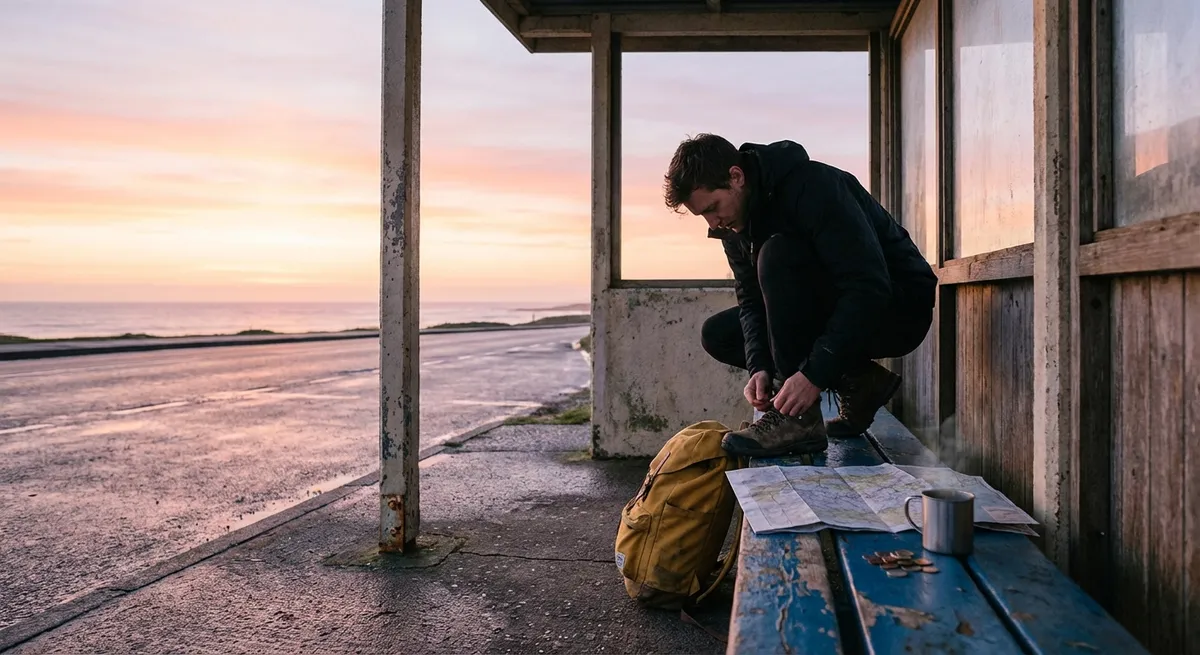
Budget travel isn’t about deprivation. It’s about designing a life where your curiosity leads and your costs follow. With a little intention and a lot of heart, limited funds can open doors you never knew existed.
Below are five budget-friendly moves that don’t just save money—they expand your sense of freedom, possibility, and adventure.
Stretch Time, Shrink Costs: Travel Slower Than You Think You Can
Fast travel burns money. Slow travel builds experiences.
When you hop from city to city every couple of days, you’re constantly paying for transport, eating in the most obvious (and usually priciest) areas, and grabbing convenience over creativity. When you slow down and stay longer, everything shifts: rent is cheaper per night, you find the local markets, and bus tickets replace last-minute flights.
Base yourself in one town for a week or more, and you’ll start to see the hidden rhythms: the bakery that discounts pastries after 6 p.m., the hole-in-the-wall café where workers grab lunch, the park where locals gather at sunset. These aren’t just “budget hacks”—they’re the places where real life unfolds.
Slow travel also means you can time your moves around off-peak transport (overnight trains, midday buses, non-weekend flights) and midweek stays, which often cost less. And because you’re not rushing, you’re less likely to panic-spend when something doesn’t go to plan. You’ve got time to improvise.
The best part? When you slow down, you don’t just save money. You actually feel like you’ve been somewhere, not just passed through.
Turn Accommodation into an Adventure, Not Just a Bed
A budget trip doesn’t have to mean settling for the least inspiring room on the internet. Where you sleep can be part of the story—if you’re willing to think beyond standard hotels.
Hostels today are not the grim bunk rooms of old stereotypes. Many have private rooms, coworking spaces, rooftop terraces, and events that help you meet other travelers without buying rounds of overpriced drinks. If you’re open to shared dorms, your nightly cost can drop dramatically, especially in off-peak seasons.
House-sitting and pet-sitting can take you deeper into a place for almost no accommodation cost at all. Caring for someone’s home and animals in exchange for a stay turns you into a temporary local, complete with neighborhood routines and favorite corners of the city you’d never see from a tourist zone.
In some regions, family-run guesthouses and homestays offer not just a bed, but home-cooked meals, local advice, and stories over the breakfast table. These places often operate on modest margins and fair prices—your stay supports real families, not faceless companies.
When you view accommodation as an adventure in itself—sleeping in a mountain hut, a simple room over a café, or a cabin steps from the shoreline—your budget options suddenly look a lot more magical.
Eat Like You Belong There: Markets, Street Food, and Tiny Local Spots
If you only eat in restaurants designed for tourists, you’ll watch your budget evaporate—and miss half the joy of being away.
Instead, follow the rhythms of the people who live there. Visit open-air markets early in the morning, when locals are buying ingredients for the day. That’s where you’ll find fresh fruit, bread, cheese, and street snacks that cost a fraction of a sit-down meal. Build your own picnic and eat it in a square, on a bench by the water, or on some church steps as life moves around you.
Street food, when chosen wisely, is often both cheaper and more authentic than what you’d find on a laminated menu. Look for stalls with a line of locals, high turnover, and food cooked to order. Not only do you save money; you get a crash course in the flavors that actually define the place.
Make lunch your main meal when you can—many countries offer affordable midday “set menus” that are far cheaper than dinner service. In the evenings, a simple meal from a supermarket or neighborhood bakery, plus a drink from a corner shop, can turn any park bench into a budget-friendly balcony.
Eating this way isn’t just economical—it makes you part of the city’s real appetite, not a spectator paying extra for the view.
Let Public Transport Show You the Soul of a Place
Taxis and rideshares are convenient, but they insulate you from the story unfolding outside. Public transport, on the other hand, is where a city’s true character is impossible to hide.
Riding a bus, tram, metro, or shared minivan isn’t just cheaper—it’s a front-row seat to daily life. You’ll hear the language as it’s actually spoken, notice school uniforms and workwear, see how people stand, sit, lean, and stare out the windows. You’ll learn how the place moves.
Day passes, weekly cards, and tourist transit passes can slash your transport costs while giving you unlimited room to wander. Trains between nearby towns may be far cheaper than flights and give you views money can’t buy: vineyards, mountains, rolling fields, coastlines flashing by like a living postcard.
In some regions, long-distance buses are an adventure all on their own—night buses that deliver you to a new city by sunrise, shared taxis that leave when they’re full, boats that connect islands instead of airports.
Budget travel is richer when you decide that the journey isn’t just a cost to minimize, but an experience to embrace.
Build a Budget That Feels Like Freedom, Not a Cage
A travel budget isn’t a restriction; it’s a compass. When you know your numbers, you get to choose your splurges instead of stumbling into them.
Start with a simple daily amount you’re comfortable spending, then break it into broad categories: accommodation, food, transport, and “experience money” (museums, tours, classes, or that one unforgettable splurge dinner). You don’t have to track every coin forever, but watching your first few days closely will show you where your habits are helping or hurting you.
From there, you can design creative trade-offs. Maybe you cook for yourself or eat street food for three nights so you can afford a sunrise hot-air balloon, a scuba lesson, or a ticket to a legendary performance. Maybe you take the slower train instead of flying, giving you the spare cash to join a walking tour or rent a bike for a day.
Look for free or low-cost experiences to anchor your days: city walking tours (many operate on tips), museum free-entry days, urban hikes, public beaches, community events, and local festivals. These don’t just cut costs; they connect you more deeply with the place you’re visiting.
When your budget is intentional, you stop asking “Can I afford this trip?” and start asking “What kind of story do I want this trip to tell?”
Conclusion
You don’t need a lottery win or a luxury resort to feel wildly alive in another country. You need curiosity, a willingness to travel a little slower and a little lighter, and the courage to step into unfamiliar streets with open eyes.
Budget travel isn’t second best—it’s an invitation to travel closer to the ground, where the real texture of a place lives. When you sleep in simple rooms, ride the same buses as everyone else, and eat what’s served from a stall instead of a pedestal, you’re not skimming the surface of the world. You’re in it.
Your budget may be limited. Your freedom doesn’t have to be.
Sources
- U.S. Department of State – Traveler’s Checklist - Official guidance on preparation, documents, and safety for international trips
- Lonely Planet – Budget Travel Tips - Practical advice on saving money while traveling, including transport, food, and accommodation strategies
- Nomadic Matt – How to Travel the World on $50 a Day - In-depth breakdown of budgeting, cost-cutting techniques, and destination examples for low-cost travel
- Rick Steves Europe – Money-Saving Tips - Detailed suggestions on stretching your money in Europe through smart spending and planning
- European Commission – Passenger Rights - Official information on traveler rights for flights, rail, bus, and ferry within the EU, helpful for budget travelers using public transport