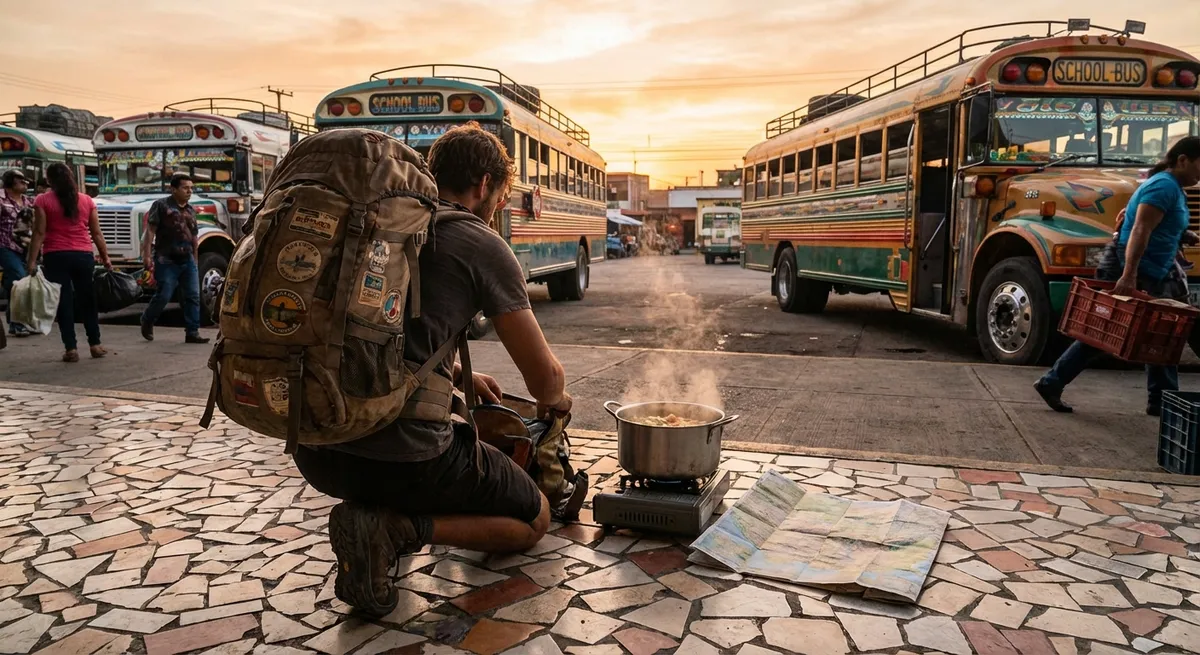
Redefine Luxury: Choose Rich Moments Over Pricey Perks
Most people treat luxury as something you buy. Budget travelers learn to treat it as something you notice.
Instead of marble lobbies and rooftop pools, imagine waking up in a simple guesthouse where the owner greets you by name and hands you a steaming cup of local coffee. That’s a kind of VIP access money can’t really purchase. Trade a high-end brunch for a bakery where the line is full of locals on their way to work; your “table” might be a park bench, but the pastry will taste like the city itself.
Redefining luxury starts with questions: What makes me feel most alive—silence or music, sea or mountains, early mornings or neon nights? Once you know that, you can channel your budget toward what actually matters. Maybe that’s a sunrise boat ride instead of a fancy dinner, or a mountain hut stay instead of a resort. Build your days around sensory richness—new spices, unfamiliar sounds, changing light—rather than price tags.
Travel this way and you’ll realize that the most luxurious thing you can afford on any budget is time: time to wander a back alley, to sit on a train and watch landscapes roll by, to stay one extra night because a place hasn’t finished teaching you something yet.
Ride the World on a Shoestring: Buses, Trains, and Bold Detours
Expensive flights are often the loudest excuse not to go—so step off the runway and onto the road. Overland travel is the backbone of budget adventures and the birthplace of the best detours.
Long-distance buses, night trains, shared vans, and even ferry decks become moving observatories. You’ll see a city’s edges, the towns between tourist dots, the farms and factories that keep a country going. Bring headphones and a playlist that sounds like possibility. Pack a light scarf or hoodie, a reusable water bottle, and snacks bought from the same corner shop as everyone else in line.
Lean into night transport whenever it’s safe and available. A sleeper train or overnight bus doesn’t just move you; it doubles as your accommodation for the night, stretching your budget without shortening your trip. Book in advance when routes are popular, and check local forums or apps for recent reviews and safety tips.
Let yourself say yes to small, unexpected pivots: a local mentions a nearby village with hot springs; someone on the bus is heading to a coastal town you’ve never heard of. Budget travel thrives on these low-cost leaps of faith. When you aren’t locked into rigid, prepaid itineraries, you’re free to follow the threads of curiosity.
Eat Like You Live There: Markets, Street Stalls, and Shared Tables
If you want to feel the heartbeat of a place on a tight budget, follow the food carts and market stalls, not the guidebook’s “Top 10 Restaurants” list.
Morning markets are part theater, part classroom. Watch what people buy on a Monday, observe how certain dishes appear only at certain times of day, and try the things that make you hesitate a little. Ask the vendor what they’d order if they had just a few coins—chances are, you’ll discover a local staple you’d never have recognized on a menu.
Street food, when chosen wisely, is a treasure for budget travelers. Look for stalls where food is cooked to order, where there’s a steady line of locals, and where ingredients don’t sit out too long. A crowded stand usually means high turnover and fresher food. One or two simple dishes eaten sitting on a curb or at a shared plastic table can tell you more about a culture than a dozen polished restaurant meals.
Balance your diet and your expenses by making markets your pantry. Fresh fruit, bread, cheese, and local snacks can cover breakfast and lunch so you can splurge a bit on one memorable meal each day. If your accommodation has a kitchen, try cooking at least once with local ingredients; you’ll not only save money but also gain a quiet, vivid memory—chopping vegetables in a strange place that suddenly starts to feel like home.
Turn Planning into a Power Move, Not a Prison
A slim budget doesn’t mean a rigid, joyless itinerary; it means you plan smart so you can play wild.
Before you go, map out the “bones” of your trip: major transit routes, likely accommodation areas, and free or low-cost experiences that match your interests—urban hikes, free museum days, public viewpoints, festivals in public squares. Research average daily costs so you aren’t blindsided by small fees that add up, like city transport cards, park entry tickets, or baggage charges on low-cost airlines.
Think of your budget like a game you design. Decide on non-negotiables: maybe you must dive in one coral reef, take one cooking class, or splurge on a historic train ride. Protect a chunk of your budget for these, and be flexible everywhere else. Use travel apps and local tourism sites to uncover passes and discounts—city cards that bundle museums and transit, off-peak train fares, or seasonal promos.
Build “white space days” into your plans—days with loose structure and almost no prepaid commitments. These are the days when budget travel shines brightest. You can follow a local’s recommendation, linger longer in a neighborhood you love, or adapt to weather without feeling like you’re wasting prepaid tours.
Planning deeply before you go gives you the freedom to be spontaneous while you’re there. You won’t be scrambling for last-minute, overpriced options; you’ll be cruising on a foundation you’ve already laid, with room to roam.
Pack Bold, Pack Light: Freedom in a Single Bag
The less you carry, the more you notice. A light backpack or carry-on isn’t just practical for budget airlines and bus luggage racks; it changes the way you move through the world.
When you’re not weighed down by stuff, you can walk farther to catch that cheaper bus, hop off at a different station without worrying about dragging a suitcase, or say yes to a last-minute room on the fourth floor of a walk-up hostel. Every stair you climb with ease is a tiny victory against overpacking and overspending.
Think in layers and multipurpose items. A light jacket that works for rain and wind, shoes that can handle both city pavements and short hikes, clothes you can wash in a sink and dry overnight. A small first-aid kit and basic medicines can save you expensive pharmacy runs in unfamiliar places. A reusable water bottle and compact tote bag cut down on both costs and waste.
Most importantly, packing light is a mindset: you’re choosing possibility over possession. You’re trusting that you don’t need a different outfit for every photo, or a suitcase full of “just in case” items. Budget travel invites you to let go of the fear that you won’t have enough and discover the deeper truth: you are enough, and the rest you can figure out along the way.
Conclusion
Budget travel isn’t about being cheap; it’s about being awake. When you trade five-star predictability for the wild, unscripted edges of the world, every bus seat, shared meal, and improvised plan becomes part of a bigger story you’re writing with your own two feet.
You don’t have to wait for a promotion, a perfect moment, or a perfect bank balance. Start where you are, with what you have. Choose one route you can afford, one city you’ve always been curious about, one weekend you can stretch into something memorable. Travel light, ask questions, say yes to the small adventures—and watch how your life quietly expands beyond anything your budget numbers could have predicted.
Sources
- World Tourism Organization (UNWTO) – Tourism Highlights - Provides global tourism statistics and trends that help understand how people travel and spend
- U.S. Department of State – Travel Advisories - Official guidance on safety, documentation, and country-specific conditions for travelers
- Centers for Disease Control and Prevention – Travelers’ Health - Up-to-date information on health precautions, vaccines, and region-specific health risks
- European Commission – Passenger Rights - Explains travelers’ rights on buses, trains, and flights within the EU, useful for budget transport planning
- Lonely Planet – Budget Travel Tips - Practical advice and real-world examples on stretching your travel budget while still having meaningful experiences